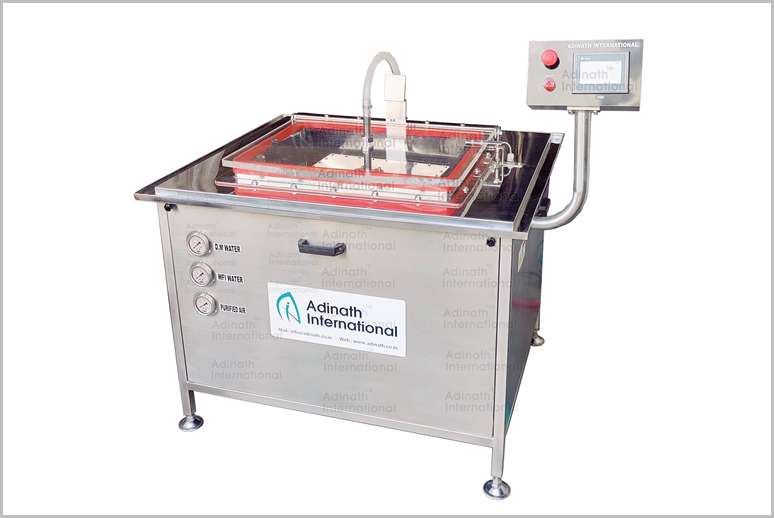
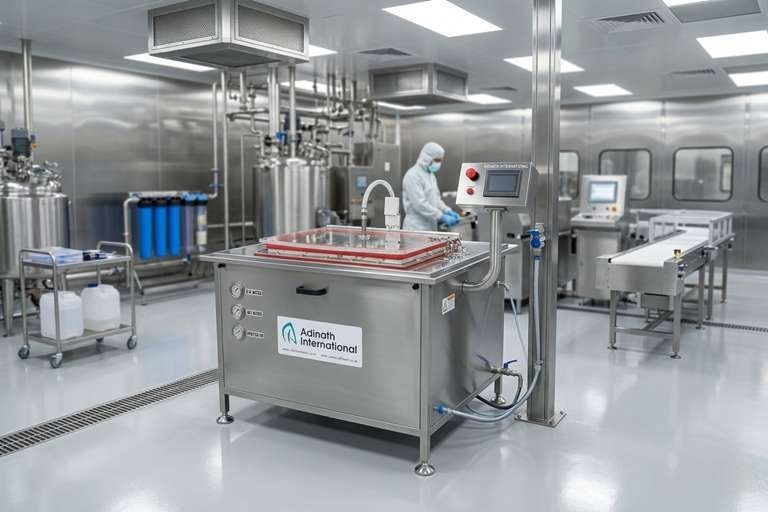
In the highly regulated world of pharmaceutical manufacturing, maintaining impeccable cleanliness and sterility is non-negotiable. A lab scale ampoule washing machine serves as a critical specialized device designed specifically for cleaning and sterilizing glass ampoules and, in many models, vials. These compact machines are ideal for small to medium-scale injectable production facilities, research and development (R&D) laboratories, and pilot plants where precision and compliance take center stage.
By minimizing direct contact between the ampoules and machine components, these washers significantly reduce the risk of particulate contamination, ensuring the highest levels of product safety and formulation integrity. Whether you are preparing containers for liquid injectables, vaccines, or other sterile pharmaceutical products, a reliable lab scale ampoule washing machine helps meet stringent quality standards while streamlining your workflow.
Pharmaceutical ampoules require thorough removal of dust, glass particles, fibers, microbes, and chemical residues before filling. Manual cleaning is not only labor-intensive and inconsistent but also poses serious contamination risks. Modern pharmaceutical ampoule washers automate this process with advanced technology, delivering repeatable, validated results that align with cGMP (current Good Manufacturing Practices) guidelines.
Ampoules are loaded in bulk onto combi tray if received in ready to dump boxes, which will have exactly same number of Ampoules and the pitch, as loading tray. Alternatively, each Ampoule/Vial has to be arranged into the tray individually. The loading tray is placed directly into the machine & the handlebar is lowered for automatic centering of washing needles into the Ampoules neck. The top cover is lowered & switch is operated for automatic sequential washing. Washing is performed from inside and outside of each individual Ampoule. Machine automatically stops after one complete washing cycle with buzzer sound and red-light indication. For removal of tray, reverse procedure is to be observed. Depending on loading & operator’s efficiency one can achieve 30 loading trays in an hour.
Multijet Ampoule Washing Machine is valued for its robust design, ease of operation (even by semi-skilled operators), and ability to deliver sterile, contaminant-free ampoules and vials, critical for pharmaceutical filling processes.
Model | AAVW 340P |
Loading & Unloading | Manually |
Washing Process | Automatic through PLC |
Input Specification | 2ml to 100ml vials and 1ml to 20ml ampoules |
Production Output | Up to 100 ampoules/vials per minute(depends upon needle plate and operator’s efficiency) |
Power Supply: | 0.25 H.P. |
Electrical Characteristics: | 220 Volts, Single Phase, 50 Hertz |
Net Weight: | 120 Kgs. Approx. |
Gross Weight: | 250 Kgs. Approx |
Net Dimension: | 1200 mm (L) X 1020 mm (W) X 1080 mm (H) approx. |
Case Dimensions: | 1350 mm (L) X 1200 mm (W) X 1280 mm (H) approx. |
* Power voltage can be adjusted as per customer’s domestic power voltage requirements.
* Rights of technical improvements & modification reserved.
* Illustrations & dimensions are shown for information purpose only.
Internal/External Washing | Washing Media |
1st Wash | De-Mineralized Water |
2nd Wash | Purified Air |
3rd Wash | De-Mineralized Water |
4th Wash | Purified Air |
5th Wash | Water for Injection |
6th Wash | Purified Air |
Jet Needles | Production Output |
56 Holes Plate | 1680 per hour approx. (56 holes plate x 30 cycles) |
99 Holes Plate | 2970 per hour approx. (56 holes plate x 30 cycles) |
189 Holes Plate | 5670 per hour approx. (56 holes plate x 30 cycles) |
240 Holes Plate | 7200 per hour approx. (56 holes plate x 30 cycles) |
340 Holes Plate | 10200 per hour approx. (56 holes plate x 30 cycles) |
The Lab Scale Ampoule Washing Machine (Model AAVW 340P) is a compact, semi-automatic, cGMP-compliant multijet washing system designed for R&D laboratories, pilot plants, and small-scale injectable production. It thoroughly cleans the internal and external surfaces of glass ampoules (1ml to 20ml) and vials (2ml to 100ml) using pressurized jets of water and air to remove dust, particles, fibers, and contaminants, ensuring high cleanliness standards before filling and sealing.
The machine supports up to 100 ampoules/vials per minute (approximately 30 trays per hour), depending on the needle plate (jet holes) and operator efficiency. It handles:
Interchangeable change parts and different needle plates (56 to 340 holes) allow easy adaptation for various sizes.
Ampoules/vials are manually loaded into a combi tray and placed in the machine. A handlebar lowers to center the washing needles automatically. After closing the acrylic top cover, the PLC-controlled cycle starts. It performs 6 sequential washes (3 water + 3 air):
Positive pressurized jets clean internally and externally with minimal media usage. The machine stops automatically with a buzzer after one complete cycle. Unloading is manual, and ampoules are released in a vertical position.
All contact parts with washing media and compressed air are made of AISI 316L Stainless Steel, Polycarbonate, HDPE, PP, or other FDA-approved materials. Non-contact parts use AISI 304 Stainless Steel. The machine is a complete cGMP-compliant model with smooth finishes, an on-line 5/10 micron filter, pressure tank for continuous media supply, and safety interlock on the acrylic top cover. IQ/OQ documentation is provided, with optional 21 CFR Part 11 compliant PLC + HMI.
Utilities required:
Optional accessories include:
The compact design (approx. 1200 × 1020 × 1080 mm) and low power consumption make it ideal for R&D and lab environments.
Algeria | Angola | Argentina | Australia | Austria | Bahrain | Bangladesh | Belarus | Belgium | Bolivia | Botswana | Brazil | Bulgaria | Canada | Chile | China | Colombia | Costa Rica | Cuba | Czech Republic | Denmark | Dominican Republic | Ecuador | Egypt | El Salvador | Ethiopia | Finland | France | Germany | Ghana | Greece | Guatemala | Haiti | Honduras | Hong Kong | Hungary | India | Indonesia | Iran | Ireland | Israel | Italy | Ivory Coast | Japan | Jordan | Kazakhstan | Kenya | Kuwait | Lebanon | Libya | Malaysia | Mexico | Mongolia | Morocco | Mozambique | Myanmar | Netherlands | New Zealand | Nicaragua | Nigeria | Norway | Oman | Pakistan | Panama | Paraguay | Peru | Philippines | Poland | Portugal | Qatar | Romania | Russia | Saudi Arabia | Senegal | Slovakia | Singapore | South Africa | South Korea | South Sudan | Spain | Sri Lanka | Sweden | Switzerland | Taiwan | Tanzania | Thailand | Trinidad and Tobago | Tunisia | Turkey | Uganda | Ukraine | United Arab Emirates | United Kingdom | United States | Uruguay | Uzbekistan | Venezuela | Vietnam | Zambia | Zimbabwe
Connect with our engineering team to discuss your specific production requirements. We provide customized, cGMP-compliant machinery solutions designed to optimize your manufacturing facility and maximize output.
©Adinath International | Theme Developed By Pharma Machinery Manufacturer I Website updated on: 18 September 2026
WhatsApp us
