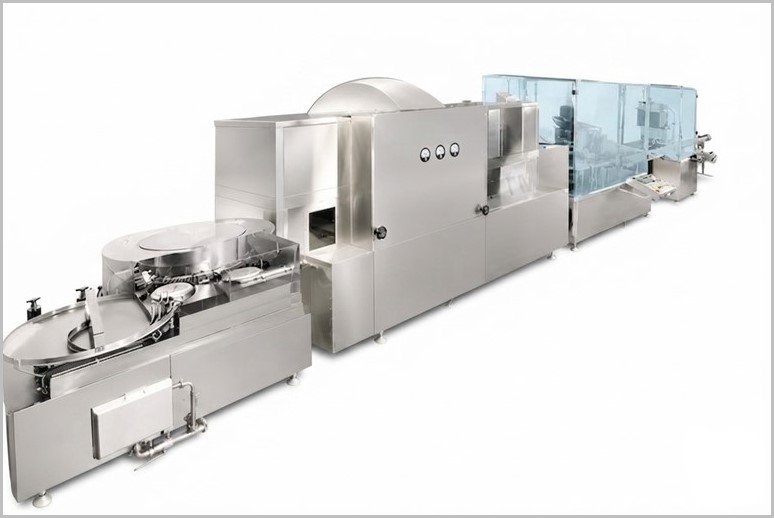
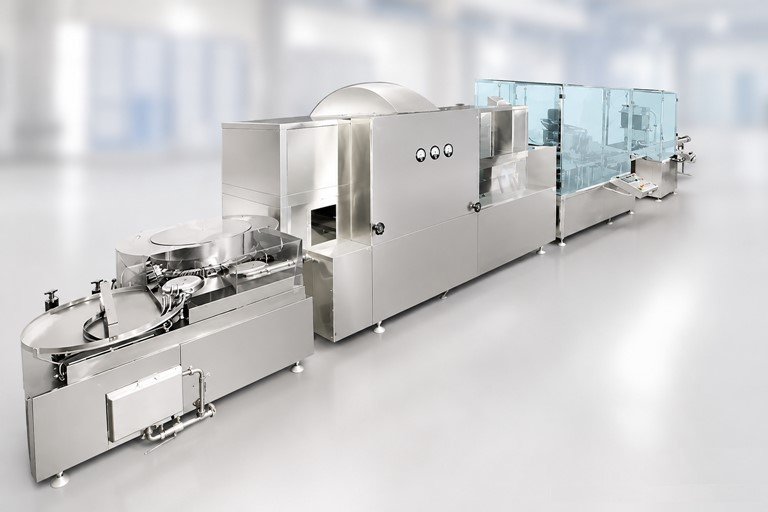
A Vial Powder Filling Line (also known as an injectable powder filling line or sterile powder vial production line) is a fully integrated, automated pharmaceutical manufacturing system designed for aseptic filling of dry powders (such as antibiotics, injectable drugs, or sterile powders) into glass vials. It ensures high precision, sterility, and compliance with cGMP, FDA, and ISO standards while minimizing contamination risks.
These lines are widely used in the pharmaceutical industry for producing sterile injectable powders, typically handling vial sizes from 2ml to 100ml, with production speeds ranging from 20–300+ vials per minute depending on the model (semi-automatic to high-speed fully automatic).
Machines for labelling, filling, sterilising, and washing make up Automatic Vial Powder Lines. To operate as a unified, cohesive system, every machine is connected. Operations employ automation to minimise the need for human intervention. These lines are sometimes referred to as High-Speed Vial Production Lines or Production Scale Vial Filling Lines.
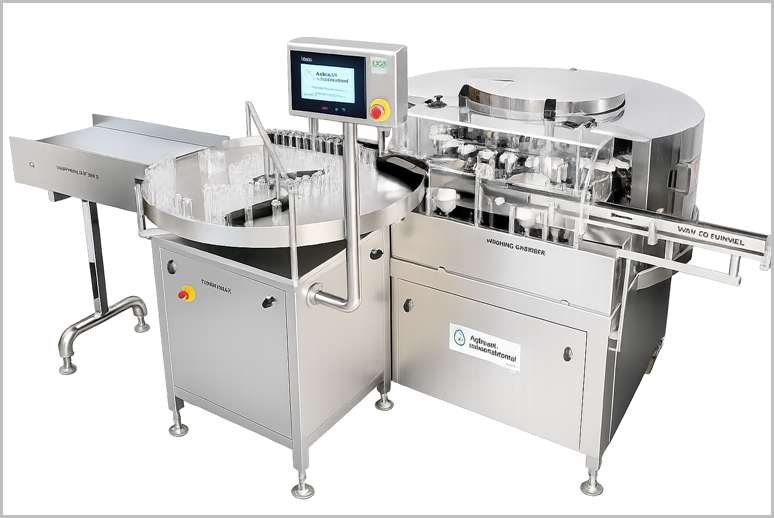
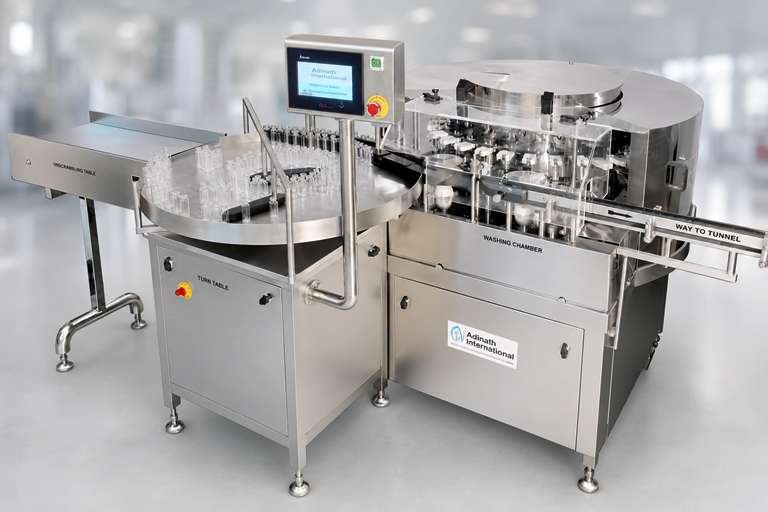
The AI-VRW Automatic Rotary Vial Washing Machine is designed to clean glass vials without allowing non-contact machine components to come into contact with the vials. The Automatic Rotary Vial cleaning Machine model’s gripper system holds the vial by the neck and flips it while the cleaning operation is in progress. In order to ensure a positive wash of the vials, the vial is discharged on the outfeed star wheel arrangement in a vertical position when the washing process is finished. Our machine model can clean glass vials and containers with a capacity of 2 to 100 millilitres using spare parts. The glass vial is held from its neck by a specially designed gripper, which then flips it and advances it on a rotating system for washing. The infeed Star Wheel receives the glass vial via a turn table.
This kind of continuous steriliser is a fully automated system that especially uses forced convection of filtered air via a high efficiency particle air filter to sterilise and dehydrogenate cleaned empty pharmaceutical glassware used in parenteral product packing.
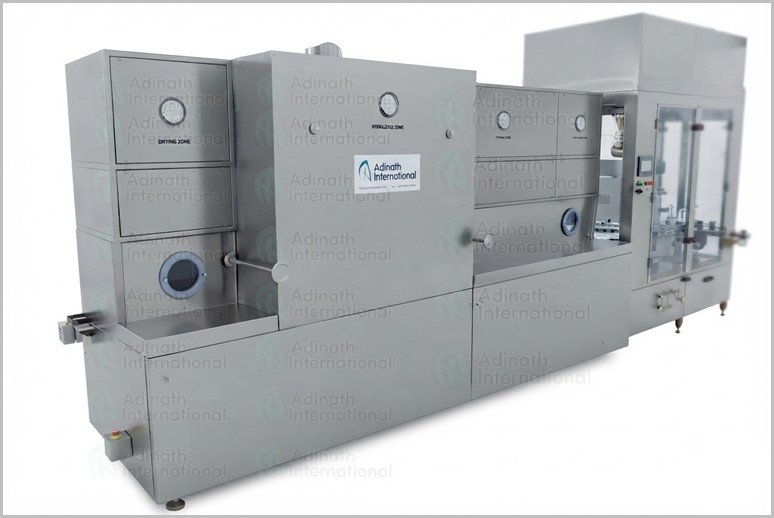
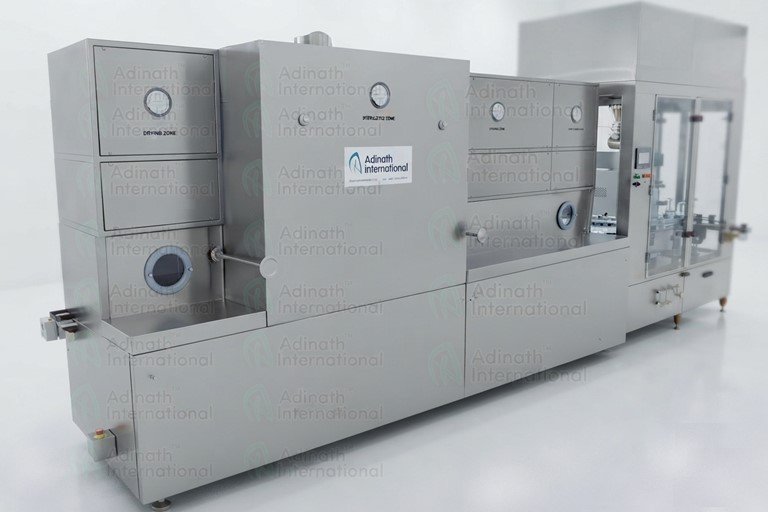
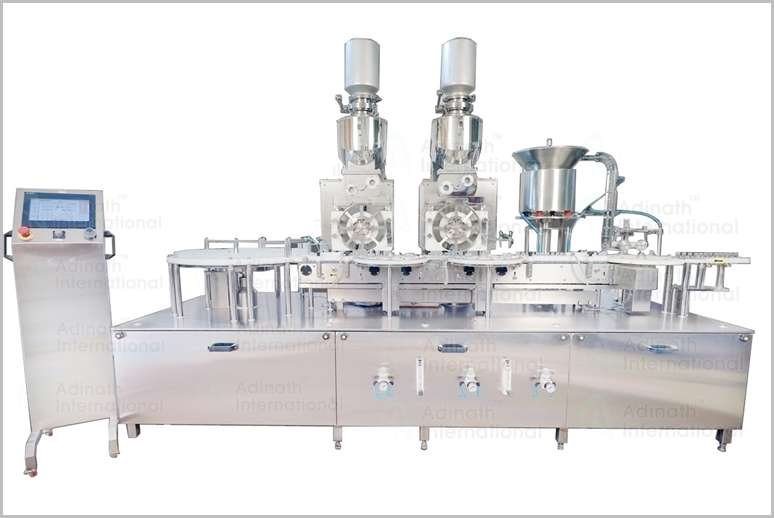
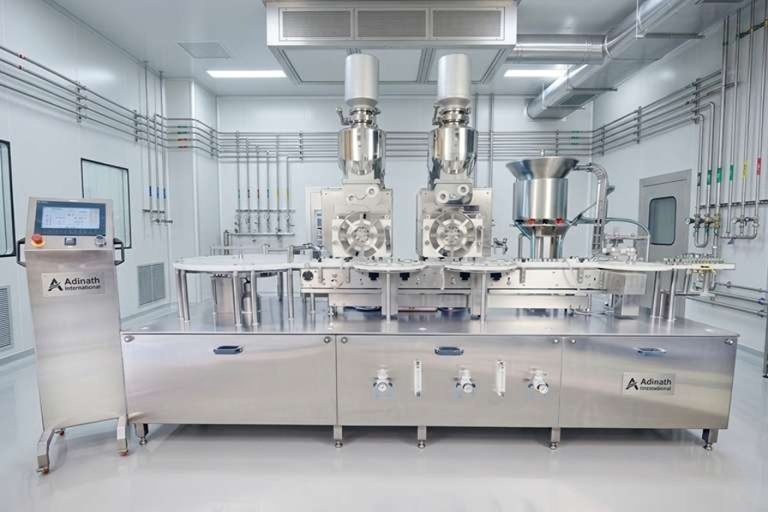
A vial powder filler, also known as a vial powder filling machine, is a filling device used to fill injection powder vials. The sterile powder filler is a monoblock device that carries out filling and stoppering/bunging operations on the same platform. All contact parts are made of stainless steel 316L or materials certified by the FDA for cGMP compliance.

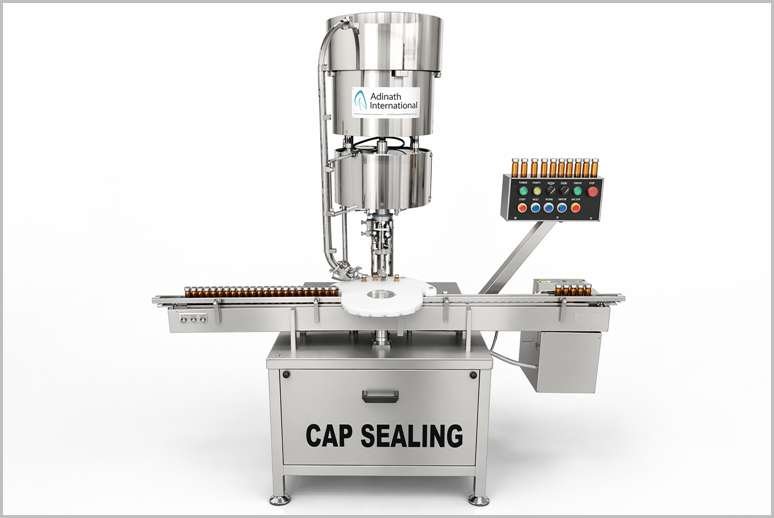
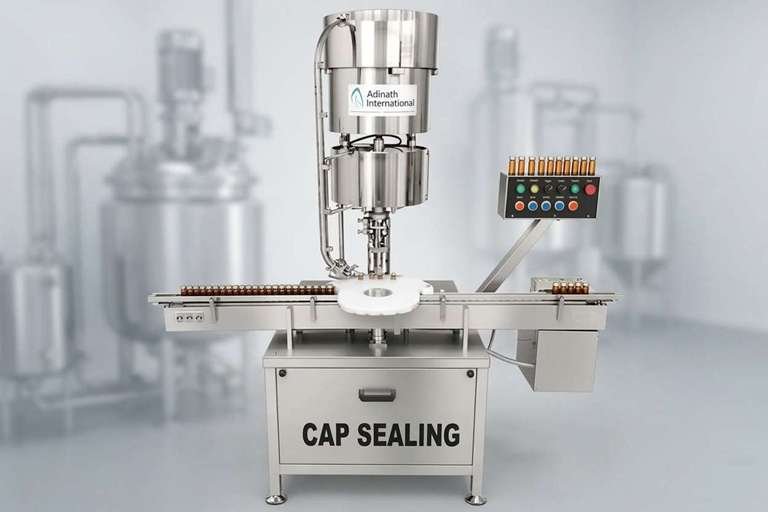
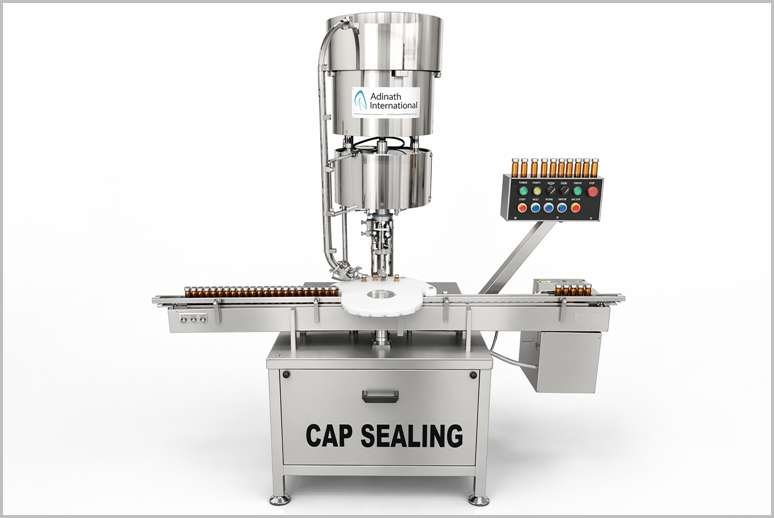
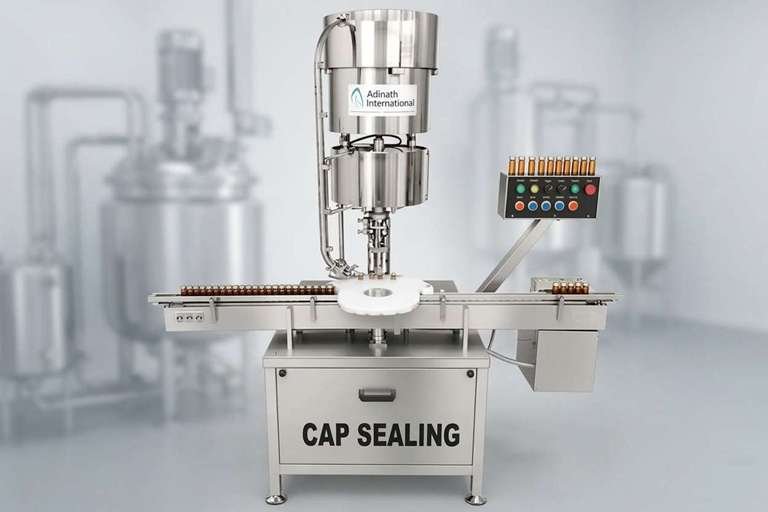
The Automatic Vial Cap Sealing Machine is suitable for sealing round glass vials with PP/Flip-ff caps. Specifically constructed of stainless steel, the vial capping machine features a mild steel frame with enclosures and cladding made of stainless steel. The cap can be constantly fed for online operation on any liquid or powder filling line thanks to the Vial Capping Machine’s vibratory bowl feeder. With the use of spare parts, the machine may be adjusted to fit a variety of vial sizes as well as plain or flip-off caps. Because it can run automatically online and requires less manufacture, the Capping Machine is a helpful tool for the pharmaceutical business.
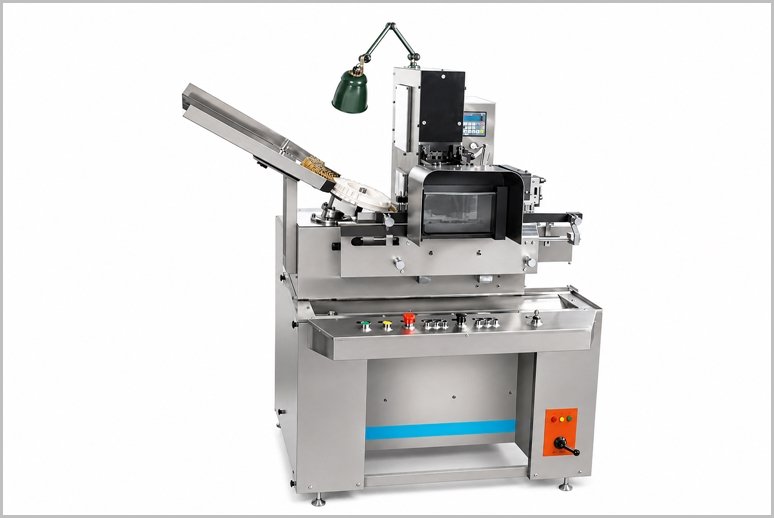
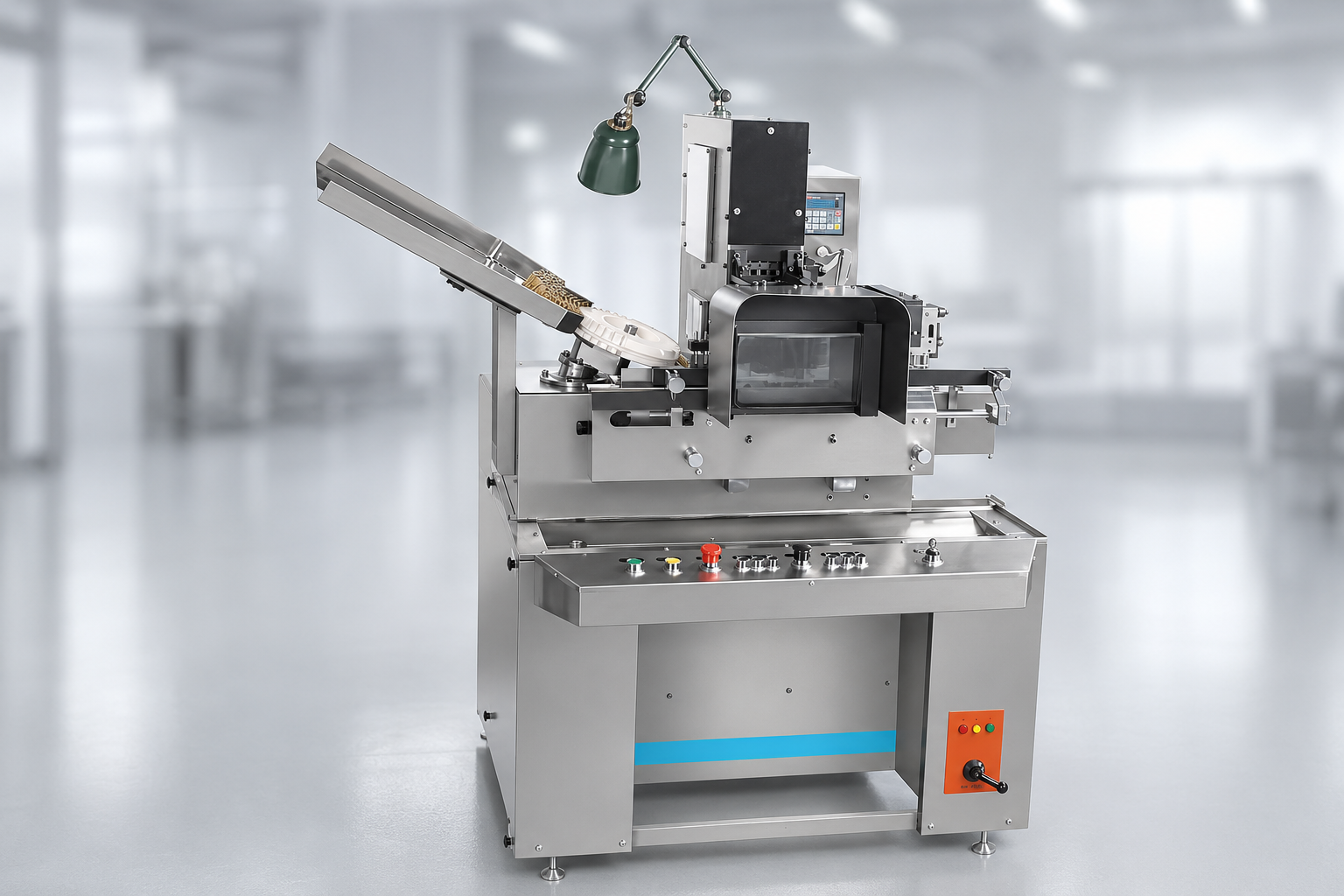
An automatic vial inspection machine is suitable for inspecting injectable glass vials. The Vial Inspection Machine consists of four nylon-6 roller chain tracks that come with a rotating assembly that features AC drive rejection units and 24V DC wiring. Additionally, a variable AC frequency drive allowed for speed modification. In accordance with cGMP rules, all of the machine’s contact parts are made of stainless steel and approved designed polymers.
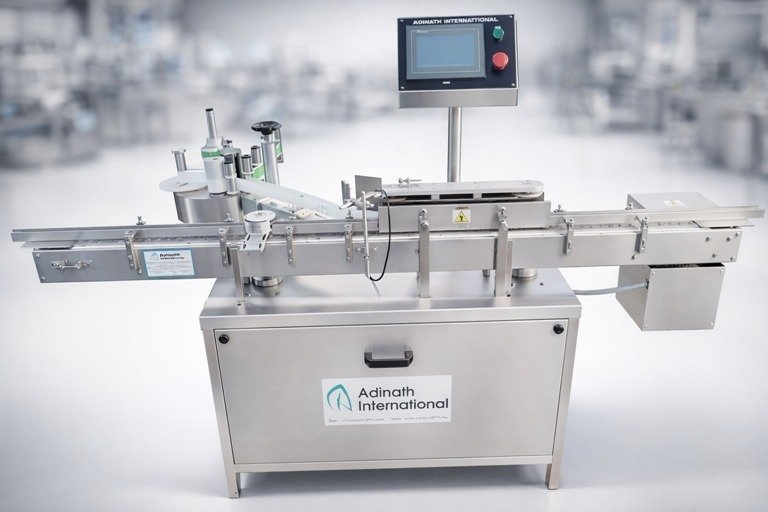
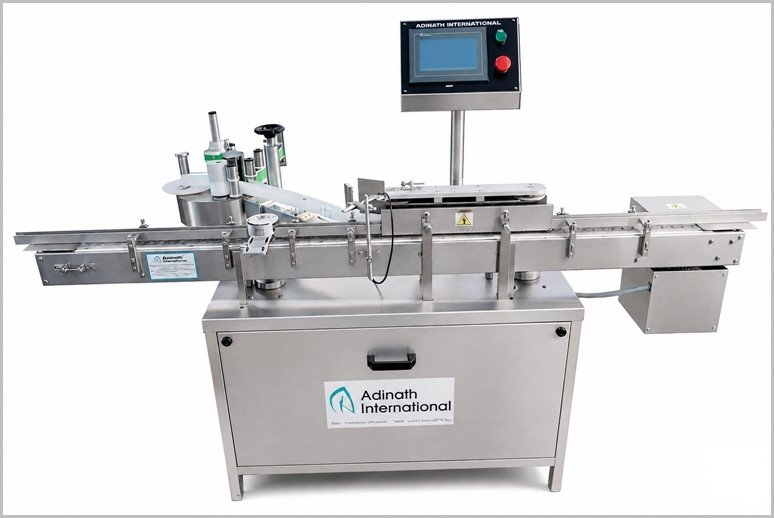
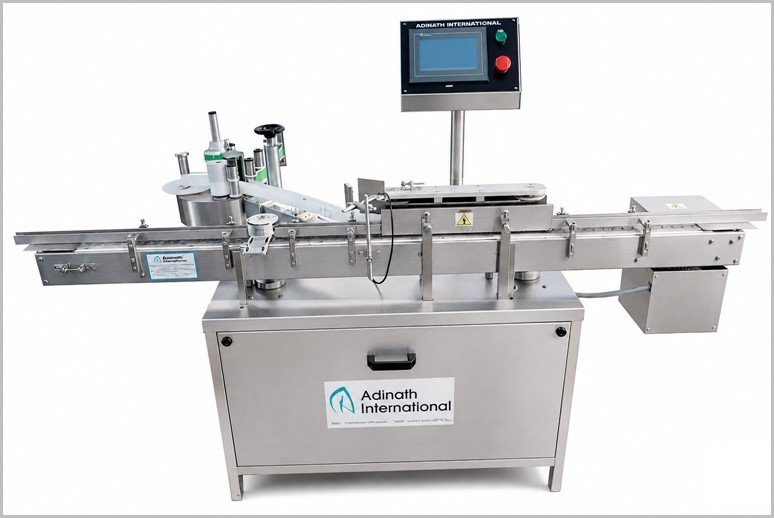
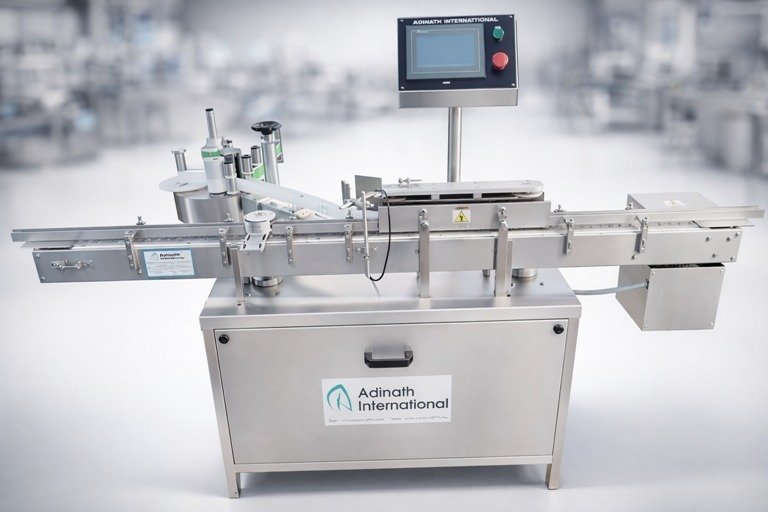
The Automatic Vial Sticker Labelling Machine is among the simplest vertical vial sticker labellers. This device features a product and label detecting system together with a state-of-the-art Micro Processor Control label dispensing mechanism. Vials and other spherical items can be labelled using the Vial Labeller. It can label up to 100 vials in a minute, depending on the vial and label size. An electronic and mechanical device designed to quickly apply transparent (No Look) labels on vials is made possible by an optional special label sensing system.
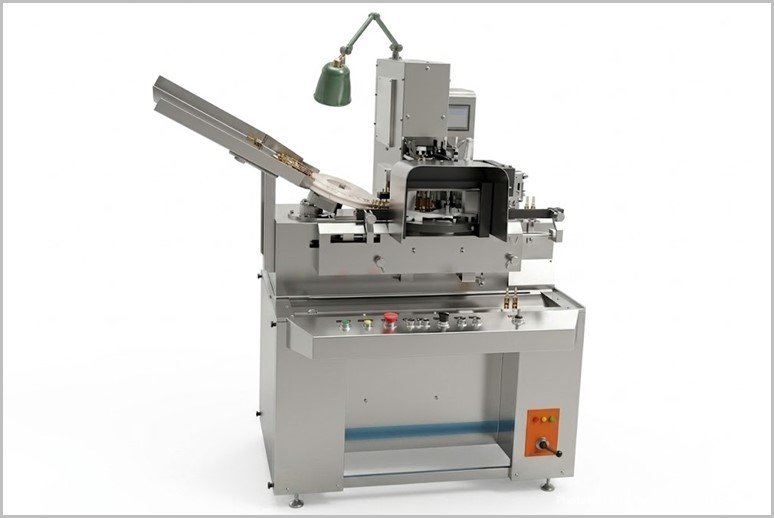
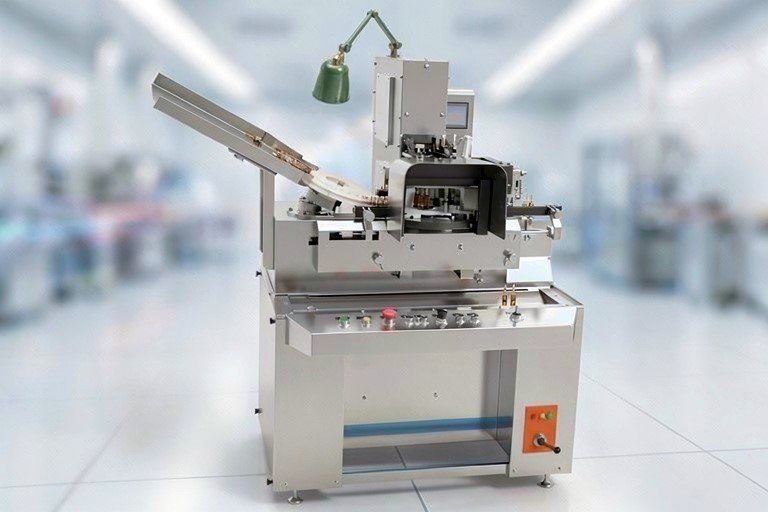
A semi-automated vial powder line consists of machines for cleaning, sterilising, filling stoppers, sealing caps, inspecting and labelling. These gadgets work independently and communicate with one other. These lines are sometimes referred to as low-cost vial production lines or small-scale vial powder lines.
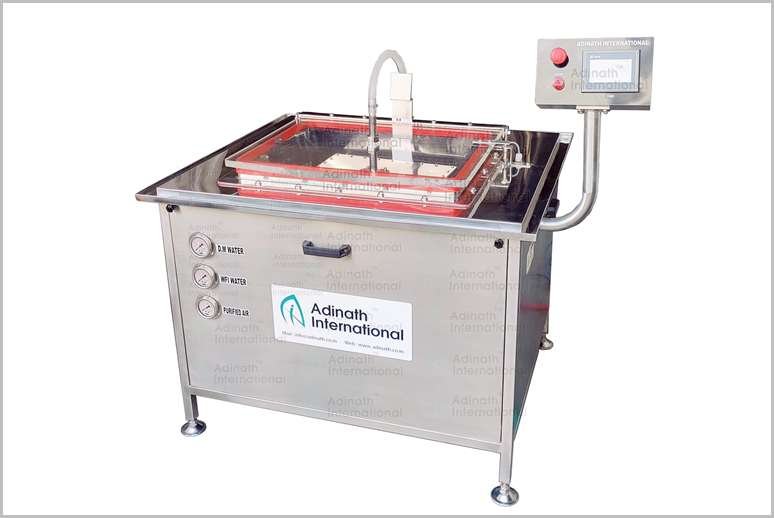
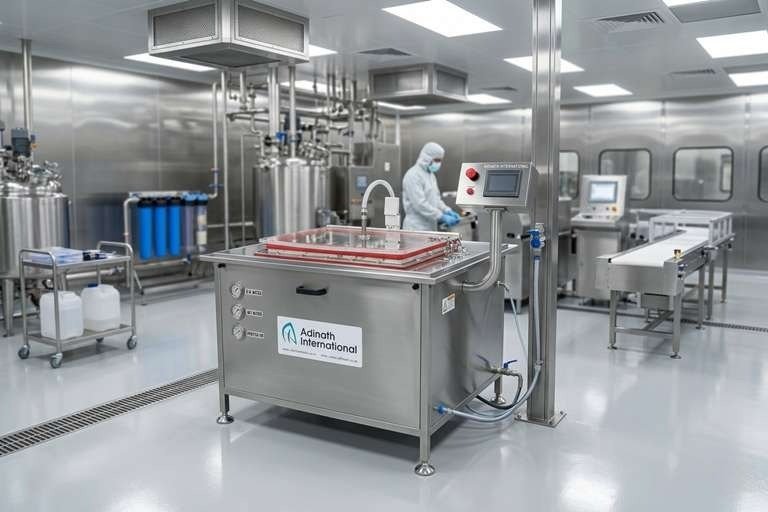
The semi-automatic vial washer, sometimes called the vial jet washer, is a dependable ampoule and vial washing equipment that conforms with cGMP standards. It is semi-automatic, compact, and versatile. The Multijet Vial Washing Machine’s stainless steel architecture enables it to wash glass vial sizes ranging from 2 to 100 millilitres and ampoule sizes from 1 to 20 millilitres when the proper replacement parts are used. All contact parts are made from stainless steel 316L or FDA-approved materials.
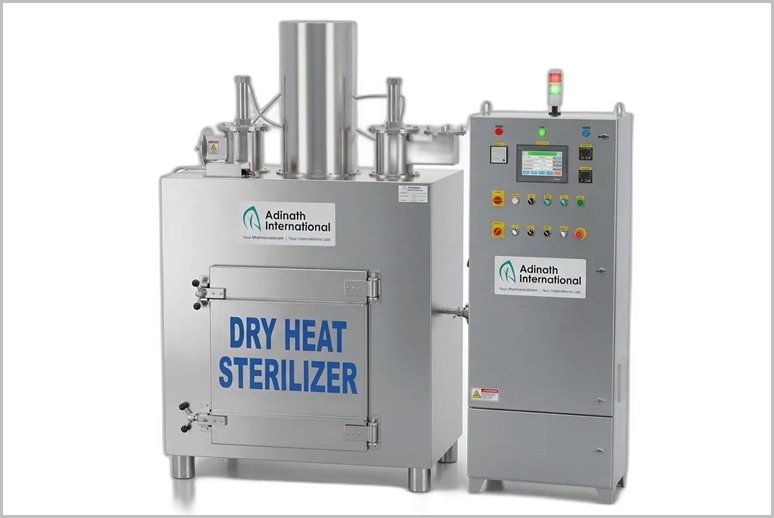
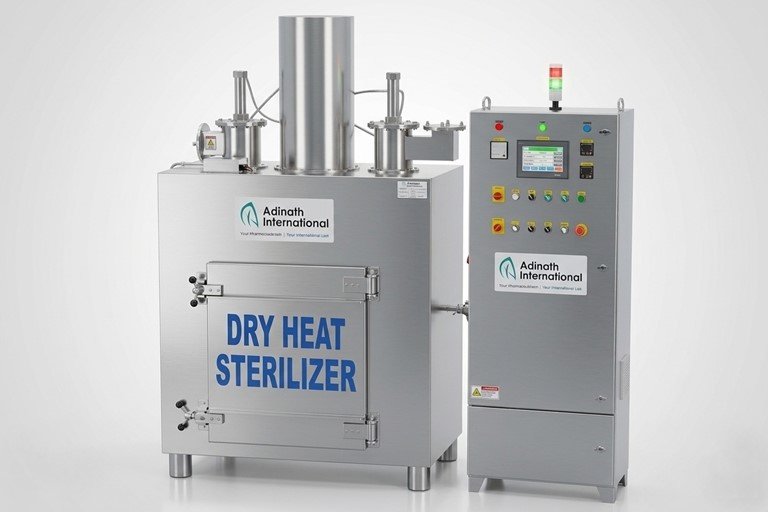
An ampoule steriliser or dry heat steriliser can be used to sterilise cleaned bottles, vials, and ampoules. With an outside wall made of stainless steel 304 and an interior wall made of stainless steel 316, it is built using MS heavy angles. Our double door DHS is produced in injectable pharmaceutical plants that maintain a class 100 environment while adhering to cGMP regulations. All contact parts are made of stainless steel 316L or materials certified by the FDA for cGMP compliance.
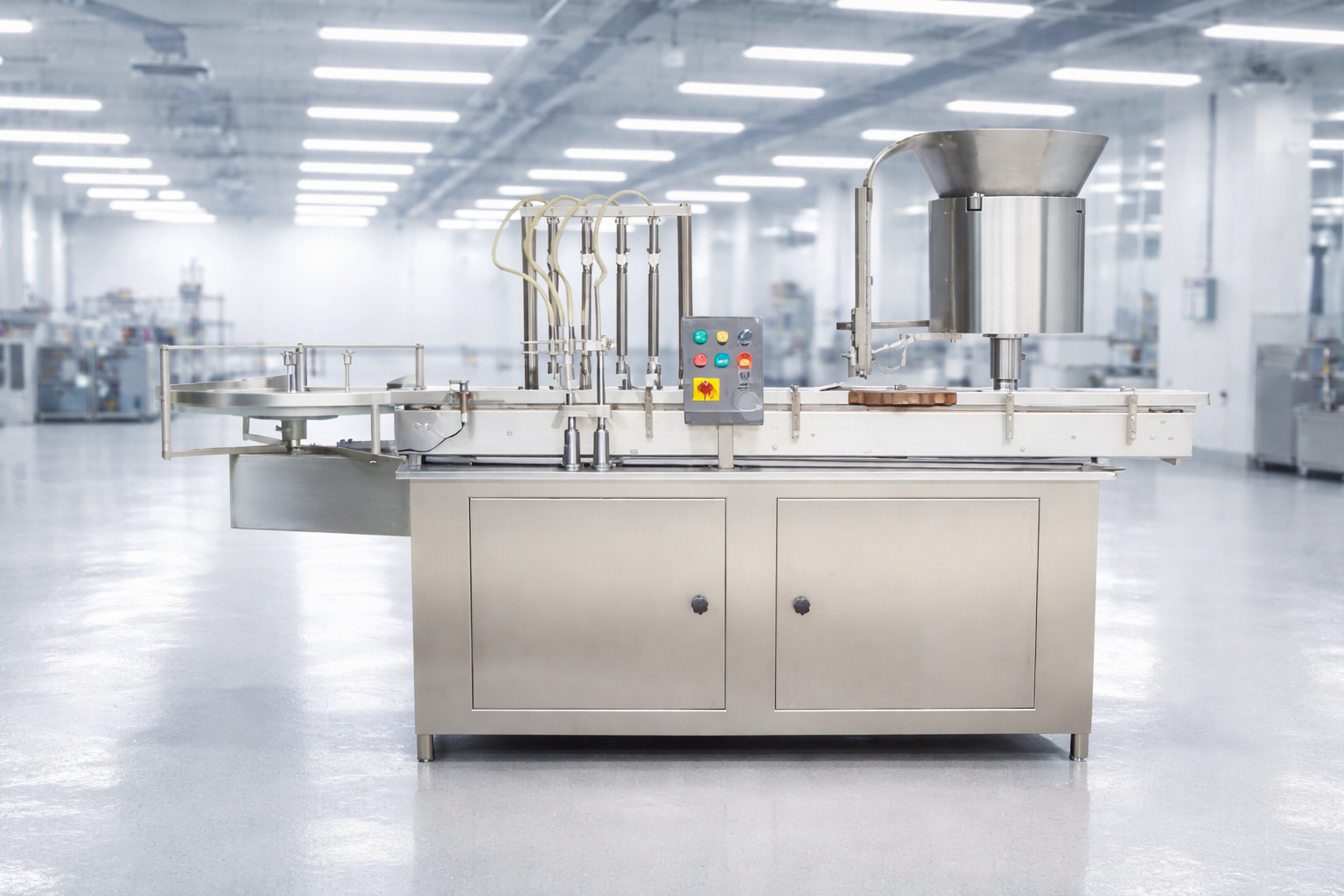
An injectable liquid filling machine, such as an automatic vial liquid filling machine, can be used to fill injectable glass vials. The basic machine consists of a turntable, a stainless-steel stat conveyor belt, and specific eccentric pre-, filling, and post-gassing. Non-toxic synthetic rubber tubing, a small, convenient panel, and extremely precise and effective 316L stainless steel syringes.
The Vial Cap Sealing Machine is suitable for sealing round glass vials with PP/Flip-ff caps. Specifically constructed of stainless steel, the vial capping machine features a mild steel frame with enclosures and cladding made of stainless steel. The cap can be constantly fed for online operation on any liquid or powder filling line thanks to the Vial Capping Machine’s vibratory bowl feeder. With the use of spare parts, the machine may be adjusted to fit a variety of vial sizes as well as plain or flip-off caps. Because it can run automatically online and requires less manufacture, the Capping Machine is a helpful tool for the pharmaceutical business.
An vial inspection machine is suitable for inspecting injectable glass vials. The Vial Inspection Machine consists of four nylon-6 roller chain tracks that come with a rotating assembly that features AC drive rejection units and 24V DC wiring. Additionally, a variable AC frequency drive allowed for speed modification. In accordance with cGMP rules, all of the machine’s contact parts are made of stainless steel and approved designed polymers.
The Vial Sticker Labelling Machine is among the simplest vertical vial sticker labellers. This device features a product and label detecting system together with a state-of-the-art Micro Processor Control label dispensing mechanism. Vials and other spherical items can be labelled using the Vial Labeller. It can label up to 100 vials in a minute, depending on the vial and label size. A uniquely designed mechanical and electrical system quickly applies clear (No Look) labels to vials using an optional unique label sensing device.
A Vial Powder Filling Line (also called an injectable powder filling line or sterile powder vial production line) is a fully integrated, automated pharmaceutical system designed for aseptic filling of dry powders—such as antibiotics, injectable drugs, or sterile powders—into glass vials. It ensures high precision, sterility, and compliance with cGMP, FDA, and ISO standards while minimizing contamination risks.
The line typically handles glass vials ranging from 2 ml to 100 ml. Production speeds range from 20 to 300+ vials per minute, depending on whether the configuration is semi-automatic or a high-speed fully automatic model.
Automatic lines integrate machines for washing, sterilizing, filling, sealing, inspecting, and labeling into a cohesive, high-speed system with minimal human intervention (also known as High-Speed or Production Scale Vial Filling Lines). Semi-automatic lines use independent machines that communicate with each other and are suited for lower-cost or small-scale production.
Core machines include the Vial Washing Machine, Sterilization Tunnel, Vial Powder Filling Machine, Vial Cap Sealing Machine, Vial Inspection Machine, and Vial Sticker Labeling Machine. All operate as a unified system.
It uses a gripper system that holds vials by the neck, flips them, and advances them on a rotating system. It cleans interior and exterior surfaces with high-pressure purified water sprays, removes dust and particulates, drains residual water, and prepares vials for sterilization—without non-contact machine parts touching the vials. It handles 2–100 ml vials.
It sterilizes and depyrogenates cleaned empty glass vials using forced convection of filtered air through HEPA filters (or controlled dry heat in semi-automatic setups). It eliminates microbial contamination, ensures uniform high-temperature distribution, cools vials safely, and supports aseptic powder filling under continuous operation.
It is a monoblock device that dispenses precise powder doses into vials and performs stoppering/bunging on the same platform under controlled aseptic conditions. It controls fill weight accurately, minimizes wastage, and adjusts easily for different vial sizes. All contact parts are stainless steel 316L or FDA-certified materials for cGMP compliance.
It places rubber stoppers on filled vials, applies and crimps aluminium seals (or PP/Flip-off caps) with firm pressure to create an airtight sterile closure, detects missing stoppers or seals, and maintains seal integrity. It features a vibratory bowl feeder for continuous online operation and can be adjusted for various vial and cap sizes.
The Inspection Machine detects foreign particles, checks fill level and powder appearance, identifies glass cracks or defects, and automatically rejects non-conforming vials using cameras, sensors, and rejection units. The Labeling Machine accurately applies labels, prints batch codes and expiry dates, verifies label presence, ensures alignment, and handles various vial diameters at speeds up to around 100 vials per minute.
It is widely used in the Pharmaceutical, Nutraceutical, Herbal, Ayurvedic, Biotech, Cosmetic, and Chemical industries. The systems are designed for cGMP, FDA, and ISO compliance, with contact parts in stainless steel 316L or FDA-approved materials to support sterile injectable powder production.
More Pharmaceutical Filling Lines
 Dry Syrup Powder Filling Line
 Vial Liquid Filling Line
 Ampoule Filling Line
 Automatic Capsule Filling Line
Algeria | Angola | Argentina | Australia | Austria | Bahrain | Bangladesh | Belarus | Belgium | Bolivia | Botswana | Brazil | Bulgaria | Canada | Chile | China | Colombia | Costa Rica | Cuba | Czech Republic | Denmark | Dominican Republic | Ecuador | Egypt | El Salvador | Ethiopia | Finland | France | Germany | Ghana | Greece | Guatemala | Haiti | Honduras | Hong Kong | Hungary | India | Indonesia | Iran | Ireland | Israel | Italy | Ivory Coast | Japan | Jordan | Kazakhstan | Kenya | Kuwait | Lebanon | Libya | Malaysia | Mexico | Mongolia | Morocco | Mozambique | Myanmar | Netherlands | New Zealand | Nicaragua | Nigeria | Norway | Oman | Pakistan | Panama | Paraguay | Peru | Philippines | Poland | Portugal | Qatar | Romania | Russia | Saudi Arabia | Senegal | Slovakia | Singapore | South Africa | South Korea | South Sudan | Spain | Sri Lanka | Sweden | Switzerland | Taiwan | Tanzania | Thailand | Trinidad and Tobago | Tunisia | Turkey | Uganda | Ukraine | United Arab Emirates | United Kingdom | United States | Uruguay | Uzbekistan | Venezuela | Vietnam | Zambia | Zimbabwe
Connect with our engineering team to discuss your specific production requirements. We provide customized, cGMP-compliant machinery solutions designed to optimize your manufacturing facility and maximize output.
©Adinath International | Theme Developed By Pharma Machinery Manufacturer I Website updated on: 15 October 2026
Request A Quick Quote
Vial Powder Filling Line
Please drop your requirements, one of our technical expert will contact you in next 24 working hours.
WhatsApp us
