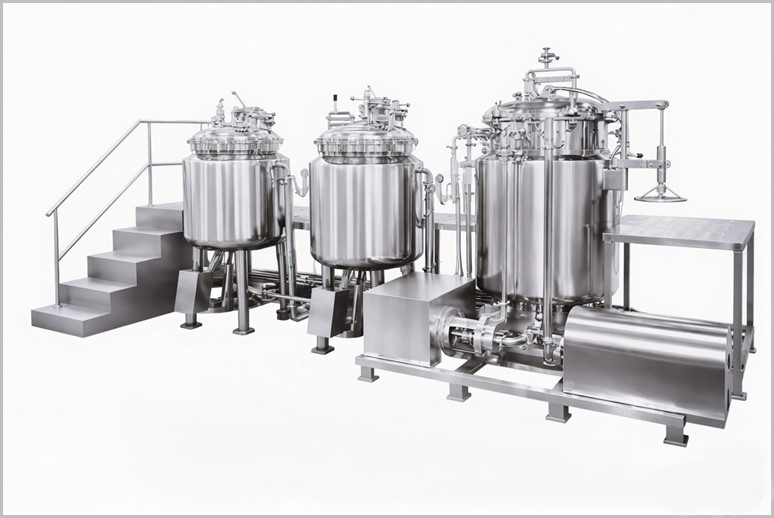
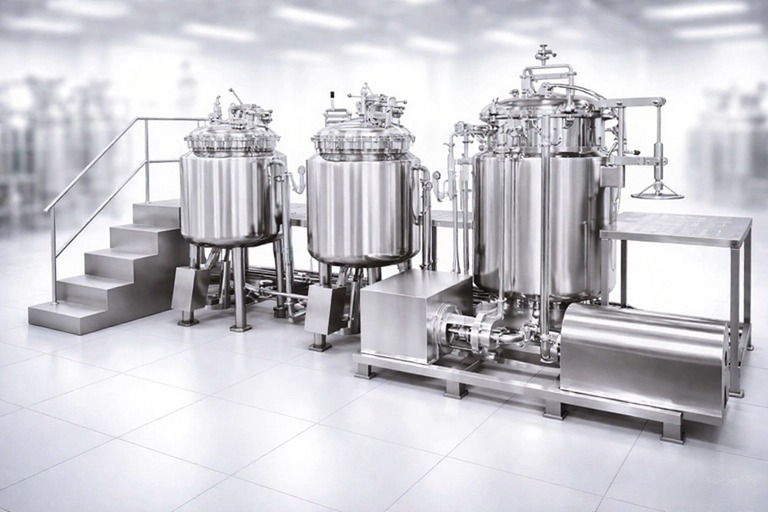
Gel Preparation Plant typically refers to a specialized industrial facility or processing setup designed for the large-scale production of gels, which are semi-solid colloidal systems used in various industries such as pharmaceuticals, cosmetics, food, agriculture, and materials science. These plants focus on the controlled synthesis, mixing, gelling, and packaging of hydrogel or similar gel formulations derived from natural or synthetic polymers. Unlike small-scale home preparation, a gel preparation plant emphasizes automation, quality control, and scalability to meet regulatory standards like GMP. Gels in this context are hydrophilic networks of polymer chains swollen with water, often used for drug delivery, wound healing, plant tissue culture, or superabsorbent applications in agriculture. The “plant” aspect could also nod to botanical sources, but the primary focus is on the manufacturing infrastructure.
If you need details on specific models and pricing, let me know!

* Power voltage can be adjusted as per customer’s domestic power voltage requirements.
* Rights of technical improvements & modification reserved.
* Illustrations & dimensions are shown for information purpose only.
Gel preparation plants follow a structured workflow involving raw material handling, polymerization or blending, gelation, and downstream processing. Here’s a step-by-step description of a typical process:
We manufacture Ointment Manufacturing Plants in batch production capacity ranging from 20 kgs. to 2000 kgs.
A Gel Preparation Plant is a specialized manufacturing system designed for producing semi-solid gel formulations used in pharmaceuticals, cosmetics, and personal care products. It ensures precise mixing, emulsification, and homogenization of gelling agents (like Carbopol or HPMC) with active ingredients under controlled temperature and vacuum conditions to achieve stable, uniform gels.
The process involves preparing water and active/oil phases separately, then transferring them under vacuum into the main vessel. High-shear homogenization and anchor agitators blend the ingredients while maintaining precise temperature. pH adjustment and cooling occur under slow stirring to form a stable gel matrix. The finished product is then transferred to storage or filling lines with minimal air incorporation.
It is widely used in the Pharmaceutical, Cosmetic, Ayurvedic, Herbal, Nutraceutical, and Biotech industries. It is ideal for manufacturing medicated gels, lubricant gels, aloe vera gels, carbomer gels, and other topical or specialty gel products.
More Manufacturing Plants
 Cream Preparation Plant
 Lotion Preparation Plant
 Manufacturing Preparation Plant
 Pharma Cream Preparation Plant
Algeria | Angola | Argentina | Australia | Austria | Bahrain | Bangladesh | Belarus | Belgium | Bolivia | Botswana | Brazil | Bulgaria | Canada | Chile | China | Colombia | Costa Rica | Cuba | Czech Republic | Denmark | Dominican Republic | Ecuador | Egypt | El Salvador | Ethiopia | Finland | France | Germany | Ghana | Greece | Guatemala | Haiti | Honduras | Hong Kong | Hungary | India | Indonesia | Iran | Ireland | Israel | Italy | Ivory Coast | Japan | Jordan | Kazakhstan | Kenya | Kuwait | Lebanon | Libya | Malaysia | Mexico | Mongolia | Morocco | Mozambique | Myanmar | Netherlands | New Zealand | Nicaragua | Nigeria | Norway | Oman | Pakistan | Panama | Paraguay | Peru | Philippines | Poland | Portugal | Qatar | Romania | Russia | Saudi Arabia | Senegal | Slovakia | Singapore | South Africa | South Korea | South Sudan | Spain | Sri Lanka | Sweden | Switzerland | Taiwan | Tanzania | Thailand | Trinidad and Tobago | Tunisia | Turkey | Uganda | Ukraine | United Arab Emirates | United Kingdom | United States | Uruguay | Uzbekistan | Venezuela | Vietnam | Zambia | Zimbabwe
Connect with our engineering team to discuss your specific production requirements. We provide customized, cGMP-compliant machinery solutions designed to optimize your manufacturing facility and maximize output.
©Adinath International | Theme Developed By Pharma Machinery Manufacturer I Website updated on: 15 October 2026
Request A Quick Quote
Gel Preparation Plant
Please drop your requirements, one of our technical expert will contact you in next 24 working hours.
WhatsApp us
