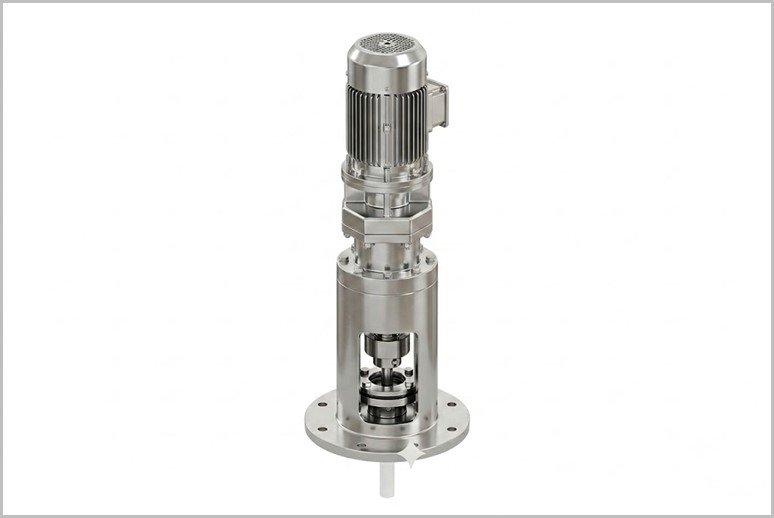
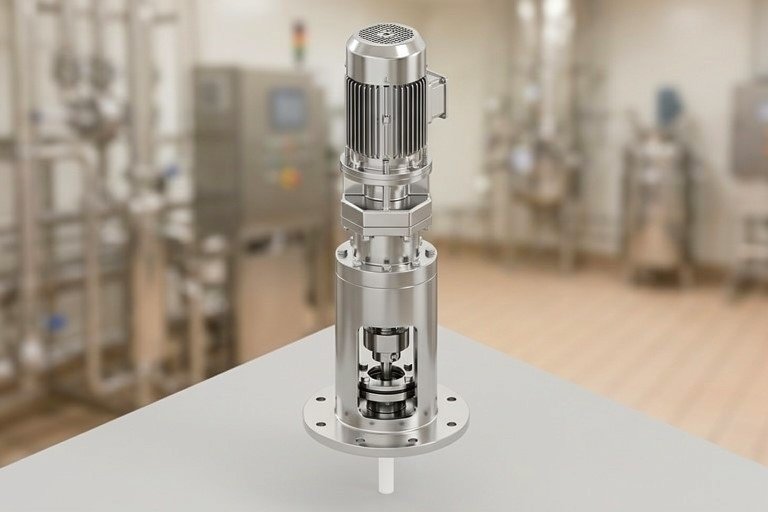
An industrial agitator is a robust mechanical device designed to mix, stir, blend, or evenly distribute fluids—such as liquids, gases, and materials suspended in a liquid—inside large industrial tanks, reactors, or vessels. It works by using a specially designed impeller that rotates with precision, producing controlled fluid movement and shear forces. These actions ensure that the product is mixed evenly, prevent solid particles from settling at the bottom, improve heat transfer efficiency, and support chemical reactions.
For individuals responsible for managing plants, designing processes, and making technical purchases, choosing the correct industrial mixing equipment is essential for maintaining consistent product quality, reducing energy costs, and cutting down on unplanned maintenance.
Selecting the Proper Agitator: Key Considerations for Engineers
To choose a dependable industrial agitator and prevent expensive equipment failures, engineers should consider several operational factors:
By carefully matching the technical requirements of the process to the specifications of the agitator, industrial facilities can extend the life of the equipment, maintain the consistency of each batch, and improve efficiency in their operations.
A typical industrial agitator consists of:
By Impeller Type (Common Designs)
Impellers determine the flow (axial for pumping, radial for shearing) and suit different viscosities:
An industrial agitator is a robust mechanical device designed to mix, stir, blend, or evenly distribute fluids—such as liquids, gases, and materials suspended in a liquid—inside large industrial tanks, reactors, or vessels. It uses a specially designed rotating impeller to create controlled fluid movement and shear forces, ensuring uniform mixing, preventing solids from settling, improving heat transfer, and supporting chemical reactions.
The agitator is powered by a motor (electric, pneumatic, or hydraulic) that drives a shaft connected to one or more impellers. As the impeller rotates, it generates axial, radial, or combined flow patterns and shear forces within the fluid. This circulation keeps the product homogeneous, suspends solids, disperses gases, and enhances process efficiency.
Key considerations include fluid viscosity and flow behavior (low-viscosity fluids need high-speed propellers; high-viscosity materials need high-torque, slower drives), tank design (size, shape, and presence of baffles determine top, side, or bottom mounting), and material of construction (SS 304, SS 316/316L, or specialized coatings for chemical resistance and durability).
It ensures product uniformity and consistency across batches, improves reaction rates and heat transfer efficiency, prevents settling of solids, reduces energy costs through optimized design, and is fully customizable for specific viscosities and tank sizes—leading to longer equipment life and fewer process disruptions.
Common impeller types include:
Contact parts are typically fabricated from stainless steel SS 304 or SS 316/316L. Specialized coatings can be applied for aggressive chemicals. Sealing systems range from simple retainers to double mechanical seals, and both flameproof and non-flameproof enclosures are available depending on the process environment.
Agitators are manufactured in capacities from 10 liters to 50,000 liters. They can be supplied with or without bottom support and offer multiple mounting configurations (top, side, or bottom) to suit any vessel shape and process requirement.
It is widely used in the pharmaceutical, nutraceutical, herbal, Ayurvedic, biotech, cosmetic, chemical, food, and allied industries for processes involving mixing, blending, dissolution, dispersion, homogenization, emulsification, reaction, and heat transfer of liquids, pastes, ointments, creams, and semi-solids.
A typical unit consists of a motor/drive (power source), gear reducer (controls speed and torque), shaft (transmits rotation), impeller(s) (creates fluid movement), sealing system (prevents leaks in pressurized or high-temperature tanks), and mounting assembly (flange, lantern, or other support on the tank).
Yes. Blade and shaft design, drive capacity, impeller type, sealing system, and mounting configuration can all be customized according to product viscosity, vessel geometry, process requirements (mixing, homogenization, emulsification, etc.), and industry standards, ensuring optimal performance and long service life.
Algeria | Angola | Argentina | Australia | Austria | Bahrain | Bangladesh | Belarus | Belgium | Bolivia | Botswana | Brazil | Bulgaria | Canada | Chile | China | Colombia | Costa Rica | Cuba | Czech Republic | Denmark | Dominican Republic | Ecuador | Egypt | El Salvador | Ethiopia | Finland | France | Germany | Ghana | Greece | Guatemala | Haiti | Honduras | Hong Kong | Hungary | India | Indonesia | Iran | Ireland | Israel | Italy | Ivory Coast | Japan | Jordan | Kazakhstan | Kenya | Kuwait | Lebanon | Libya | Malaysia | Mexico | Mongolia | Morocco | Mozambique | Myanmar | Netherlands | New Zealand | Nicaragua | Nigeria | Norway | Oman | Pakistan | Panama | Paraguay | Peru | Philippines | Poland | Portugal | Qatar | Romania | Russia | Saudi Arabia | Senegal | Slovakia | Singapore | South Africa | South Korea | South Sudan | Spain | Sri Lanka | Sweden | Switzerland | Taiwan | Tanzania | Thailand | Trinidad and Tobago | Tunisia | Turkey | Uganda | Ukraine | United Arab Emirates | United Kingdom | United States | Uruguay | Uzbekistan | Venezuela | Vietnam | Zambia | Zimbabwe
Connect with our engineering team to discuss your specific production requirements. We provide customized, cGMP-compliant machinery solutions designed to optimize your manufacturing facility and maximize output.
©Adinath International | Theme Developed By Pharma Machinery Manufacturer I Website updated on: 15 October 2026
Request A Quick Quote
Industrial Agitator
Please drop your requirements, one of our technical expert will contact you in next 24 working hours.
WhatsApp us


