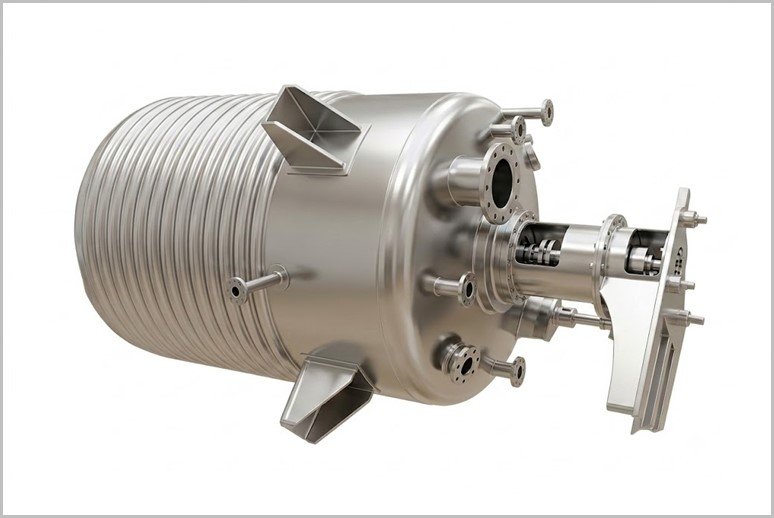
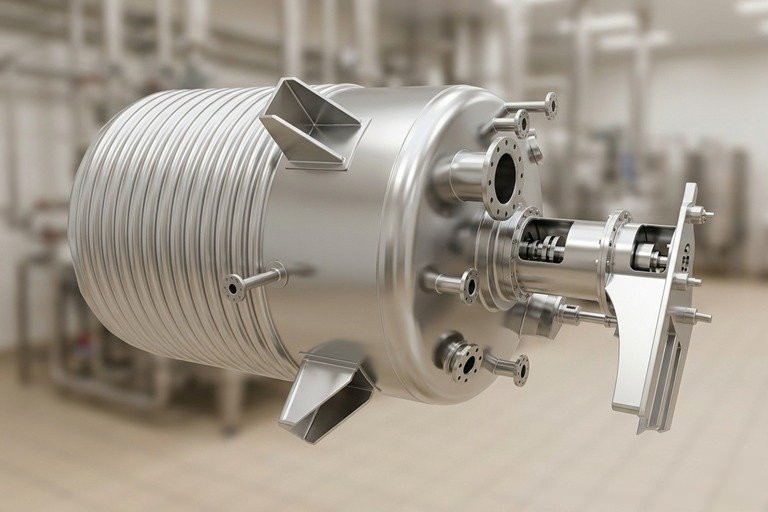
An alkyd resin reactor is an advanced, heavy-duty chemical reaction vessel engineered specifically for the batch production of alkyd resins. These essential polymers are oil-modified polyesters created by polycondensation reactions involving polybasic acids (such as phthalic anhydride), polyhydric alcohols (such as glycerin or pentaerythritol), and drying or non-drying fatty acids/oils.
Widely celebrated across industrial manufacturing sectors, alkyd resins serve as the primary binder backbone for high-performance architectural paints, industrial coatings, protective varnishes, and glossy enamels. Their widespread adoption stems from unmatched functional attributes, including superior substrate adhesion, brilliant gloss retention, excellent weathering resistance, and long-term mechanical durability.
Why Choose Industrial-Grade Alkyd Reactors?
For chemical processors, paint manufacturers, and resin synthesis plants, investing in a robust alkyd reactor translates directly to optimized throughput and compliance. Automated PLC controls allow operators to monitor critical variables such as acid value, batch viscosity, and real-time vessel temperature profiles with pinpoint accuracy. By ensuring optimal molecular weight distribution and eliminating batch-to-batch inconsistencies, these specialized reactors empower manufacturers to produce eco-compliant, high-solids, and traditional solvent-borne coating resins that meet rigorous international quality standards.
Alkyd resins form via polycondensation (esterification) of polyols (e.g., glycerol), dibasic acids/anhydrides (e.g., phthalic anhydride), and fatty acids/oils. Water forms as a by-product and must be continuously removed to drive the reversible reaction forward.
Typical steps:
This setup ensures precise control, high yield, and consistent resin quality.
A Reactor for Alkyd Resin is a specialized heavy-duty chemical reaction vessel designed for the batch production of alkyd resins. These oil-modified polyesters are formed through polycondensation reactions involving polybasic acids (such as phthalic anhydride), polyhydric alcohols (such as glycerin or pentaerythritol), and fatty acids or oils.
Alkyd resins serve as the primary binder in high-performance architectural paints, industrial coatings, protective varnishes, and glossy enamels. They offer excellent substrate adhesion, gloss retention, weathering resistance, and long-term mechanical durability.
The reactor is typically constructed from high-grade stainless steel such as SS 304, SS 316, or SS 316L. These materials provide excellent corrosion resistance, durability, and suitability for high-temperature chemical processing.
It is equipped with a jacketed or limpet coil type heating system that ensures efficient and uniform heat transfer. This design supports precise temperature control required for the esterification and polycondensation reactions.
Yes. The reactor is designed to be compatible with both vacuum and pressurized operations. Vacuum helps in the effective removal of water and by-products during the reaction, while pressure capability supports specific process requirements.
It features a heavy-duty agitator system, typically of anchor, frame, or turbine type, which is specially suited for handling high-viscosity materials that develop during the resin manufacturing process.
Yes. The reactor can produce long, medium, and short oil alkyd resins, making it versatile for various paint, coating, and varnish formulations.
Key features include provision for inert gas atmosphere (nitrogen blanketing), optional mechanical seals, temperature measurement at multiple levels (jacket and product), optional PLC-based automatic controls, and design compliance with ASME/IS standards.
Benefits include high product quality with consistent molecular weight and viscosity, suitability for high-viscosity materials, excellent corrosion resistance and durability, easy cleaning and maintenance, and compliance with industrial standards.
Yes. The reactor is available in customizable capacities ranging from laboratory to large industrial scale. Options include variable speed drives (VFD), condenser and water separator systems for dehydration, and different levels of automation to suit specific production needs.
More Other Machines
 Alkyd Resin Reactor
 Acrylic Resin Reactor
 Jacketed Reactor For Resin Paints
 Oil Heating Resin Reactor
Algeria | Angola | Argentina | Australia | Austria | Bahrain | Bangladesh | Belarus | Belgium | Bolivia | Botswana | Brazil | Bulgaria | Canada | Chile | China | Colombia | Costa Rica | Cuba | Czech Republic | Denmark | Dominican Republic | Ecuador | Egypt | El Salvador | Ethiopia | Finland | France | Germany | Ghana | Greece | Guatemala | Haiti | Honduras | Hong Kong | Hungary | India | Indonesia | Iran | Ireland | Israel | Italy | Ivory Coast | Japan | Jordan | Kazakhstan | Kenya | Kuwait | Lebanon | Libya | Malaysia | Mexico | Mongolia | Morocco | Mozambique | Myanmar | Netherlands | New Zealand | Nicaragua | Nigeria | Norway | Oman | Pakistan | Panama | Paraguay | Peru | Philippines | Poland | Portugal | Qatar | Romania | Russia | Saudi Arabia | Senegal | Slovakia | Singapore | South Africa | South Korea | South Sudan | Spain | Sri Lanka | Sweden | Switzerland | Taiwan | Tanzania | Thailand | Trinidad and Tobago | Tunisia | Turkey | Uganda | Ukraine | United Arab Emirates | United Kingdom | United States | Uruguay | Uzbekistan | Venezuela | Vietnam | Zambia | Zimbabwe
Connect with our engineering team to discuss your specific production requirements. We provide customized, cGMP-compliant machinery solutions designed to optimize your manufacturing facility and maximize output.
©Adinath International | Theme Developed By Pharma Machinery Manufacturer I Website updated on: 15 October 2026
Request A Quick Quote
Reactor For Alkyd Resin
Please drop your requirements, one of our technical expert will contact you in next 24 working hours.
WhatsApp us
