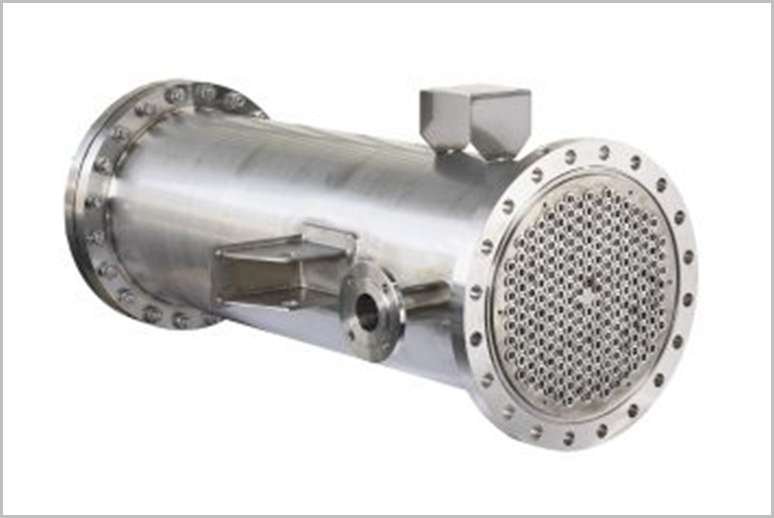
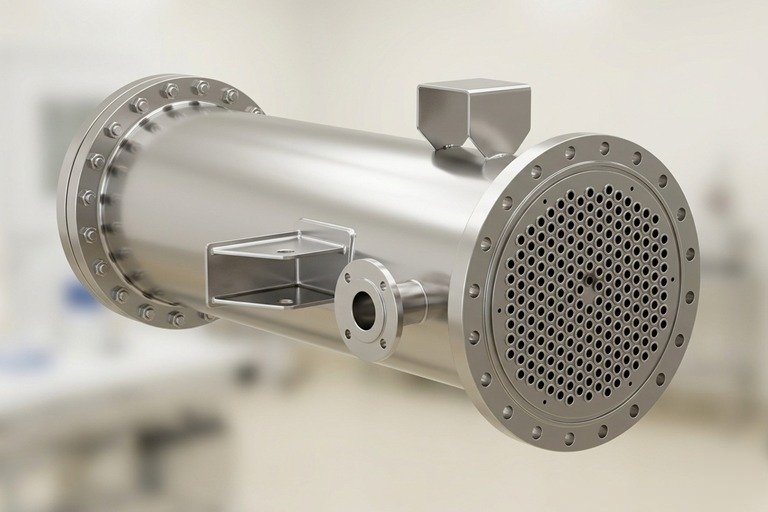
A tube heat exchanger—most commonly referred to in engineering as a shell and tube heat exchanger—is one of the most vital, trusted, and widely utilized thermal management devices in modern industrial processes. Engineered to facilitate thermal energy transfer between two or more fluids without allowing direct physical mixing, these systems are indispensable across heavy and light manufacturing sectors. Their robust architecture makes them the premier choice for demanding environments that require handling extreme pressures, high temperatures, and large-scale thermal loads.
Material Selection and Regulatory Standards To ensure long-term reliability and compliance with safety frameworks, tube heat exchangers are manufactured in accordance with strict international standards set by the Tubular Exchanger Manufacturers Association (TEMA) and the American Society of Mechanical Engineers (ASME). Depending on the operating environment, tube and shell materials are carefully selected to resist corrosion and chemical degradation. Common alloys include:
Stainless Steel (e.g., 304L, 316L, and Duplex): Ideal for hygienic food processing and corrosive chemical applications. Copper-Nickel and Brass: Exceptional thermal conductivity, heavily utilized in HVAC and marine cooling systems.
Titanium: Unmatched resistance to aggressive chloride environments, such as seawater desalination plants.
Conclusion
Understanding the mechanical behavior, material compatibility, and operational parameters of tube heat exchangers ensures optimal energy recovery, reduced downtime, and extended asset life cycles. By choosing the correct design configuration and maintaining compliance with TEMA and ASME codes, industrial facilities can achieve maximum thermal efficiency safely and sustainably.
Working Principle
There are several configurations based on design needs, particularly how the tube bundle connects to the shell (to allow for thermal expansion):
A tube heat exchanger (commonly known as a shell and tube heat exchanger) is a thermal management device that transfers heat energy between two or more fluids without allowing them to mix. It is widely used in industrial processes that involve high pressures, high temperatures, and large thermal loads.
Tube heat exchangers are manufactured in accordance with strict international standards set by the Tubular Exchanger Manufacturers Association (TEMA) and the American Society of Mechanical Engineers (ASME) to ensure reliability, safety, and compliance.
Common materials include Stainless Steel (such as 304L, 316L, and Duplex) for hygienic and corrosive applications; Copper-Nickel and Brass for excellent thermal conductivity (often used in HVAC and marine systems); and Titanium for superior resistance to aggressive chloride environments like seawater desalination.
Key features include a compact array of parallel tubes inside a shell for high thermal efficiency, heavy-duty metallic construction for extreme pressures and temperatures, support for single-pass or multi-pass designs, construction from stainless steel/titanium/special alloys, removable or floating tube bundles for easy cleaning and inspection, and adaptability for liquid-to-liquid, gas-to-liquid, condensation, and evaporation processes.
They are used across pharmaceutical, nutraceutical, herbal, Ayurvedic, biotech, cosmetic, and chemical industries, as well as in petrochemical, power generation, oil refineries, HVAC, and food processing sectors.
They handle high pressures and temperatures, remain robust and reliable even with dirty or corrosive fluids, are easy to scale up by adding more tubes, and are widely applied in demanding industrial environments.
The primary types are:
It maximizes heat transfer through a dense array of parallel tubes within the shell and supports single- or multi-pass configurations to optimize fluid velocity. Removable or floating tube bundles allow straightforward mechanical cleaning, descaling, and inspection, reducing downtime.
Yes. They can be fabricated from high-grade stainless steel, titanium, or specialized alloys specifically chosen to resist corrosion, chemical degradation, and aggressive environments such as chloride-rich seawater.
Correct material selection and design configuration (aligned with TEMA and ASME codes) ensure optimal energy recovery, resistance to operating conditions, reduced downtime, extended equipment life, and safe, sustainable thermal efficiency in industrial applications.
More Other Machines
 Biological Indicator Tube Filler
 Biological Indicator Tube Filler Sealer
 Crushable Tube Filler
 Crushable Tube Filler Sealer
Algeria | Angola | Argentina | Australia | Austria | Bahrain | Bangladesh | Belarus | Belgium | Bolivia | Botswana | Brazil | Bulgaria | Canada | Chile | China | Colombia | Costa Rica | Cuba | Czech Republic | Denmark | Dominican Republic | Ecuador | Egypt | El Salvador | Ethiopia | Finland | France | Germany | Ghana | Greece | Guatemala | Haiti | Honduras | Hong Kong | Hungary | India | Indonesia | Iran | Ireland | Israel | Italy | Ivory Coast | Japan | Jordan | Kazakhstan | Kenya | Kuwait | Lebanon | Libya | Malaysia | Mexico | Mongolia | Morocco | Mozambique | Myanmar | Netherlands | New Zealand | Nicaragua | Nigeria | Norway | Oman | Pakistan | Panama | Paraguay | Peru | Philippines | Poland | Portugal | Qatar | Romania | Russia | Saudi Arabia | Senegal | Slovakia | Singapore | South Africa | South Korea | South Sudan | Spain | Sri Lanka | Sweden | Switzerland | Taiwan | Tanzania | Thailand | Trinidad and Tobago | Tunisia | Turkey | Uganda | Ukraine | United Arab Emirates | United Kingdom | United States | Uruguay | Uzbekistan | Venezuela | Vietnam | Zambia | Zimbabwe
Connect with our engineering team to discuss your specific production requirements. We provide customized, cGMP-compliant machinery solutions designed to optimize your manufacturing facility and maximize output.
©Adinath International | Theme Developed By Pharma Machinery Manufacturer I Website updated on: 15 October 2026
Request A Quick Quote
Tube Heat Exchanger
Please drop your requirements, one of our technical expert will contact you in next 24 working hours.
WhatsApp us
