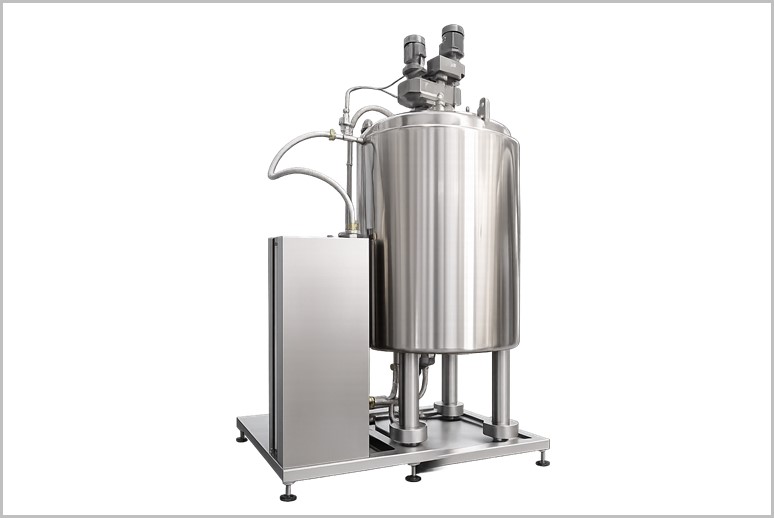
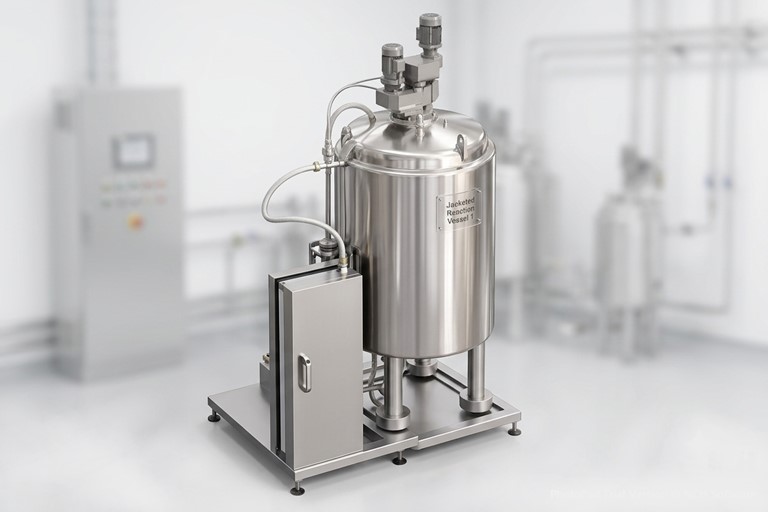
Jacketed Reaction Vessel also called a jacketed reactor or double-walled reactor is a specialized piece of laboratory or industrial equipment designed for chemical reactions that require precise temperature control. It consists of an inner vessel where the reactants are held and mixed, surrounded by an outer jacket through which a heat transfer fluid (such as water, oil, or a coolant) circulates to heat or cool the reaction. This setup allows for efficient thermal regulation, preventing heat loss or gain from the environment and enabling reactions to occur under controlled conditions, often ranging from -120°C to 250°C depending on the model.
Jacketed Vessels are usually constructed from borosilicate glass for lab use due to its thermal shock resistance and transparency, though stainless steel versions exist for larger industrial scales. Sizes range from small benchtop models (e.g., 100 mL to 5 L) for R&D to pilot-scale (up to 50 L or 200 L) for process development.
If you need details on specific models and pricing, let me know!
The vessel works by transferring heat through the jacket walls to the inner reaction space. For example, hot fluid in the jacket raises the temperature for exothermic reactions, while cold fluid cools for endothermic ones. This indirect method ensures safety and uniformity.
A Jacketed Reaction Vessel (also known as Jacketed Reactor or Double-Walled Reactor) is a specialized piece of equipment used for chemical reactions that require precise temperature control. It consists of an inner vessel for holding and mixing reactants, surrounded by an outer jacket through which heating or cooling fluids (water, oil, steam, or coolant) circulate. This design enables efficient thermal regulation, typically ranging from -120°C to 250°C, while preventing heat loss to the environment.
The vessel works by transferring heat through the jacket walls to the inner reaction space. A heat transfer fluid circulates in the jacket (or limpet coil) to heat or cool the contents. An agitator ensures homogeneous mixing. The system supports operations under vacuum or pressure and can handle batch or continuous processes. Accessories like temperature probes, condensers, and discharge valves provide full process control.
The Jacketed Reaction Vessel is available from small lab-scale sizes (10 liters) up to large production capacities of 20,000 liters or more, as per custom requirements. It is fabricated using SS 304, SS 316, Mild Steel, or rubber-lined materials to ensure corrosion resistance and compatibility with various chemicals.
It is widely used in the Pharmaceutical, Chemical, Cosmetic, Ayurvedic, and Herbal & Nutraceutical industries. It is ideal for chemical synthesis, mixing, heating/cooling processes, and controlled reactions in R&D, pilot plants, and commercial manufacturing.
Algeria | Angola | Argentina | Australia | Austria | Bahrain | Bangladesh | Belarus | Belgium | Bolivia | Botswana | Brazil | Bulgaria | Canada | Chile | China | Colombia | Costa Rica | Cuba | Czech Republic | Denmark | Dominican Republic | Ecuador | Egypt | El Salvador | Ethiopia | Finland | France | Germany | Ghana | Greece | Guatemala | Haiti | Honduras | Hong Kong | Hungary | India | Indonesia | Iran | Ireland | Israel | Italy | Ivory Coast | Japan | Jordan | Kazakhstan | Kenya | Kuwait | Lebanon | Libya | Malaysia | Mexico | Mongolia | Morocco | Mozambique | Myanmar | Netherlands | New Zealand | Nicaragua | Nigeria | Norway | Oman | Pakistan | Panama | Paraguay | Peru | Philippines | Poland | Portugal | Qatar | Romania | Russia | Saudi Arabia | Senegal | Slovakia | Singapore | South Africa | South Korea | South Sudan | Spain | Sri Lanka | Sweden | Switzerland | Taiwan | Tanzania | Thailand | Trinidad and Tobago | Tunisia | Turkey | Uganda | Ukraine | United Arab Emirates | United Kingdom | United States | Uruguay | Uzbekistan | Venezuela | Vietnam | Zambia | Zimbabwe
Connect with our engineering team to discuss your specific production requirements. We provide customized, cGMP-compliant machinery solutions designed to optimize your manufacturing facility and maximize output.
©Adinath International | Theme Developed By Pharma Machinery Manufacturer I Website updated on: 15 October 2026
Request A Quick Quote
Jacketed Reaction Vessel
Please drop your requirements, one of our technical expert will contact you in next 24 working hours.
WhatsApp us


