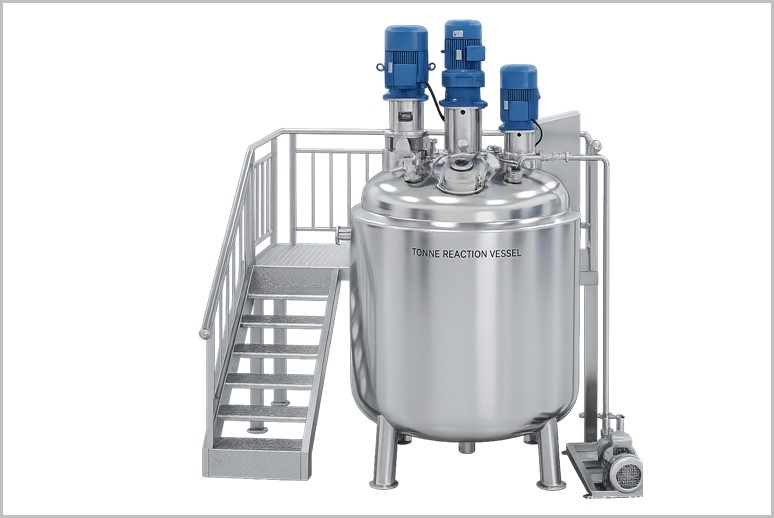
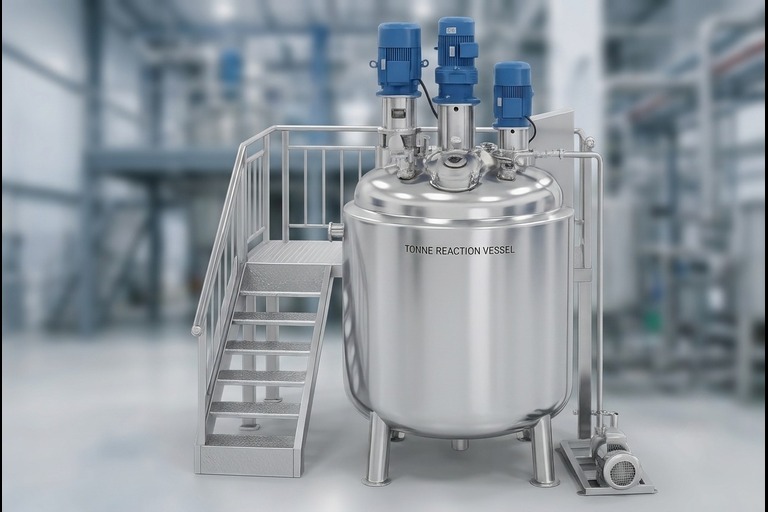
Reaction Vessel is a specialized container designed to hold chemical reactants during a reaction, ensuring controlled conditions such as temperature, pressure, and mixing. It prevents interference from external factors and allows for safe monitoring and manipulation of the process. Unlike standard lab flasks, reaction vessels are often thick-walled to withstand vacuum, high pressure, or extreme temperatures.
If you need details on specific models and pricing, let me know!
A Reaction Vessel is a specialized thick-walled container designed to hold chemical reactants during a reaction under controlled conditions of temperature, pressure, and mixing. It is used for processes like synthesis, blending, heating, cooling, and distillation in pharmaceutical, chemical, and industrial applications.
Reaction Vessels are available from lab/pilot scale (starting from 10–50 liters) up to large production capacities of 20,000 liters or more, fully customizable according to specific process requirements.
It features strong construction to handle pressure/vacuum, precise temperature control via jackets/coils, variable-speed agitation for uniform mixing, and integrated safety devices. The design supports CIP/SIP cleaning and meets regulatory standards for reliable performance.
They are widely used in the Pharmaceutical, Chemical, Cosmetic, Ayurvedic, Herbal, Nutraceutical, Food Processing, and Petrochemical industries for chemical synthesis, formulation preparation, and controlled reaction processes.
United States | Canada | Mexico | Brazil | Argentina | Chile | Colombia | Peru | Germany | United Kingdom | France | Italy | Spain | Netherlands | Belgium | Switzerland | Sweden | Austria | Denmark | Norway | Poland | Finland | Czech Republic | Hungary | Portugal | Ireland | Greece | Slovakia | Romania | Bulgaria | China | Japan | India | South Korea | Indonesia | Vietnam | Thailand | Malaysia | Philippines | Singapore | Bangladesh | Pakistan | Saudi Arabia | United Arab Emirates | Israel | Turkey | Iran | Qatar | Kuwait | South Africa | Nigeria | Egypt | Algeria | Morocco | Kenya | Ghana | Tunisia | Australia | New Zealand | Russia | Ukraine | Belarus | Kazakhstan | Taiwan | Hong Kong | South Sudan | Uzbekistan | Oman | Jordan | Bahrain | Sri Lanka | Myanmar | Lebanon | Mongolia | Ethiopia | Libya | Angola | Zambia | Zimbabwe | Mozambique | Ivory Coast | Senegal | Uganda | Tanzania | Botswana | Ecuador | Venezuela | Bolivia | Paraguay | Uruguay | Trinidad and Tobago | Panama | Guatemala | Costa Rica | Honduras | El Salvador | Nicaragua | Dominican Republic | Haiti | Cuba
Connect with our engineering team to discuss your specific production requirements. We provide customized, cGMP-compliant machinery solutions designed to optimize your manufacturing facility and maximize output.
Algeria | Angola | Argentina | Australia | Austria | Bahrain | Bangladesh | Belarus | Belgium | Bolivia | Botswana | Brazil | Bulgaria | Canada | Chile | China | Colombia | Costa Rica | Cuba | Czech Republic | Denmark | Dominican Republic | Ecuador | Egypt | El Salvador | Ethiopia | Finland | France | Germany | Ghana | Greece | Guatemala | Haiti | Honduras | Hong Kong | Hungary | India | Indonesia | Iran | Ireland | Israel | Italy | Ivory Coast | Japan | Jordan | Kazakhstan | Kenya | Kuwait | Lebanon | Libya | Malaysia | Mexico | Mongolia | Morocco | Mozambique | Myanmar | Netherlands | New Zealand | Nicaragua | Nigeria | Norway | Oman | Pakistan | Panama | Paraguay | Peru | Philippines | Poland | Portugal | Qatar | Romania | Russia | Saudi Arabia | Senegal | Slovakia | Singapore | South Africa | South Korea | South Sudan | Spain | Sri Lanka | Sweden | Switzerland | Taiwan | Tanzania | Thailand | Trinidad and Tobago | Tunisia | Turkey | Uganda | Ukraine | United Arab Emirates | United Kingdom | United States | Uruguay | Uzbekistan | Venezuela | Vietnam | Zambia | Zimbabwe
Connect with our engineering team to discuss your specific production requirements. We provide customized, cGMP-compliant machinery solutions designed to optimize your manufacturing facility and maximize output.
©Adinath International | Theme Developed By Pharma Machinery Manufacturer I Website updated on: 31 August 2026
WhatsApp us
