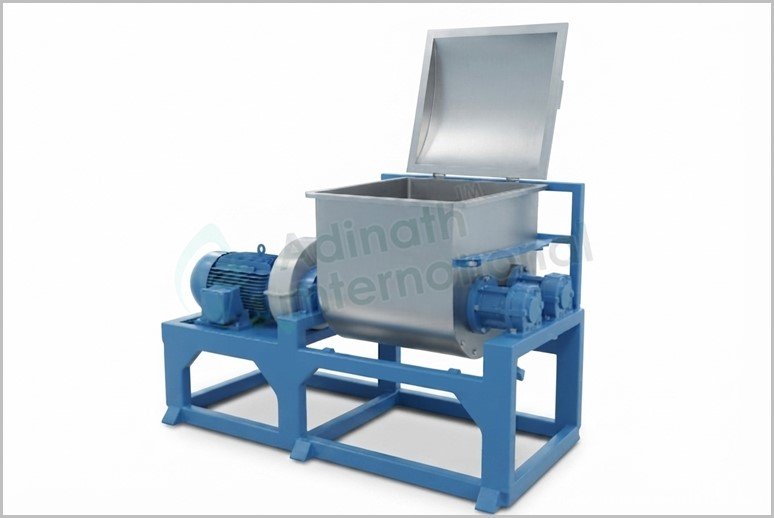
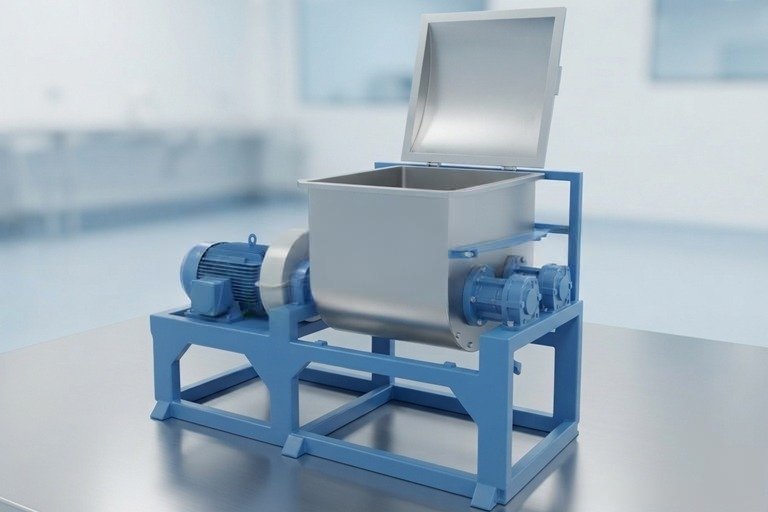
The Biscuit Dough Kneader is a high-performance, commercial-grade spiral mixer engineered specifically for demanding bakery operations. Whether you’re producing biscuits, cookies, bread, pizza bases, cakes, or pastries, this powerful dough kneader delivers consistent, professional results every time. Designed to handle heavy-duty mixing tasks, it transforms raw ingredients into smooth, elastic, perfectly developed dough while significantly reducing manual labor and production time in high-volume environments.
In today’s fast-paced food industry, efficiency is everything. Hotels, restaurants, caterers, cloud kitchens, and industrial bakeries rely on reliable bakery equipment like the Biscuit Dough Kneader to meet growing demand without compromising quality. Its robust spiral hook design ensures thorough, uniform mixing that gently develops gluten structure without overworking the dough. This careful process preserves the ideal texture, flavor, and rise for biscuits and other baked goods, resulting in superior end products that customers love.
Agitation Kinematics & Shear Dynamics
Product Extraction Methods
Tangential Blade Arrangement
Overlapping Blade Arrangement
Model | Capacity – Liters | Motor (H.P.) | ||
Working Capacity approx. | Gross Capacity approx. | General | Heavy Duty | |
ASM – 5 | 5 Liters | 8 Liters | 1 H.P. | 1.5 H.P. |
ASM – 10 | 10 Liters | 15 Liters | 1 H.P. | 1.5 H.P. |
ASM – 20 | 20 Liters | 30 Liters | 1.5 H.P. | 3 H.P. |
ASM – 50 | 50 Liters | 80 Liters | 5 H.P. | 7.5 H.P. |
ASM – 75 | 75 Liters | 110 Liters | 7.5 H.P. | 10 H.P. |
ASM – 100 | 100 Liters | 150 Liters | 10 H.P. | 15 H.P. |
* Power voltage can be adjusted as per customer’s domestic power voltage requirements.
* Rights of technical improvements & modification reserved.
* Illustrations & dimensions are shown for information purpose only.
It is a high-performance commercial-grade sigma/spiral mixer engineered for demanding bakery operations. It handles biscuit, cookie, bread, pizza base, cake, and pastry doughs, delivering consistent, elastic, perfectly developed dough while reducing manual labor and production time in hotels, restaurants, caterers, cloud kitchens, and industrial bakeries.
Models range from ASM-5 (approx. 5 L working / 8 L gross) to ASM-100 (approx. 100 L working / 150 L gross), corresponding to the 5–100 kg range. Motors are offered in general and heavy-duty versions (e.g., 1–1.5 HP for smaller models up to 10–15 HP for the 100 L unit). Voltage can be adjusted to local power requirements.
The machine is built from industrial-grade Mild Steel, SS 304, or SS 316. Surfaces can be finished in matte or mirror polish. Mild-steel versions receive a red-oxide primer base plus dual-layer protective epoxy paint for corrosion resistance.
It uses two counter-rotating ‘Z’-profile (sigma) blades that create tangential kneading action. The blades produce bulk movement, stretching, folding, splitting, and re-amalgamation of the dough, generating high shear against the trough walls for uniform mixing and gluten development without overworking the dough.
Tangential blades meet side-by-side, typically run at a 3:2 speed ratio, and deliver higher shear—ideal for heavy, high-viscosity biscuit doughs. Overlapping blades intermesh at the same speed, provide faster material interchange, and suit lighter or more free-flowing mixes with gentler action.
Emptying can be manual (hand-wheel) or automated (hydraulic). Additional options include vessel tipping, bottom-mounted discharge valves, or a lateral extrusion screw for controlled product removal.
Yes. Optional jackets allow external heating or cooling. The trough is insulated with high-density mineral wool and protected by external metal cladding, supporting consistent temperature-controlled batches.
An ultra-tight clearance (~2 mm) between the blades and trough walls minimizes product retention. PTFE shaft seals provide sanitary, food-grade sealing. The Z-blade geometry and low dead-spot design promote thorough homogenization.
It uniformly handles tough doughs containing fats, sugars, and flours, reducing manual effort by up to 80%. It is suitable for shortbread, digestive, sandwich biscuits, and recipes requiring controlled gluten development. Energy-efficient motors and durable construction deliver low maintenance and faster batch cycles for strong ROI.
Yes. Specialized add-ons include vacuum systems and controlled fluid-spray mechanisms. Jacketed versions, different discharge methods, blade configurations, and material/finish choices can be supplied to match specific production needs.
Algeria | Angola | Argentina | Australia | Austria | Bahrain | Bangladesh | Belarus | Belgium | Bolivia | Botswana | Brazil | Bulgaria | Canada | Chile | China | Colombia | Costa Rica | Cuba | Czech Republic | Denmark | Dominican Republic | Ecuador | Egypt | El Salvador | Ethiopia | Finland | France | Germany | Ghana | Greece | Guatemala | Haiti | Honduras | Hong Kong | Hungary | India | Indonesia | Iran | Ireland | Israel | Italy | Ivory Coast | Japan | Jordan | Kazakhstan | Kenya | Kuwait | Lebanon | Libya | Malaysia | Mexico | Mongolia | Morocco | Mozambique | Myanmar | Netherlands | New Zealand | Nicaragua | Nigeria | Norway | Oman | Pakistan | Panama | Paraguay | Peru | Philippines | Poland | Portugal | Qatar | Romania | Russia | Saudi Arabia | Senegal | Slovakia | Singapore | South Africa | South Korea | South Sudan | Spain | Sri Lanka | Sweden | Switzerland | Taiwan | Tanzania | Thailand | Trinidad and Tobago | Tunisia | Turkey | Uganda | Ukraine | United Arab Emirates | United Kingdom | United States | Uruguay | Uzbekistan | Venezuela | Vietnam | Zambia | Zimbabwe
Connect with our engineering team to discuss your specific production requirements. We provide customized, cGMP-compliant machinery solutions designed to optimize your manufacturing facility and maximize output.
©Adinath International | Theme Developed By Pharma Machinery Manufacturer I Website updated on: 15 October 2026
Request A Quick Quote
Biscuit Dough Kneader 5-kgs-10-kgs-20-kgs-50-kgs-100-kgs
Please drop your requirements, one of our technical expert will contact you in next 24 working hours.
WhatsApp us


