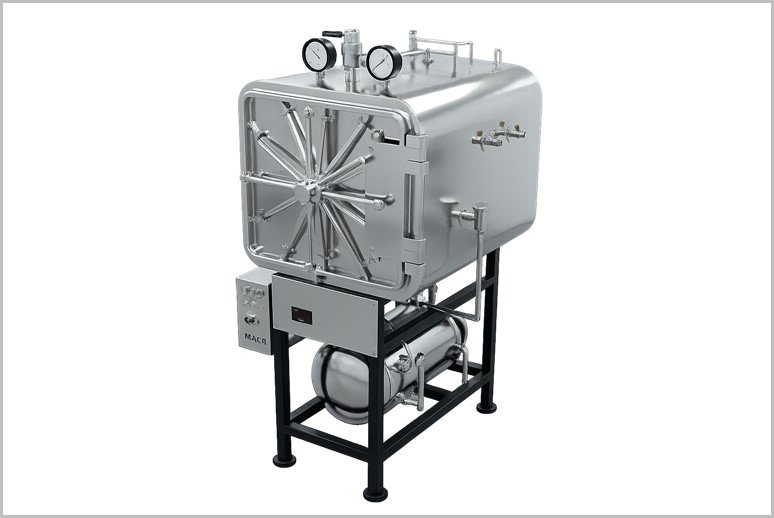
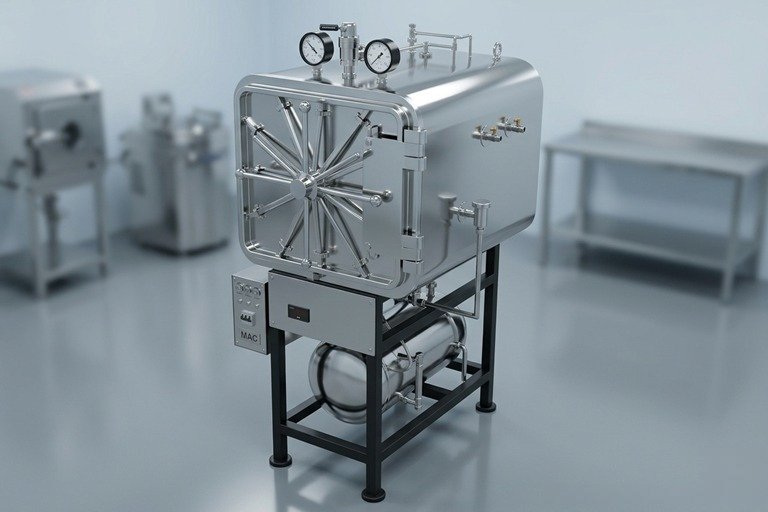
A horizontal autoclave sterilizer is a highly efficient steam sterilization system engineered for high-pressure, high-temperature processing of medical, laboratory, and industrial equipment. Using saturated steam under pressure, it effectively destroys bacteria, viruses, fungi, and even highly resistant bacterial spores on heat-stable materials such as surgical instruments, laboratory glassware, culture media, pipettes, and production tools.
Unlike vertical autoclaves, which feature an upright cylindrical chamber that often requires top-loading, horizontal autoclave sterilizers have a side-oriented chamber with a front-loading door. This design allows seamless loading and unloading using carts or trolleys, significantly improving ergonomics and workflow efficiency in busy environments.
Choosing the Right Horizontal Autoclave Sterilizer
A typical cycle in a horizontal autoclave sterilizer follows a controlled, multi-stage process validated for consistent results:
Modern units include digital controls, data logging, and sensors for precise monitoring of time, temperature, pressure, and F0 values, supporting audit-ready documentation.
* Power voltage can be adjusted as per customer’s domestic power voltage requirements.
* Rights of technical improvements & modification reserved.
* Illustrations & dimensions are shown for information purpose only.
A horizontal autoclave sterilizer is a steam sterilization system that uses saturated steam under high pressure and temperature to destroy bacteria, viruses, fungi, and resistant spores on heat-stable items such as surgical instruments, laboratory glassware, culture media, and production tools. Unlike vertical autoclaves (which typically use top-loading upright cylindrical chambers), it features a side-oriented chamber with a front-loading door. This design enables easier loading/unloading with carts or trolleys, improving ergonomics and workflow efficiency.
These sterilizers are typically built with robust stainless-steel chambers (SS 304 or SS 316) for excellent corrosion resistance and hygiene. Many models use double-walled or triple-walled construction with high-quality insulation to minimize heat loss and boost energy efficiency. Smooth internal surfaces and removable trays/shelves further support easy cleaning.
The process generally includes: loading items on perforated trays or carts; air removal (via gravity displacement, steam pulsing, or vacuum pumps); introduction of high-pressure steam to reach and hold the set temperature/pressure; controlled exhaust and cooling to avoid thermal shock; and optional vacuum-assisted drying. Sensors monitor parameters throughout, often with data logging for validation and traceability.
Standard cycles operate at around 121°C (for 15–30 minutes) or 134°C (for 3–5 minutes) at corresponding pressures (commonly in the 15–30 psi / 1–2 bar range). Moist heat denatures microbial proteins to achieve a sterility assurance level (SAL) of 10⁻⁶.
Key safety features include door interlocking systems that prevent opening under pressure, over-pressure and over-temperature cut-offs with visual/audible alarms, pressure relief valves, low-water-level protection with automatic monitoring, and compliance with standards such as ISO, CE, and ASME.
Units commonly support multiple cycles, including pre-vacuum, gravity displacement, and liquid cycles. This versatility allows effective sterilization of different load types (porous items, liquids, instruments, etc.) while ensuring thorough air removal and steam penetration.
Horizontal designs offer superior capacity for larger or bulkier loads, faster turnaround times, improved operational efficiency through front-loading and cart compatibility, enhanced energy efficiency from insulation, consistent uniform steam distribution, and long-term reliability from high-grade stainless-steel construction. They also support easier maintenance and programmable cycles.
They are widely applied in the pharmaceutical, nutraceutical, herbal, Ayurvedic, biotech, cosmetic, and chemical industries, as well as in hospitals, laboratories, research institutions, and healthcare facilities for sterilizing instruments, glassware, media, production tools, and related items.
Modern models feature automatic pressure and temperature control via digital or microprocessor-based systems (often with PLC and touchscreens), user-friendly panels displaying temperature, pressure, and cycle status, optional printers or data-logging for process documentation and validation, and sensors that track time, temperature, pressure, and F0 values for audit-ready records.
The front-loading horizontal chamber allows seamless placement of large, bulky, stacked, or flat loads using trays, shelves, or wheeled carts without excessive lifting or bending. This maximizes usable volume, reduces operator strain, supports higher throughput in busy environments (such as hospital CSSDs or pharmaceutical processing), and provides a more ergonomic alternative to top-loading vertical models. Capacity ranges from smaller units to large industrial models to suit laboratory, hospital, or production needs.
More Sterilization Equipments
 Horizontal Autoclave Rectangular
 Horizontal Cylindrical Autoclave
 Horizontal Rectangular Steam Sterilizer
 Sterilizer Autoclave Manufacturer
Algeria | Angola | Argentina | Australia | Austria | Bahrain | Bangladesh | Belarus | Belgium | Bolivia | Botswana | Brazil | Bulgaria | Canada | Chile | China | Colombia | Costa Rica | Cuba | Czech Republic | Denmark | Dominican Republic | Ecuador | Egypt | El Salvador | Ethiopia | Finland | France | Germany | Ghana | Greece | Guatemala | Haiti | Honduras | Hong Kong | Hungary | India | Indonesia | Iran | Ireland | Israel | Italy | Ivory Coast | Japan | Jordan | Kazakhstan | Kenya | Kuwait | Lebanon | Libya | Malaysia | Mexico | Mongolia | Morocco | Mozambique | Myanmar | Netherlands | New Zealand | Nicaragua | Nigeria | Norway | Oman | Pakistan | Panama | Paraguay | Peru | Philippines | Poland | Portugal | Qatar | Romania | Russia | Saudi Arabia | Senegal | Slovakia | Singapore | South Africa | South Korea | South Sudan | Spain | Sri Lanka | Sweden | Switzerland | Taiwan | Tanzania | Thailand | Trinidad and Tobago | Tunisia | Turkey | Uganda | Ukraine | United Arab Emirates | United Kingdom | United States | Uruguay | Uzbekistan | Venezuela | Vietnam | Zambia | Zimbabwe
Connect with our engineering team to discuss your specific production requirements. We provide customized, cGMP-compliant machinery solutions designed to optimize your manufacturing facility and maximize output.
©Adinath International | Theme Developed By Pharma Machinery Manufacturer I Website updated on: 15 October 2026
Request A Quick Quote
Horizontal Autoclave Sterilizer
Please drop your requirements, one of our technical expert will contact you in next 24 working hours.
WhatsApp us
