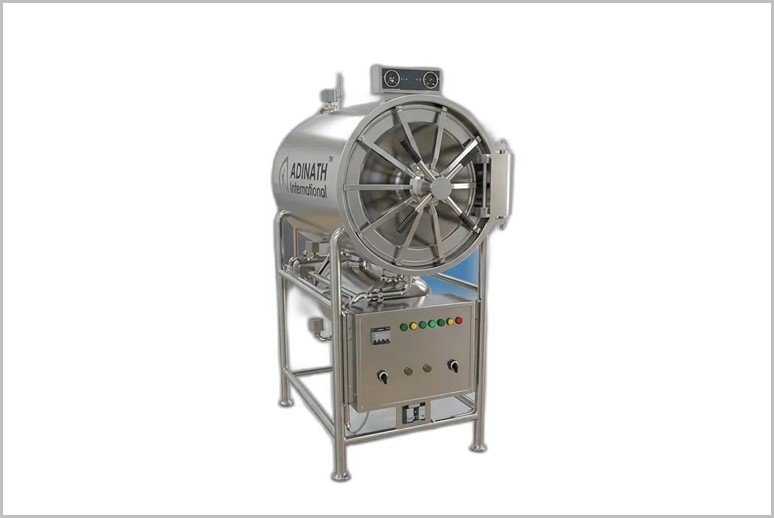
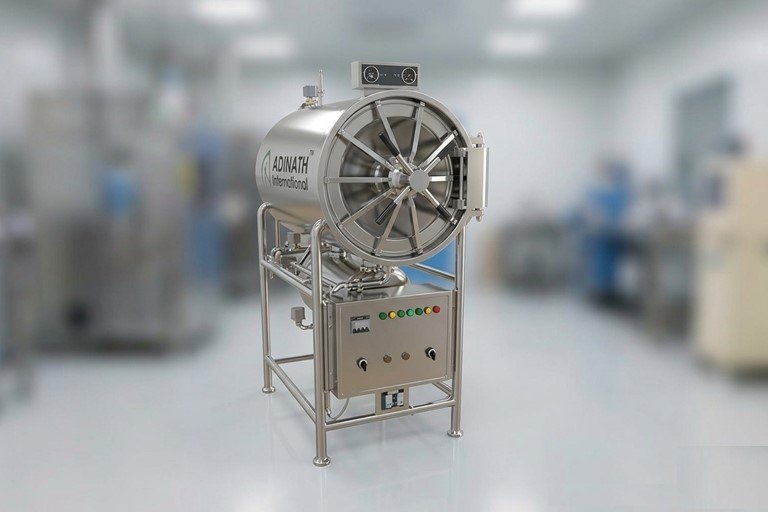
A horizontal cylindrical autoclave is a robust pressure vessel engineered for effective high-pressure, high-temperature steam sterilization. Widely used in laboratories, hospitals, pharmaceutical manufacturing, research facilities, and industrial settings, it delivers reliable elimination of bacteria, viruses, fungi, and resistant spores from instruments, equipment, glassware, media, and production materials. Its cylindrical chamber, oriented horizontally, combines structural strength with practical operational advantages.
The cylindrical geometry is a key engineering feature. Cylinders naturally distribute internal pressure more evenly than other shapes, allowing the horizontal cylindrical autoclave to safely withstand the demanding conditions of steam sterilization (typically 121°C to 134°C at 15–30 psi). This design enhances durability and longevity while maintaining excellent performance under repeated high-pressure cycles.
A standard cycle in a horizontal cylindrical autoclave follows a validated, multi-phase process:
Modern units include digital controllers, sensors, data logging, and compliance features that support traceability and regulatory audits.
* Power voltage can be adjusted as per customer’s domestic power voltage requirements.
* Rights of technical improvements & modification reserved.
* Illustrations & dimensions are shown for information purpose only.
Unlike vertical autoclaves with upright chambers that require top loading, horizontal cylindrical autoclaves feature a side-oriented chamber with a hinged or sliding door at one end. This configuration offers several practical benefits:
These features make the horizontal cylindrical steam sterilizer particularly suitable for facilities that prioritize efficiency and scalability.
Investing in a quality horizontal cylindrical autoclave delivers higher throughput, reduced cycle times, lower labor costs, and superior safety. Built with premium stainless steel (often 304 or 316L), these units incorporate multiple safety mechanisms including pressure relief valves, door interlocks, and over-temperature protection. Reputable models comply with international standards such as ISO 17665, EN 285, ASME, and CE marking.
When selecting equipment, experienced professionals evaluate chamber size, automation level, validation capabilities, energy efficiency, and manufacturer support. Facilities that emphasize EEAT (Experience, Expertise, Authoritativeness, Trustworthiness) choose suppliers with proven engineering expertise, comprehensive documentation, and strong after-sales service to ensure long-term compliance and performance.
A horizontal cylindrical autoclave is a robust pressure vessel designed for high-pressure, high-temperature steam sterilization of instruments, glassware, media, equipment, and production materials. The cylindrical chamber geometry distributes internal pressure more evenly than other shapes, allowing the unit to safely withstand typical sterilization conditions (121°C–134°C at 15–30 psi). This design enhances structural strength, durability, and longevity under repeated high-pressure cycles.
The chamber is oriented horizontally with a front-loading door, enabling effortless loading and unloading of large-volume or bulky loads. This setup supports the use of wheeled carts, reduces operator strain, and improves workflow efficiency compared with top-loading vertical models, making it practical for laboratories, hospitals, pharmaceutical plants, and industrial settings.
Units are available in single-door or double-door configurations. Double-door models support continuous workflow and sterile-area separation (pass-through design), allowing materials to move from a non-sterile loading side to a sterile unloading side while maintaining barrier integrity.
Chamber diameters generally range from 400 mm to 700 mm, with depths from 600 mm to 1300 mm, providing volumes typically between 79 and 500 liters. This range accommodates everything from laboratory-scale loads to industrial batches of bulky instruments or bulk media.
The autoclave operates in the 121°C–134°C temperature range (adjustable) at standard pressures around 0.22 MPa (approximately 15–30 psi). Typical hold times are 15–30 minutes at 121°C or 3–5 minutes at 134°C, ensuring complete microbial destruction through saturated steam.
A validated multi-phase cycle includes: air removal (via vacuum or gravity displacement), pressurization and heating with saturated steam, sterilization hold at the set temperature and pressure, vacuum-assisted drying to remove residual moisture, and controlled cooling/depressurization with door interlocks for operator safety. Digital controllers and sensors provide real-time monitoring and data logging.
A jacketed vessel improves heat-transfer efficiency, helps maintain uniform temperature, and reduces overall cycle times. Combined with strategically placed steam ports, it ensures consistent steam distribution throughout the chamber for reliable sterilization results.
Modern models feature automatic pressure and temperature control via digital or PLC-based panels with programmable cycles and real-time monitoring. An integrated vacuum pump enables efficient air removal for superior penetration into porous loads. Optional printer or USB connectivity supports complete cycle documentation for regulatory compliance and audits.
Safety interlocks prevent the door from opening under pressure. Additional protections include pressure relief valves, overheat protection, alarms, and robust stainless-steel construction. These features help prevent accidents and ensure safe operation during high-pressure cycles.
It is widely used in the pharmaceutical, nutraceutical, herbal, Ayurvedic, biotech, cosmetic, and chemical industries, as well as in hospitals, laboratories, research facilities, and industrial settings. Key benefits include large chamber capacity for bulk loads, uniform steam distribution, efficient vacuum-assisted drying, reduced cycle times via jacketed design, easy-to-clean smooth interiors, and long-term corrosion resistance from stainless-steel construction.
More Sterilization Equipments
 Cylindrical Autoclave
 Horizontal Autoclave Rectangular
 Horizontal Autoclave Sterilizer
 Cement Autoclave
Algeria | Angola | Argentina | Australia | Austria | Bahrain | Bangladesh | Belarus | Belgium | Bolivia | Botswana | Brazil | Bulgaria | Canada | Chile | China | Colombia | Costa Rica | Cuba | Czech Republic | Denmark | Dominican Republic | Ecuador | Egypt | El Salvador | Ethiopia | Finland | France | Germany | Ghana | Greece | Guatemala | Haiti | Honduras | Hong Kong | Hungary | India | Indonesia | Iran | Ireland | Israel | Italy | Ivory Coast | Japan | Jordan | Kazakhstan | Kenya | Kuwait | Lebanon | Libya | Malaysia | Mexico | Mongolia | Morocco | Mozambique | Myanmar | Netherlands | New Zealand | Nicaragua | Nigeria | Norway | Oman | Pakistan | Panama | Paraguay | Peru | Philippines | Poland | Portugal | Qatar | Romania | Russia | Saudi Arabia | Senegal | Slovakia | Singapore | South Africa | South Korea | South Sudan | Spain | Sri Lanka | Sweden | Switzerland | Taiwan | Tanzania | Thailand | Trinidad and Tobago | Tunisia | Turkey | Uganda | Ukraine | United Arab Emirates | United Kingdom | United States | Uruguay | Uzbekistan | Venezuela | Vietnam | Zambia | Zimbabwe
Connect with our engineering team to discuss your specific production requirements. We provide customized, cGMP-compliant machinery solutions designed to optimize your manufacturing facility and maximize output.
©Adinath International | Theme Developed By Pharma Machinery Manufacturer I Website updated on: 15 October 2026
Request A Quick Quote
Horizontal Cylindrical Autoclave
Please drop your requirements, one of our technical expert will contact you in next 24 working hours.
WhatsApp us
