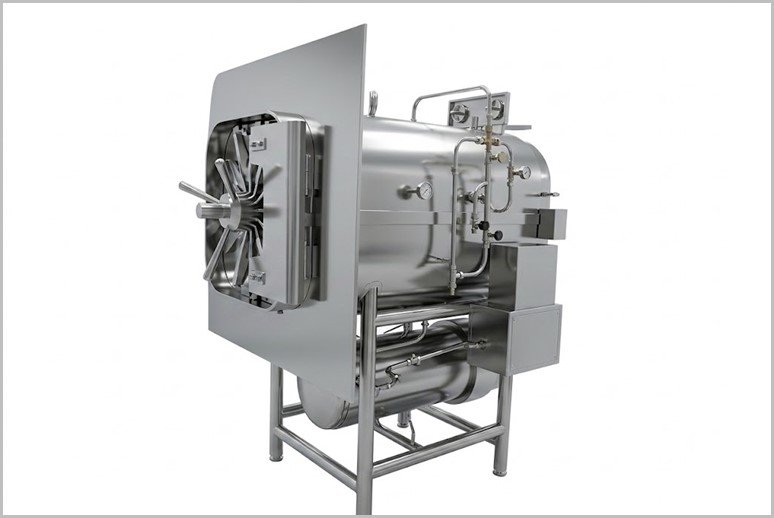
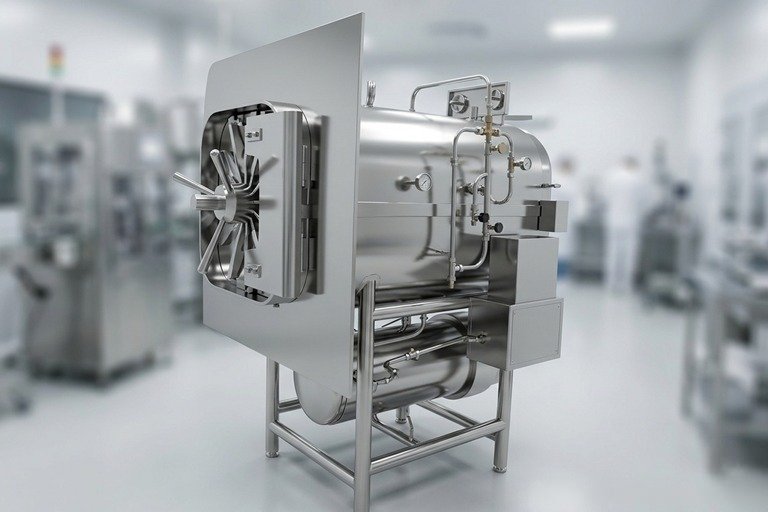
A horizontal rectangular steam sterilizer, commonly referred to as a rectangular autoclave, is a advanced high-pressure steam sterilization system designed for reliable decontamination of medical, laboratory, pharmaceutical, and industrial equipment. Its rectangular chamber provides superior loading flexibility compared to traditional cylindrical autoclaves, making it the preferred choice for processing bulkier, oddly shaped, or high-volume items such as surgical instrument sets, laboratory glassware, textiles, rubber goods, utensils, and complex medical devices.
By generating saturated steam under pressure, these units achieve exceptional microbial kill rates exceeding 99.9999% (SAL 10⁻⁶), effectively eliminating bacteria, viruses, fungi, and resistant spores while meeting stringent international standards including ISO 17665 and AAMI ST79.
Conclusion
This design outperforms cylindrical models in space efficiency but may require more maintenance for the rectangular seals.
* Power voltage can be adjusted as per customer’s domestic power voltage requirements.
* Rights of technical improvements & modification reserved.
* Illustrations & dimensions are shown for information purpose only.
Horizontal rectangular steam sterilizers vary by manufacturer, but common attributes include:
A horizontal rectangular steam sterilizer (also called a rectangular autoclave) is an advanced high-pressure steam sterilization system used for decontaminating medical, laboratory, pharmaceutical, and industrial equipment. Its rectangular chamber provides superior loading flexibility compared with traditional cylindrical models, making it ideal for bulkier, oddly shaped, or high-volume items such as surgical instrument sets, laboratory glassware, textiles, rubber goods, utensils, and complex medical devices. The geometry maximizes usable internal volume while supporting efficient cart or trolley loading.
By generating saturated steam under pressure, the unit achieves microbial kill rates exceeding 99.9999% (sterility assurance level of 10⁻⁶). It is designed to meet stringent international standards, including ISO 17665 and AAMI ST79, supporting reliable decontamination for patient safety, research integrity, and regulatory compliance.
Chamber volumes range from approximately 78 liters to 600 liters to suit different throughput needs. Standard operating temperature is 121°C (upgradeable to 135°C for certain applications), with adjustable pressure from 5 to 30 psi. Power supply is normally 440 V, 3-phase AC (single-phase available on request), and voltage can be adapted to local requirements.
Items are loaded on perforated trays or carts. A pre-vacuum pump evacuates air (often verified by Bowie-Dick test) for deep steam penetration. Saturated steam is then injected via the jacket and chamber, and the set temperature/pressure is held for 3–30 minutes depending on the load. Steam is exhausted, followed by hot-air drying; total cycle time is typically 30–90 minutes. Optional water-jacket cooling can speed unloading.
The rectangular geometry maximizes usable volume and accommodates irregular or bulky loads more efficiently than cylindrical chambers. The horizontal front-loading door allows smooth entry of trolleys or carts, enabling rapid loading and unloading of heavy instrument sets with less physical strain and higher throughput in hospitals, laboratories, and pharmaceutical facilities.
A high-performance vacuum system thoroughly removes air, allowing deep steam penetration into dense or porous materials. Uniform steam circulation is achieved through multiple inlets and a carefully engineered baffle system, ensuring consistent sterilization throughout the chamber and helping reduce the risk of wet packs.
Yes, dual-door pass-through options are available. These support strict separation between clean and sterile zones in controlled environments, allowing materials to move from a non-sterile loading side to a sterile unloading side while maintaining barrier integrity—ideal for pharmaceutical cleanrooms or hospital sterile processing departments.
Units feature heavy-duty stainless-steel construction (typically SS 304 or 316L) with smooth, crevice-free interiors for easy cleaning. A jacketed vessel with efficient insulation (often triple-walled with glass wool) stabilizes temperature and reduces energy use. Safety elements include advanced interlocks that prevent door opening under pressure, pressure-relief mechanisms, triple safety valves, vacuum breakers, and other protections for operators and equipment.
Fully automatic PLC-controlled systems offer precise temperature, pressure, and time management with customizable programs and digital/LCD displays. Integrated data recording plus optional printer or USB output provide complete cycle documentation for audits. Heating can use electric immersion heaters or a built-in steam generator, with optional steam/water jackets for faster heating and cooling.
Key benefits include higher loading capacity for bulk or irregular loads, shorter overall cycle times, improved energy efficiency from the jacketed and insulated design, excellent temperature uniformity, and reduced risk of wet packs. Robust 316L stainless-steel construction ensures long-term durability and corrosion resistance under demanding daily use in pharmaceutical, biotech, hospital, laboratory, and related industries.
More Sterilization Equipments
 Horizontal Autoclave Rectangular
 Horizontal Autoclave Sterilizer
 Steam Sterilizer
 2 Cubic Feet EO Gas Sterilizer
Algeria | Angola | Argentina | Australia | Austria | Bahrain | Bangladesh | Belarus | Belgium | Bolivia | Botswana | Brazil | Bulgaria | Canada | Chile | China | Colombia | Costa Rica | Cuba | Czech Republic | Denmark | Dominican Republic | Ecuador | Egypt | El Salvador | Ethiopia | Finland | France | Germany | Ghana | Greece | Guatemala | Haiti | Honduras | Hong Kong | Hungary | India | Indonesia | Iran | Ireland | Israel | Italy | Ivory Coast | Japan | Jordan | Kazakhstan | Kenya | Kuwait | Lebanon | Libya | Malaysia | Mexico | Mongolia | Morocco | Mozambique | Myanmar | Netherlands | New Zealand | Nicaragua | Nigeria | Norway | Oman | Pakistan | Panama | Paraguay | Peru | Philippines | Poland | Portugal | Qatar | Romania | Russia | Saudi Arabia | Senegal | Slovakia | Singapore | South Africa | South Korea | South Sudan | Spain | Sri Lanka | Sweden | Switzerland | Taiwan | Tanzania | Thailand | Trinidad and Tobago | Tunisia | Turkey | Uganda | Ukraine | United Arab Emirates | United Kingdom | United States | Uruguay | Uzbekistan | Venezuela | Vietnam | Zambia | Zimbabwe
Connect with our engineering team to discuss your specific production requirements. We provide customized, cGMP-compliant machinery solutions designed to optimize your manufacturing facility and maximize output.
©Adinath International | Theme Developed By Pharma Machinery Manufacturer I Website updated on: 15 October 2026
Request A Quick Quote
Horizontal Rectangular Steam Sterilizer
Please drop your requirements, one of our technical expert will contact you in next 24 working hours.
WhatsApp us
