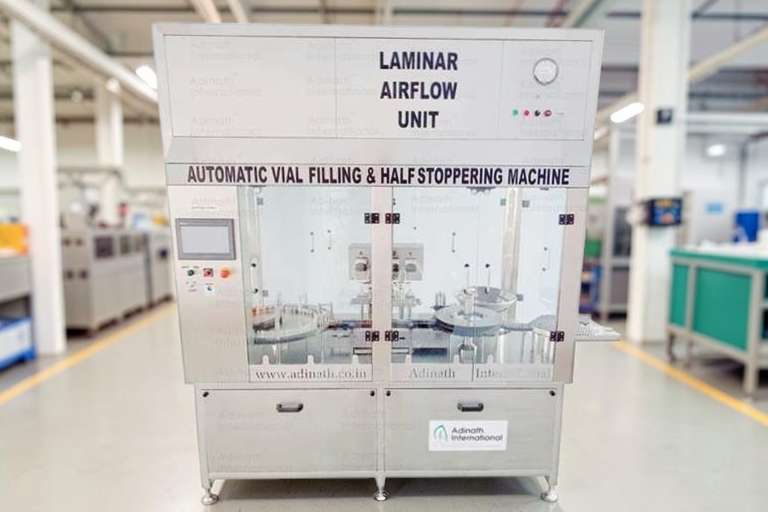
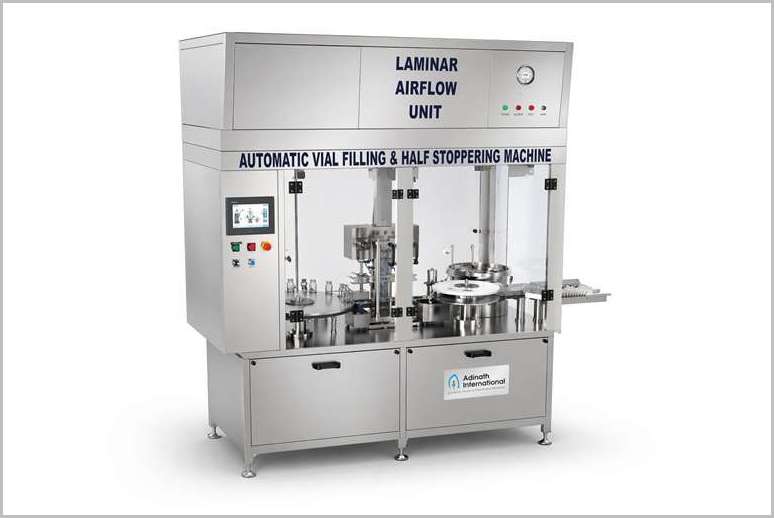
A Vial Packaging Machine is advanced automated equipment designed to fill, seal, label, and package small glass or plastic vials with speed, accuracy, and consistency. Widely used in the pharmaceutical, biotechnology, cosmetic, and chemical industries, it helps manufacturers handle sterile liquids, powders, and semi-solid products in both single-dose and multi-dose formats.
In pharmaceutical manufacturing, vial packaging machines are essential for packaging injectables, vaccines, antibiotics, and oncology drugs, where even a small error can affect product safety and patient health. By automating the entire vial handling process, these machines reduce manual intervention, which significantly lowers the risk of contamination and ensures every vial meets strict quality standards.
Compliance is another major reason manufacturers invest in modern vial packaging systems. Built to meet cGMP (Current Good Manufacturing Practices) and other global regulatory requirements, these machines support clean, controlled, and traceable production environments. Their precise dosing and sealing performance also minimizes product wastage, helping companies save on costly raw materials and improve overall efficiency.
Vial packaging machines are especially valuable for high-volume operations, such as large-scale vaccine production, where speed and accuracy must go hand in hand. Whether you run a small laboratory facility or a full-scale production plant, an automated vial packaging line delivers reliable output, consistent product quality, and long-term cost savings.
Beyond pharmaceuticals, cosmetic and chemical companies also rely on these machines to package serums, essential oils, reagents, and specialty chemicals in compact vials with a professional, leak-proof finish.
If you are looking for a dependable vial packaging machine to improve productivity, maintain sterility, and meet regulatory standards, choosing the right equipment is a smart investment for your business growth and product safety.
The machine operates on a continuous or intermittent (indexing) motion principle in a controlled aseptic environment to prevent contamination. Here’s the typical sequence:
The entire process is PLC-controlled with servo motors for precision, speed (up to hundreds of vials per minute), and minimal human intervention.
Model | ALVF-40 | ALVF-80 | ALVF-120 | ALVF – 250 |
Filling Heads | Two | Four | Eight | Twelve |
Production Rate | Up to 40 Vials/Minute | Up to 80 Vials/Minute | Up to 150 Vials/Minute | Up to 250 Vials/Minute |
Vial Diameter | 15mm to 70mm | 15mm to 70mm | 15mm to 70mm | 15mm to 70mm |
Vial Height | 25mm to 140mm | 25mm to 140mm | 25mm to 140mm | 25mm to 140mm |
Filling Precision | ±1% | ±1% | ±1% | ±1% |
Power Required | 1 H.P. | 1.5 H.P. | 2 H.P. | 2 H.P. |
Electrical Characteristics | 440 Volts, 3 Phase, 50 Hertz | 440 Volts, 3 Phase, 50 Hertz | 440 Volts, 3 Phase, 50 Hertz | 440 Volts, 3 Phase, 50 Hertz |
Overall Dimension | 2050mm (L) x 850mm (W) x 1700mm (H) | 2200mm (L) x 850mm (W) x 1700mm (H) | 3000mm (L) x 945mm (W) x 1700mm (H) | 3500mm (L) x 945mm (W) x 1700mm (H) |
* Power voltage can be adjusted as per customer’s domestic power voltage requirements.
* Rights of technical improvements & modification reserved.
* Illustrations & dimensions are shown for information purpose only.
Vial Packaging Machines often integrate multiple stages into a single line or modular system. A typical process flow includes:
A Vial Packaging Machine is a fully automatic or semi-automatic system designed to fill, stopper, cap/seal, inspect, and prepare small glass or plastic vials containing sterile liquids, powders, or semi-solids. It is widely used in the pharmaceutical, biotech, cosmetic, and chemical industries for packaging injectables, vaccines, antibiotics, and other parenteral products. The machine ensures high precision, sterility, and compliance with cGMP, FDA, and EU guidelines while minimizing contamination and product waste.
We offer a range of high-speed models to suit various production needs:
All models handle vial diameters from 15mm to 70mm, heights from 25mm to 140mm, and fill volumes from 2ml to 250ml. Speeds are adjustable via variable frequency drive, and the machines include a digital vial counter for easy monitoring
Our Vial Packaging Machines deliver excellent filling accuracy of ±1% (and up to ±0.5% depending on the pump technology). They can handle a wide range of products, including:
Product contact parts are made of high-quality AISI SS 316L to ensure compatibility and prevent contamination. Features like the “No Vial – No Filling” system further enhance safety and reduce wastage.
Yes. The machine is designed for operation in controlled aseptic environments, including ISO 5 / Class 100 cleanrooms. It supports advanced features such as:
This ensures complete sterility and compliance with stringent pharmaceutical regulations.
The main benefits include:
These features make it ideal for both small-batch clinical trials and large-scale commercial production.
Yes — Adinath International Vial Packaging Machine complies to cGMP, MHRA, FDA and WHO-GMP standards, with optional CE marked equipments and 21 CFR Part 11 software compliance for the HMI/PLC. Machine contact parts having Stainless Steel 316L grade materials with validation documents having IQ, OQ, DQ validation protocols as optional. Organization is ISO 9001:2015 certified.
Manufacturing lead time is generally 7 to 14 weeks from order confirmation. Further it takes 2 to 8 weeks for international shipping depending upon destination. Order can be expediate sooner or later as per specific buying requirements. Destination specific certifications like US FDA, EU, ANVISA, SFDA. CE can add 3 to 6 weeks additionally.
Yes, Adinath International Vial Packaging Machine export this machine to more than 48 countries of this world including America, Europe, Asia, Middle East, Africa, CIS and Australia sub continents. Please visit our clientele page for complete list of our customers worldwide. Located at Ahmedabad, India having world class infrastructure.
Service of skilled engineers and technicians provided for technical support of supplied equipments. Installations, commissioning, training and IQ, OQ, DQ validations performed by qualified engineers. Remote support through video call, phone, email and other modes provided for international installations. Spare parts of Vial Packaging Machine stocked at our premises in Ahmedabad and shipped immediately after ordering. Standard 12 months manufacturing warranty included with supplied equipment.
More Vial Filling Machines
 Vial Powder Packaging Machine
 Aseptic Vial Filler Capper
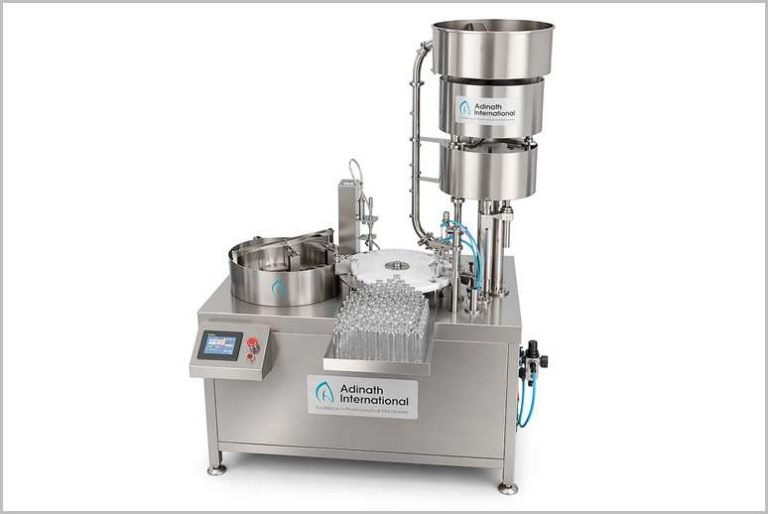 Automatic Vial Filler
 Automatic Vial Filling Equipment
Algeria | Angola | Argentina | Australia | Austria | Bahrain | Bangladesh | Belarus | Belgium | Bolivia | Botswana | Brazil | Bulgaria | Canada | Chile | China | Colombia | Costa Rica | Cuba | Czech Republic | Denmark | Dominican Republic | Ecuador | Egypt | El Salvador | Ethiopia | Finland | France | Germany | Ghana | Greece | Guatemala | Haiti | Honduras | Hong Kong | Hungary | India | Indonesia | Iran | Ireland | Israel | Italy | Ivory Coast | Japan | Jordan | Kazakhstan | Kenya | Kuwait | Lebanon | Libya | Malaysia | Mexico | Mongolia | Morocco | Mozambique | Myanmar | Netherlands | New Zealand | Nicaragua | Nigeria | Norway | Oman | Pakistan | Panama | Paraguay | Peru | Philippines | Poland | Portugal | Qatar | Romania | Russia | Saudi Arabia | Senegal | Slovakia | Singapore | South Africa | South Korea | South Sudan | Spain | Sri Lanka | Sweden | Switzerland | Taiwan | Tanzania | Thailand | Trinidad and Tobago | Tunisia | Turkey | Uganda | Ukraine | United Arab Emirates | United Kingdom | United States | Uruguay | Uzbekistan | Venezuela | Vietnam | Zambia | Zimbabwe
Connect with our engineering team to discuss your specific production requirements. We provide customized, cGMP-compliant machinery solutions designed to optimize your manufacturing facility and maximize output.
©2012-2026 Adinath International | Theme Developed By Pharma Machinery Manufacturer I Website updated on: 27 November 2026
Request A Quick Quote
Vial Packaging Machine
Please drop your requirements, one of our technical expert will contact you in next 24 working hours.
WhatsApp us
