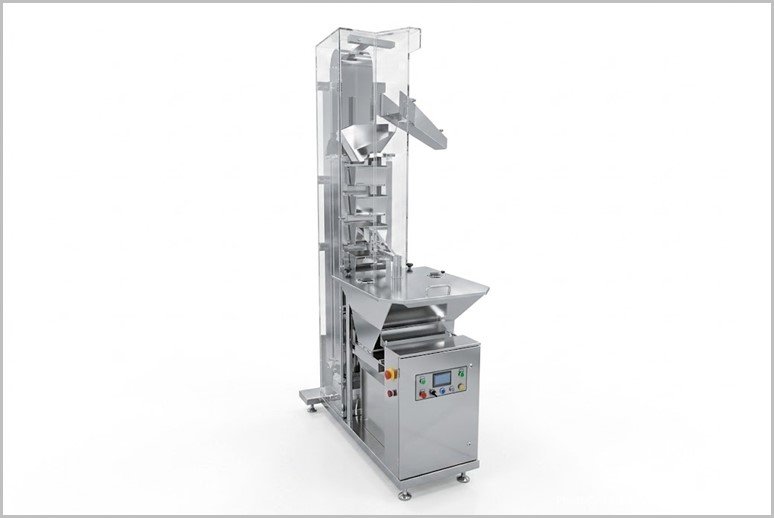
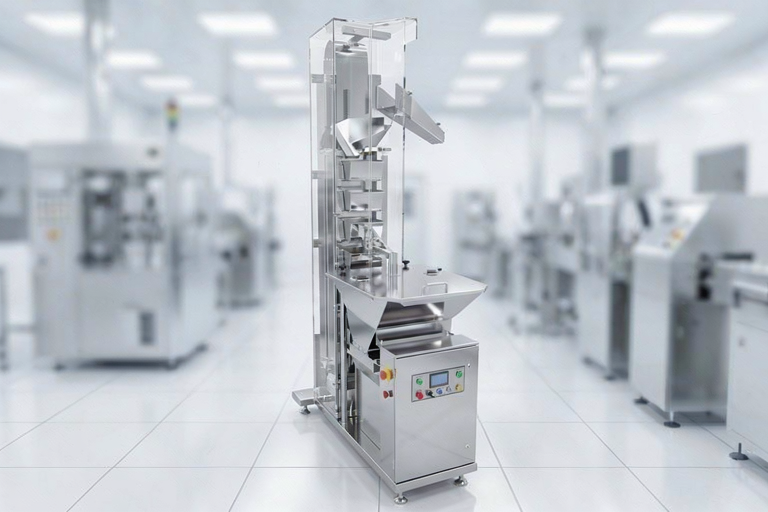
In modern high-speed pharmaceutical manufacturing and packaging lines, maintaining a seamless, uninterrupted flow of solid dosage forms is critical to overall plant productivity. At the heart of this automated material transfer lies the Automatic Tablet Elevator—frequently referred to in the industry as a tablet feeder, bulk product elevator, or tablet lift.
This specialized packaging machinery is engineered to automatically elevate tablets, capsules, caplets, and similar solid oral dosage forms from a floor-mounted feed hopper to the elevated infeed hopper of downstream packaging systems. By bridging the height gap between primary production or inspection units and high-speed packaging machinery, automatic tablet elevators eliminate manual lifting bottlenecks, reduce product breakage, and support strict cGMP compliance in cleanroom environments.
Expertise and Compliance in Tablet Elevator Manufacturing
An Automatic Tablet Elevator (also called a tablet feeder, bulk product elevator, or tablet lift) is specialized packaging machinery that automatically elevates tablets, capsules, caplets, and similar solid oral dosage forms from a floor-mounted feed hopper to the elevated infeed hopper of downstream packaging systems such as counters or blister packers.
Tablets or capsules are loaded into a low-profile floor-level hopper. A vibratory feeder transfers product into a pneumatic or magnetic-belt scoop/bucket. Level sensors trigger the lift, which gently elevates and tips the product into the packaging machine hopper. “Call” sensors synchronize the elevator with downstream equipment to maintain continuous supply.
It is designed for solid oral dosage forms including tablets, capsules, and caplets. It supports a wide range of sizes and shapes commonly used in pharmaceutical, nutraceutical, and related industries while minimizing breakage or damage.
The machine uses stainless steel (SS 304/316) construction with pharma-grade contact parts for full cGMP compliance. It features a fully enclosed design with transparent polycarbonate safety guards, tool-free or quick-release disassembly of hopper, scoop, and chute for fast cleaning, and dust extraction points to remove fine particles.
The low-profile hopper allows ergonomic, floor-level loading, eliminating the need to manually lift heavy drums or boxes. This reduces operator physical strain, improves workplace safety, and supports cleanroom operations.
Typical feed capacity ranges from 280–300 kg/hr or up to 12,000–24,000 tablets per minute (depending on model and product size). Options include single or dual (Y-chute) discharge to feed one or two hoppers simultaneously, with adjustable discharge height (typically up to 2000 mm or customized).
It uses automatic level sensors and “call” sensors that communicate with downstream machines (tablet counters, blister packers, etc.). This maintains consistent product levels in the receiving hopper and prevents overfilling or supply interruptions without creating bottlenecks.
Yes. It features PLC + HMI/touchscreen controls that are simple enough for unskilled operators. Contact parts can be disassembled tool-free or with quick-release mechanisms for rapid cleaning and batch changeovers, supporting efficient multi-product lines.
It is commonly applied in the pharmaceutical, nutraceutical, herbal, Ayurvedic, biotech, cosmetic, and chemical industries—anywhere high-volume, gentle transfer of solid dosage forms is required between production and packaging stages.
Key benefits include elimination of manual lifting and feeding, improved operator ergonomics, higher production efficiency and throughput, gentle product handling that minimizes breakage, consistent hopper levels via sensors, and hygienic GMP-compliant stainless-steel construction.
Algeria | Angola | Argentina | Australia | Austria | Bahrain | Bangladesh | Belarus | Belgium | Bolivia | Botswana | Brazil | Bulgaria | Canada | Chile | China | Colombia | Costa Rica | Cuba | Czech Republic | Denmark | Dominican Republic | Ecuador | Egypt | El Salvador | Ethiopia | Finland | France | Germany | Ghana | Greece | Guatemala | Haiti | Honduras | Hong Kong | Hungary | India | Indonesia | Iran | Ireland | Israel | Italy | Ivory Coast | Japan | Jordan | Kazakhstan | Kenya | Kuwait | Lebanon | Libya | Malaysia | Mexico | Mongolia | Morocco | Mozambique | Myanmar | Netherlands | New Zealand | Nicaragua | Nigeria | Norway | Oman | Pakistan | Panama | Paraguay | Peru | Philippines | Poland | Portugal | Qatar | Romania | Russia | Saudi Arabia | Senegal | Slovakia | Singapore | South Africa | South Korea | South Sudan | Spain | Sri Lanka | Sweden | Switzerland | Taiwan | Tanzania | Thailand | Trinidad and Tobago | Tunisia | Turkey | Uganda | Ukraine | United Arab Emirates | United Kingdom | United States | Uruguay | Uzbekistan | Venezuela | Vietnam | Zambia | Zimbabwe
Connect with our engineering team to discuss your specific production requirements. We provide customized, cGMP-compliant machinery solutions designed to optimize your manufacturing facility and maximize output.
©Adinath International | Theme Developed By Pharma Machinery Manufacturer I Website updated on: 15 October 2026
Request A Quick Quote
Automatic Tablet Elevator
Please drop your requirements, one of our technical expert will contact you in next 24 working hours.
WhatsApp us


