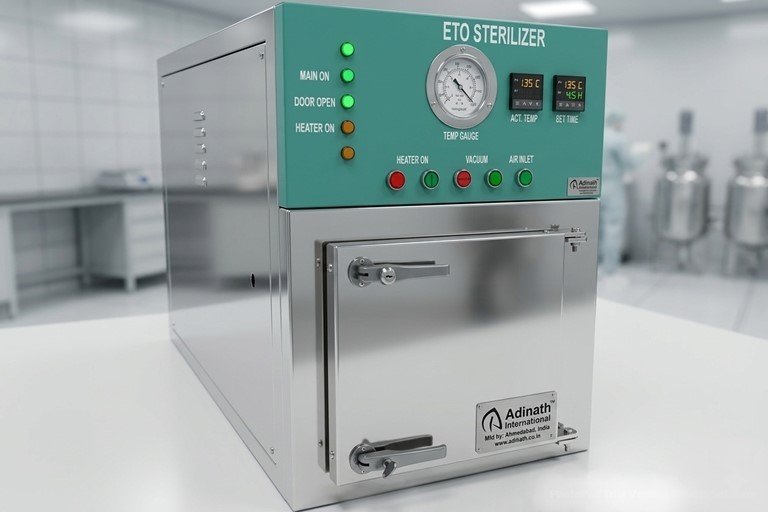
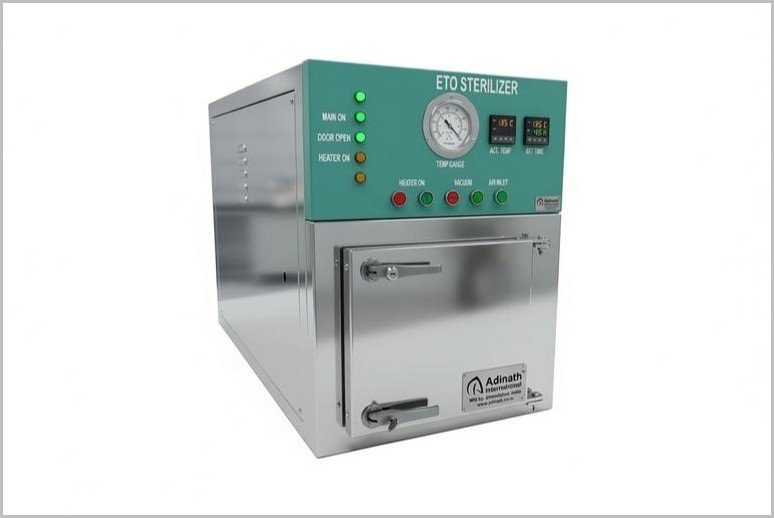
In the demanding world of healthcare, pharmaceuticals, and precision manufacturing, maintaining absolute sterility is non-negotiable. An EO Sterilizer Machine, also widely known as an Ethylene Oxide Sterilizer, stands as one of the most effective and versatile solutions for sterilizing items that cannot tolerate high heat or moisture. Unlike traditional steam autoclaves or dry heat ovens, EO sterilization operates at low temperatures, making it the preferred method for delicate, complex, and heat-sensitive materials.
An Ethylene Oxide (EO) Sterilizer is a specialized chamber system that uses EO gas — a potent alkylating agent — to eliminate bacteria, viruses, fungi, and spores. The gas penetrates deep into packaging materials, intricate device lumens, and porous surfaces, disrupting the DNA and proteins of microorganisms. This process achieves an exceptionally high Sterility Assurance Level (SAL) of 10⁻⁶, meaning the probability of a single viable microorganism surviving is one in a million.
EO sterilization typically runs at controlled low temperatures between 80–150°F (27–66°C) with precise humidity and vacuum/pressure cycles. This gentle approach ensures that sensitive medical equipment remains undamaged while still meeting stringent regulatory standards set by bodies like the FDA, ISO 11135, and AAMI.
EO sterilizers use a sealed chamber where items are placed in breathable packaging. The machine injects a microdose of EO gas (often mixed with inert gases like CO₂ or nitrogen for safety). Vacuum and pressure cycles ensure even distribution. Built-in sensors monitor parameters in real-time, with traceability features for batch reporting. Aeration can take hours to days, often in dedicated chambers. Advanced models use flexible chamber technology to minimize gas usage and reduce environmental impact.
Core Advantages Over Steam Sterilization
Manufacturing Range & Control Configurations
As a premier Indian manufacturer of ethylene oxide sterilizers, we offer systems engineered in two distinct operational tiers:
Model | AETOS – 2.6 | AETOS – 4.5 | AETOS – 8 |
Working Capacity in Cu. Ft. | 2.6 | 4.5 | 8 |
Working Volume | 70 Liters | 125 Liters | 200 Liters |
Chamber Size | 12” (W) x 12” (H) x 32”
| 12” (W) x 12” (H) x 54” (D) OR 15” (W) x 15” (H) x 36” (D) | 20” (W) x 18” (H) x 38” (D) OR 16” (W) x 16” (H) x 54” (D) |
Sterilant Gas | 40 grams cartridge | 100 grams cartridge | 170 grams cartridge |
Sterilization Cycle | Warm & Cold Cycles are possible. | Warm & Cold Cycles are possible. | Warm & Cold Cycles are possible. |
Aeration | In-built aeration facility provided. | In-built aeration facility provided. | In-built aeration facility provided. |
Utility | Compressed Air (100 psig) | Compressed Air (100 psig) | Compressed Air (100 psig) |
Power Supply | 1 K.W. | 2 K.W. | 2.5 K.W. |
Power Voltage | 220 volts, Single Phase, 50 Hertz | 220 volts, Single Phase, 50 Hertz | 220 volts, Single Phase, 50 Hertz |
* Power voltage can be adjusted as per customer’s domestic power voltage requirements.
* Rights of technical improvements & modification reserved.
* Illustrations & dimensions are shown for information purpose only.
Facilities with extensive experience using EO sterilization report superior compatibility with a wide range of materials compared to alternatives. The process’s low-temperature nature preserves the integrity of polymers, electronics, and delicate optics found in today’s advanced medical technologies. Authoritative sources and industry guidelines consistently highlight EO as indispensable for certain product categories where no viable substitute exists.
When selecting an EO Sterilizer Machine, factors such as chamber size, cycle efficiency, compliance with ISO 11135:2014, and integrated safety monitoring systems should be prioritized. Reputable manufacturers focus on robust construction, validated cycles, and comprehensive training support to help facilities maintain trustworthiness and operational excellence.
Ethylene oxide is a regulated substance due to its toxicity at high concentrations. Leading providers implement state-of-the-art scrubbers, catalytic converters, and real-time monitoring to ensure emissions remain well below permissible exposure limits. Trained personnel follow strict protocols, and facilities undergo regular audits to uphold the highest standards of patient and environmental safety.
It operates at low temperatures (typically 27–66°C / ~50°C average) as a dry process, preserving the integrity of polymers, electronics, optics, and delicate items that would be damaged by steam autoclaves or dry-heat methods, while still achieving a Sterility Assurance Level (SAL) of 10⁻⁶.
A full treatment cycle, including preconditioning, gas exposure, exhaust, and aeration, is generally completed in approximately 8 hours, with built-in aeration helping remove residual gas.
Ethylene oxide acts as a potent alkylating agent that penetrates packaging, complex geometries, and porous materials, disrupting the DNA and proteins of bacteria, viruses, fungi, and spores.
Systems are offered in semi-automatic configurations (analog push-button control) and fully automatic PLC-HMI versions with touchscreen interfaces for precise, hands-off cycle execution.
Models include AETOS-2.6 (2.6 cu. ft. / 70 L), AETOS-4.5 (4.5 cu. ft. / 125 L), and AETOS-8 (8 cu. ft. / 200 L), with larger industrial units available up to 40 cubic meters and modular designs for scalability.
They typically require compressed air at 100 psig and operate on 220 V single-phase power (1–2.5 kW depending on model); voltage can be adjusted to match local requirements.
Yes—it is also effective for preventing biological proliferation in spices, dried nuts, packaged grains, and various food items, in addition to pharmaceutical, biotech, cosmetic, and related industries.
Product-contact surfaces are fabricated from premium stainless steel (SS 304 or SS 316), with modular chamber designs and optional IQ/OQ/DQ validation documentation for regulatory compliance.
The process includes an exhaust phase followed by in-built aeration (degassing) to reduce residues below safe limits; modern systems also incorporate scrubbers, catalytic converters, and real-time monitoring to keep emissions within permissible exposure limits.
They are designed to meet requirements from bodies such as the FDA, ISO 11135, and AAMI, with emphasis on validated cycles, operator training, emissions control, and regular facility audits for patient and environmental safety.
More Sterilization Equipments
 2 Cubic Feet EO Gas Sterilizer
 3 Cubic Feet EO Sterilizer
 4 Cubic Feet EO Gas Sterilizer
 EO Cartridge Sterilizer
Algeria | Angola | Argentina | Australia | Austria | Bahrain | Bangladesh | Belarus | Belgium | Bolivia | Botswana | Brazil | Bulgaria | Canada | Chile | China | Colombia | Costa Rica | Cuba | Czech Republic | Denmark | Dominican Republic | Ecuador | Egypt | El Salvador | Ethiopia | Finland | France | Germany | Ghana | Greece | Guatemala | Haiti | Honduras | Hong Kong | Hungary | India | Indonesia | Iran | Ireland | Israel | Italy | Ivory Coast | Japan | Jordan | Kazakhstan | Kenya | Kuwait | Lebanon | Libya | Malaysia | Mexico | Mongolia | Morocco | Mozambique | Myanmar | Netherlands | New Zealand | Nicaragua | Nigeria | Norway | Oman | Pakistan | Panama | Paraguay | Peru | Philippines | Poland | Portugal | Qatar | Romania | Russia | Saudi Arabia | Senegal | Slovakia | Singapore | South Africa | South Korea | South Sudan | Spain | Sri Lanka | Sweden | Switzerland | Taiwan | Tanzania | Thailand | Trinidad and Tobago | Tunisia | Turkey | Uganda | Ukraine | United Arab Emirates | United Kingdom | United States | Uruguay | Uzbekistan | Venezuela | Vietnam | Zambia | Zimbabwe
Connect with our engineering team to discuss your specific production requirements. We provide customized, cGMP-compliant machinery solutions designed to optimize your manufacturing facility and maximize output.
©Adinath International | Theme Developed By Pharma Machinery Manufacturer I Website updated on: 15 October 2026
Request A Quick Quote
EO Sterilizer Machine
Please drop your requirements, one of our technical expert will contact you in next 24 working hours.
WhatsApp us
