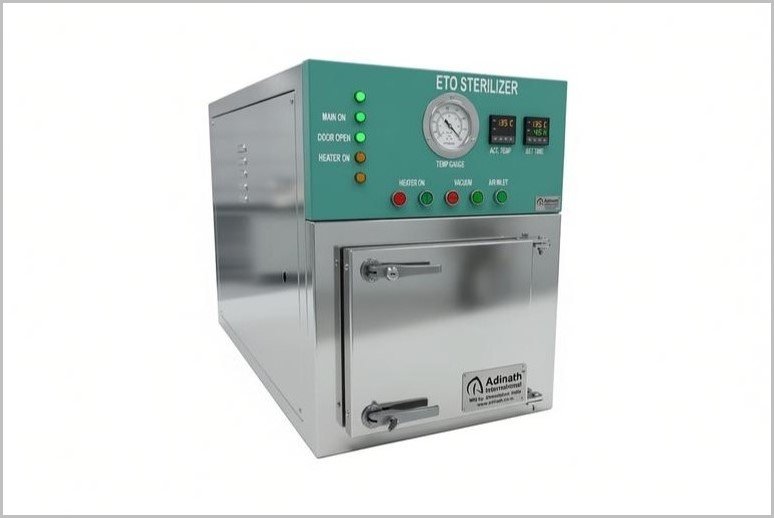
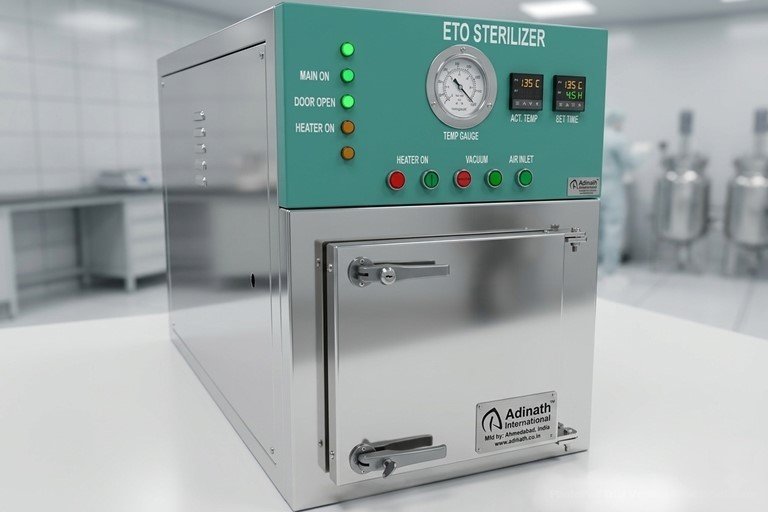
In healthcare and medical device manufacturing, sterilizing delicate, heat- or moisture-sensitive instruments requires specialized technology. A 3 cubic feet EO sterilizer provides an ideal solution. This compact ethylene oxide gas sterilization system delivers reliable, low-temperature processing for items that cannot withstand traditional steam autoclaves.
A 3 cubic feet EO sterilizer is a precision-engineered gas-based sterilization chamber with an internal volume of approximately 3 cubic feet (about 85 liters). It uses ethylene oxide (EO) gas, typically blended with inert gases such as CO₂ or nitrogen, to reduce explosion risks while maintaining powerful antimicrobial action. EO gas excels at penetrating complex packaging, lumens, and porous materials, effectively alkylating microbial DNA and proteins to eliminate bacteria, viruses, fungi, and resistant spores.
This chamber size is particularly well-suited for small to medium-scale operations. Hospitals, outpatient surgical centers, medical device manufacturers, pharmaceutical companies, and specialized laboratories use these units for processing endoscopes, catheters, syringes, pacemakers, rubber gloves, plastic tubing, and other sensitive supplies. With typical load capacities of 10–20 lbs (depending on density), the 3 cubic feet ethylene oxide sterilizer balances compactness with practical throughput.
Sterilization Process
The EO cycle is divided into four validated phases, typically lasting 3–12 hours (including dwell times), with 1–2 cycles per day possible:
Why Choose Ethylene Oxide (ETO) Sterilization?
Unlike conventional steam autoclaves, ETO gas sterilization utilizes a low-temperature, dry environment (operating around 50°C). This gentle thermal profile makes it the ideal technology for processing high-value, heat-sensitive medical goods that would otherwise warp, melt, or degrade under high steam heat.
Key Performance Benefits
Our Manufacturing Portfolio: ETO Sterilizer Variants
As a premier Indian manufacturer of pharmaceutical and hospital sterilization engineering, we deliver robust systems tailored to diverse facility workflows:
Model | AETOS – 2.6 | AETOS – 4.5 | AETOS – 8 |
Working Capacity in Cu. Ft. | 2.6 | 4.5 | 8 |
Working Volume | 70 Liters | 125 Liters | 200 Liters |
Chamber Size | 12” (W) x 12” (H) x 32”
| 12” (W) x 12” (H) x 54” (D) OR 15” (W) x 15” (H) x 36” (D) | 20” (W) x 18” (H) x 38” (D) OR 16” (W) x 16” (H) x 54” (D) |
Sterilant Gas | 40 grams cartridge | 100 grams cartridge | 170 grams cartridge |
Sterilization Cycle | Warm & Cold Cycles are possible. | Warm & Cold Cycles are possible. | Warm & Cold Cycles are possible. |
Aeration | In-built aeration facility provided. | In-built aeration facility provided. | In-built aeration facility provided. |
Utility | Compressed Air (100 psig) | Compressed Air (100 psig) | Compressed Air (100 psig) |
Power Supply | 1 K.W. | 2 K.W. | 2.5 K.W. |
Power Voltage | 220 volts, Single Phase, 50 Hertz | 220 volts, Single Phase, 50 Hertz | 220 volts, Single Phase, 50 Hertz |
* Power voltage can be adjusted as per customer’s domestic power voltage requirements.
* Rights of technical improvements & modification reserved.
* Illustrations & dimensions are shown for information purpose only.
It is a compact ethylene oxide (EO) gas sterilization chamber with an internal volume of approximately 3 cubic feet (about 85 liters). It is designed for low-temperature sterilization of heat- or moisture-sensitive medical devices, instruments, and consumables that cannot withstand traditional steam autoclaves. Common uses include hospitals, outpatient surgical centers, medical device manufacturing, pharmaceutical production, and specialized laboratories.
It effectively processes delicate items such as endoscopes, catheters, syringes, pacemakers, rubber gloves, plastic tubing, infusion sets, hypodermic syringes, surgical packs, urinary drainage bags, cardiac catheters, vascular stents, intraocular lenses, and diagnostic scopes. It is also used for reducing bioburden in heat-sensitive consumables like spices, dry nuts, packaged grains, and cereals.
EO gas (often blended with inert gases like CO₂ or nitrogen for safety) penetrates complex packaging, lumens, and porous materials. It alkylates microbial DNA and proteins, eliminating bacteria, viruses, fungi, and resistant spores at low temperatures around 50°C in a dry environment. The process includes vacuum/pressure cycles, gas exposure, and built-in aeration/degassing.
A complete validated sterilization and degassing cycle averages approximately 8 hours from start to finish. Warm and cold cycles are possible, with in-built aeration to safely remove residual gas.
Product-contact surfaces and the internal chamber are fabricated from premium AISI 304 or 316 stainless steel for corrosion resistance and sterile compliance. The unit features a robust, expandable framework, vacuum and pressure operation (up to about 1.5 kg/cm²), and a sealed door (manual or automatic) often with exhaust provisions.
Both options are available. Semi-automatic models use a rugged analog push-button interface for operator-controlled phases. Fully automatic models use a PLC with an intuitive touch-screen HMI for automated parameter tracking, programmed recipes, real-time monitoring (temperature, humidity, pressure, gas concentration), data logging, and safety interlocks.
It is designed with explosion-proof features, static electricity safeguards, emission controls, and compliance with relevant standards including ASME pressure vessel codes, FDA, EPA, OSHA (29 CFR 1910.1047), and ISO 11135 for residual limits. Optional complete IQ, OQ, and DQ validation documentation packages support regulatory audits. Aeration extends off-gassing for residual safety.
Key advantages include excellent material compatibility for heat-sensitive plastics, electronics, and complex devices; sterilization of items in final sealed packaging; a compact footprint suitable for limited spaces with practical batch sizes (typical loads of 10–20 lbs); high efficacy achieving a Sterility Assurance Level (SAL) of 10⁻⁶; and versatility across hospitals, pharmaceutical production, dental implant packaging, and veterinary equipment.
It typically requires compressed air (around 100 psig). Power supply is in the range of 1–2.5 kW depending on the exact model variant, usually at 220 volts single-phase 50 Hz (adjustable to local voltage requirements). Gas is supplied via cartridges (e.g., around 40–100 grams depending on capacity).
It is produced by a specialized Indian manufacturer of pharmaceutical and hospital sterilization equipment. While focused on the compact ~3 cubic feet size, the lineup includes standard and custom capacities scaling from smaller units up to much larger industrial systems (0.5 to 40 cubic meters). Related model examples in the series include capacities around 2.6, 4.5, and 8 cubic feet.
More Sterilization Equipments
 2 Cubic Feet EO Gas Sterilizer
 4 Cubic Feet EO Gas Sterilizer
 2 Cubic Feet Sterilizer
 EO Cartridge Sterilizer
Algeria | Angola | Argentina | Australia | Austria | Bahrain | Bangladesh | Belarus | Belgium | Bolivia | Botswana | Brazil | Bulgaria | Canada | Chile | China | Colombia | Costa Rica | Cuba | Czech Republic | Denmark | Dominican Republic | Ecuador | Egypt | El Salvador | Ethiopia | Finland | France | Germany | Ghana | Greece | Guatemala | Haiti | Honduras | Hong Kong | Hungary | India | Indonesia | Iran | Ireland | Israel | Italy | Ivory Coast | Japan | Jordan | Kazakhstan | Kenya | Kuwait | Lebanon | Libya | Malaysia | Mexico | Mongolia | Morocco | Mozambique | Myanmar | Netherlands | New Zealand | Nicaragua | Nigeria | Norway | Oman | Pakistan | Panama | Paraguay | Peru | Philippines | Poland | Portugal | Qatar | Romania | Russia | Saudi Arabia | Senegal | Slovakia | Singapore | South Africa | South Korea | South Sudan | Spain | Sri Lanka | Sweden | Switzerland | Taiwan | Tanzania | Thailand | Trinidad and Tobago | Tunisia | Turkey | Uganda | Ukraine | United Arab Emirates | United Kingdom | United States | Uruguay | Uzbekistan | Venezuela | Vietnam | Zambia | Zimbabwe
Connect with our engineering team to discuss your specific production requirements. We provide customized, cGMP-compliant machinery solutions designed to optimize your manufacturing facility and maximize output.
©Adinath International | Theme Developed By Pharma Machinery Manufacturer I Website updated on: 15 October 2026
Request A Quick Quote
3 Cubic Feet EO Sterilizer
Please drop your requirements, one of our technical expert will contact you in next 24 working hours.
WhatsApp us
