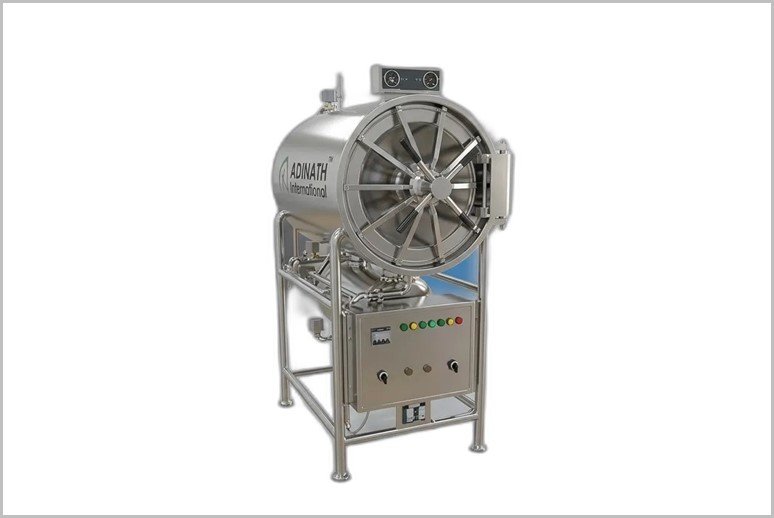
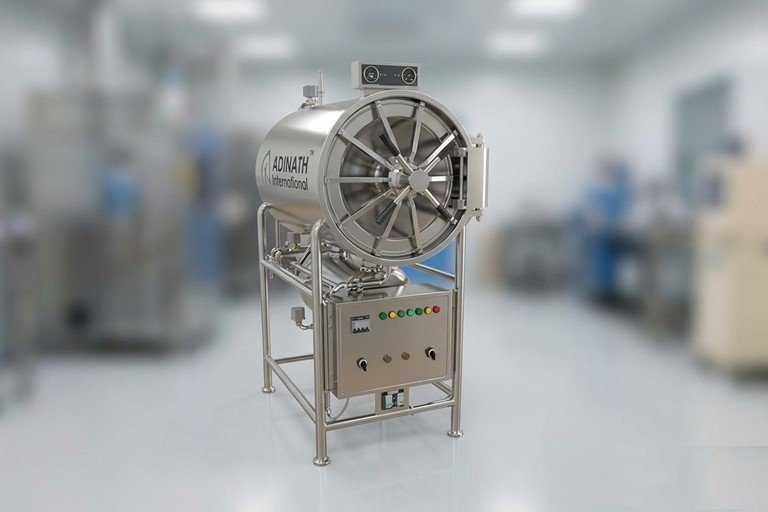
A horizontal autoclave rectangular is a robust and efficient steam sterilizer widely trusted in laboratories, hospitals, pharmaceutical manufacturing plants, research institutions, and healthcare facilities worldwide. Designed for demanding sterilization needs, this equipment excels at eliminating harmful microorganisms, bacteria, viruses, and spores from surgical instruments, laboratory glassware, culture media, medical waste, and other critical items. Its rectangular chamber design sets it apart from traditional cylindrical autoclaves, delivering superior capacity and practicality for modern high-throughput environments.
Unlike round cylindrical models, the horizontal rectangular autoclave features a spacious, flat loading area that maximizes usable chamber volume. This design allows easy accommodation of trays, wire baskets, and transport carts, making it ideal for sterilizing large quantities of flat or bulky items in a single cycle. The horizontal orientation — with the chamber positioned parallel to the floor — combined with a convenient front-loading door, ensures ergonomic access for operators. Staff can load and unload heavy loads safely without excessive bending or lifting, reducing physical strain and improving workflow efficiency.
In high-volume settings such as central sterile supply departments (CSSD) in hospitals or bulk media preparation in pharmaceutical companies, this configuration translates into significant time and labor savings. Operators appreciate the ability to slide in multiple shelves or carts seamlessly, optimizing throughput while maintaining strict sterilization standards.
When evaluating a horizontal rectangular autoclave, consider chamber size (e.g., 100L to 1000L+), automation level, validation capabilities, and after-sales service. Look for models with data logging, cycle documentation, and remote monitoring options to support compliance audits.
In summary, a horizontal autoclave rectangular represents a smart investment for any organization requiring dependable, high-capacity sterilization. Its ergonomic design, superior loading flexibility, and proven performance make it the preferred choice for professionals who demand excellence in infection control and laboratory efficiency.
By choosing a well-engineered rectangular horizontal steam sterilizer, healthcare providers, researchers, and manufacturers can maintain the highest standards of safety and productivity while protecting both patients and valuable research outcomes.
These sterilizers utilize pressurized saturated steam at temperatures typically ranging from 121°C to 134°C. The rectangular chamber is engineered with high-grade stainless steel (often 316L) for superior corrosion resistance and durability. Advanced models incorporate features like automatic pressure control, vacuum cycles for better steam penetration, drying functions, and programmable cycles tailored to specific load types.
Safety remains paramount. Modern horizontal autoclaves include multiple redundant safety mechanisms such as door interlocks, pressure relief valves, and over-temperature protection. Many units comply with international standards including ISO, CE, and ASME, ensuring they meet rigorous regulatory requirements for medical and laboratory use.
Models: 9 kW/380V, 50Hz, depending on size and features.
* Power voltage can be adjusted as per customer’s domestic power voltage requirements.
* Rights of technical improvements & modification reserved.
* Illustrations & dimensions are shown for information purpose only.
A Horizontal Autoclave Rectangular is a robust steam sterilizer designed for laboratories, hospitals, pharmaceutical plants, research institutions, and healthcare facilities. It uses pressurized saturated steam to eliminate microorganisms, bacteria, viruses, and spores from surgical instruments, laboratory glassware, culture media, medical waste, and other items. Its rectangular chamber and horizontal front-loading design provide superior usable capacity and ergonomic operation compared to traditional cylindrical autoclaves.
Unlike cylindrical models, the rectangular chamber offers a spacious, flat loading area that maximizes usable volume. This allows easy placement of trays, wire baskets, and transport carts, making it ideal for sterilizing large quantities of flat or bulky items in a single cycle. The design improves throughput in high-volume settings such as hospital CSSDs or pharmaceutical media preparation.
Key features include a rectangular chamber for maximum space utilization, front-loading horizontal orientation for easy access, triple-wall construction (inner chamber + steam jacket + outer shell) with glass-wool or mineral-wool insulation, heavy-gauge stainless steel (SS-304/SS-316) construction with argon-arc welding, energy-efficient heaters, optional automatic microprocessor/HMI controls, radial locking or sliding door with pressure interlock, separate steam boiler with safety devices, multiport valve, moisture trap, and a sturdy corrosion-resistant stand.
It uses pressurized saturated steam at temperatures typically ranging from 121°C to 134°C. The rectangular chamber, usually made of high-grade stainless steel (often 316L), ensures corrosion resistance and durability. Advanced models include automatic pressure control, vacuum cycles for better steam penetration, drying functions, and programmable cycles. Multiple safety mechanisms such as door interlocks, pressure relief valves, and over-temperature protection are standard.
Chamber sizes generally range with dimensions supporting volumes from about 79 to 500 liters (depths typically 600–1300 mm). Operating temperature is adjustable between 121°C and 134°C, with standard pressure around 0.22 MPa. Power options commonly include 9 kW/380 V, 50 Hz (adjustable to customer voltage requirements). Exact models and dimensions can vary.
Safety features include a radial locking or sliding door with pressure interlock (prevents opening under pressure), spring-loaded safety valves, vacuum breaker, steam trap, low-water cut-off on the boiler, pressure gauges, and automatic pressure switches. Many units also feature over-temperature protection and comply with standards such as ISO, CE, and ASME.
Benefits include higher capacity per cycle compared to vertical or smaller cylindrical units, improved operational efficiency with faster turnaround and reduced energy use in optimized models, easier maintenance due to front access, consistent performance from uniform steam distribution, and long-term reliability from premium stainless-steel construction when properly maintained.
It is widely used in the pharmaceutical, nutraceutical, herbal, Ayurvedic, biotech, cosmetic, and chemical industries, as well as in hospitals, laboratories, research institutions, and healthcare facilities for sterilizing instruments, glassware, media, and other critical items.
Main components include the rectangular stainless-steel chamber, steam sterilization system (saturated steam under pressure), hinged or sliding front door with safety interlocks, digital/PLC or multiport controls with temperature/pressure/time sensors, safety devices (relief valves, vacuum systems, alarms), and utilities such as a steam generator/boiler, water supply, electricity, and drainage. A moisture trap helps keep loads dry.
The horizontal orientation places the chamber parallel to the floor with a convenient front-loading door. This allows operators to slide in trays, shelves, or carts ergonomically without excessive bending or lifting, reducing physical strain, improving safety for heavy loads, and enabling higher throughput in busy environments such as central sterile supply departments or bulk processing areas.
More Sterilization Equipments
 Horizontal Autoclave Sterilizer
 Horizontal Cylindrical Autoclave
 Horizontal Rectangular Steam Sterilizer
 Cement Autoclave
Algeria | Angola | Argentina | Australia | Austria | Bahrain | Bangladesh | Belarus | Belgium | Bolivia | Botswana | Brazil | Bulgaria | Canada | Chile | China | Colombia | Costa Rica | Cuba | Czech Republic | Denmark | Dominican Republic | Ecuador | Egypt | El Salvador | Ethiopia | Finland | France | Germany | Ghana | Greece | Guatemala | Haiti | Honduras | Hong Kong | Hungary | India | Indonesia | Iran | Ireland | Israel | Italy | Ivory Coast | Japan | Jordan | Kazakhstan | Kenya | Kuwait | Lebanon | Libya | Malaysia | Mexico | Mongolia | Morocco | Mozambique | Myanmar | Netherlands | New Zealand | Nicaragua | Nigeria | Norway | Oman | Pakistan | Panama | Paraguay | Peru | Philippines | Poland | Portugal | Qatar | Romania | Russia | Saudi Arabia | Senegal | Slovakia | Singapore | South Africa | South Korea | South Sudan | Spain | Sri Lanka | Sweden | Switzerland | Taiwan | Tanzania | Thailand | Trinidad and Tobago | Tunisia | Turkey | Uganda | Ukraine | United Arab Emirates | United Kingdom | United States | Uruguay | Uzbekistan | Venezuela | Vietnam | Zambia | Zimbabwe
Connect with our engineering team to discuss your specific production requirements. We provide customized, cGMP-compliant machinery solutions designed to optimize your manufacturing facility and maximize output.
©Adinath International | Theme Developed By Pharma Machinery Manufacturer I Website updated on: 15 October 2026
Request A Quick Quote
Horizontal Autoclave Rectangular
Please drop your requirements, one of our technical expert will contact you in next 24 working hours.
WhatsApp us
