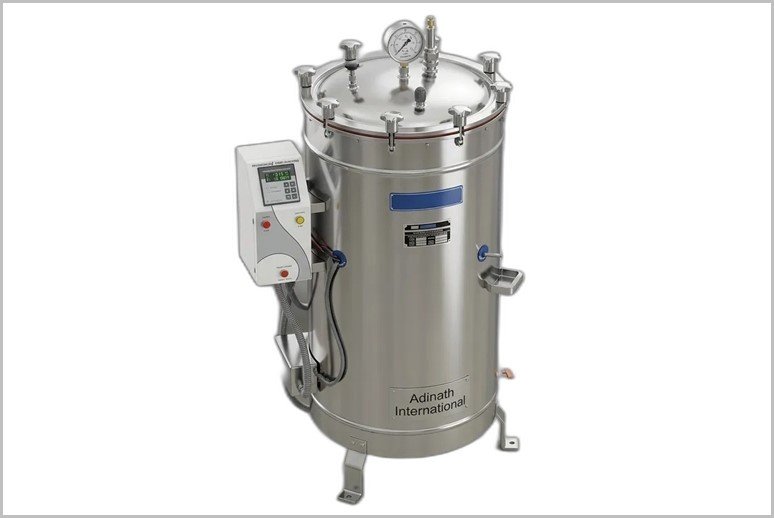
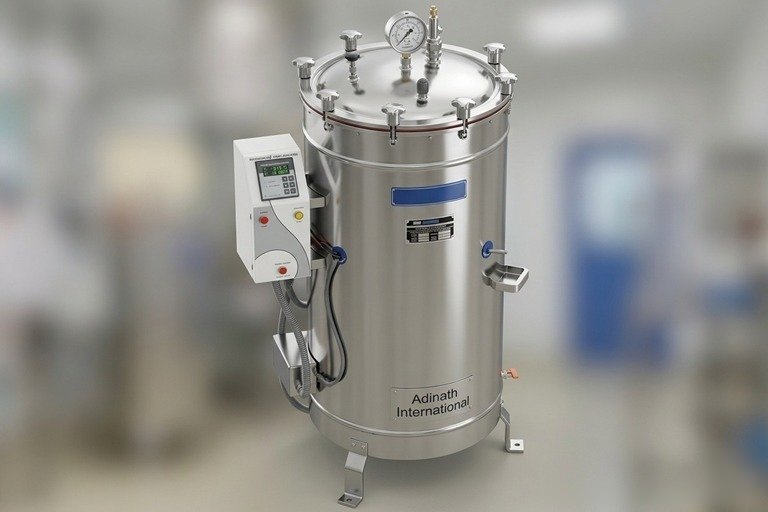
A cement autoclave is a critical piece of laboratory equipment widely used in the construction materials testing industry to assess the soundness of cement. Particularly important for Portland cement, this specialized apparatus helps manufacturers, quality control laboratories, and civil engineers ensure that cement will maintain its structural integrity over time. In simple terms, the cement autoclave test determines whether the cement can retain its volume after setting, preventing dangerous delayed expansion that leads to cracking, warping, or failure in concrete structures.
Soundness is a key quality parameter for cement. It refers to the cement’s ability to remain stable in volume once it has hardened. Unsound cement often contains excessive amounts of free lime (CaO) or magnesia (MgO). These compounds can react slowly with water long after the initial setting process, causing expansion that compromises the durability of concrete.
The cement autoclave addresses this challenge by simulating accelerated aging conditions. During the test, cement specimens (usually small bars or patties) are exposed to high-pressure steam at elevated temperatures—typically around 2.1 MPa (300 psi) and 216°C—for a specified duration, often 3 hours. This high-pressure steam environment rapidly hydrates the free oxides that would otherwise react slowly in normal conditions. By measuring the expansion of the specimens before and after the autoclave cycle, technicians can accurately predict the long-term performance of the cement.
In the construction industry, using unsound cement can have catastrophic consequences. Excessive expansion may lead to cracks in buildings, bridges, dams, roads, and other critical infrastructure. These failures not only pose serious safety risks but also result in expensive repairs and project delays. That’s why standards organizations such as ASTM (C151), IS (Indian Standards), and BS (British Standards) mandate autoclave soundness testing for cement production and quality assurance.
Cement manufacturers rely heavily on the cement autoclave during routine quality control checks. It allows them to identify and reject batches with high free lime or magnesia content before the product reaches the market. For third-party testing laboratories and construction companies, the autoclave provides reliable data to verify that supplied cement meets project specifications and regulatory requirements.
Step-by-Step Operating Instructions for Portable Autoclave / Sterilizer
Construction | Standard Model | Double Walled Model | Triple Walled Model |
MOC Exterior | MS Painted | SS 304 (mirror finish) | SS 304 mirror finish) |
No. of walls | Double | Double | Triple |
Lid | Polished MS | SS 304 | SS 304 |
Interior | SS 304 with silicon gasket | ||
Working Pressure | 15 to 20 PSI | ||
Working Temperature | 121°C to 125°C | ||
Controller | 15 PSI & 121°C | ||
Pressure display | Analog dial gauge. | ||
Timer | Mechanical timer | ||
Hydraulic tested | Hydraulically Tested up to 40 psi. | ||
Basket | Stainless steel basket | Stainless steel basket | Not Required |
Power supply | 220 Volts, Single Phase, 50Hz | ||
Standard Fittings |
| ||
Optional Accessories |
| ||
* Power voltage can be adjusted as per customer’s domestic power voltage requirements.
* Rights of technical improvements & modification reserved.
* Illustrations & dimensions are shown for information purpose only.
Today’s cement autoclaves are designed for precision, safety, and efficiency. High-quality models feature:
These features ensure consistent, repeatable results while minimizing operator risk. Many advanced units also include data logging capabilities, allowing labs to maintain detailed records for compliance and traceability.
A cement autoclave is specialized laboratory equipment used in the construction materials testing industry to assess the soundness of cement (particularly Portland cement). It helps determine whether the cement will maintain stable volume after setting, preventing delayed expansion that can cause cracking, warping, or structural failure in concrete.
Soundness refers to the cement’s ability to remain stable in volume once hardened. Unsound cement often contains excess free lime (CaO) or magnesia (MgO), which can react slowly with water over time and cause expansion that compromises the durability and safety of concrete structures.
Cement specimens (typically small bars or patties) are exposed to high-pressure steam at elevated temperatures—around 2.1 MPa (300 psi) and 216°C—for a specified duration (commonly 3 hours). This accelerates the hydration of free oxides. Expansion is measured before and after the cycle to predict long-term performance.
It creates accelerated aging conditions using high-pressure steam to rapidly hydrate free lime and magnesia that would otherwise react slowly under normal environmental conditions, allowing technicians to evaluate potential long-term volume instability.
Manufacturers, quality control laboratories, and civil engineers use it to ensure cement quality, meet regulatory standards, and verify that batches will maintain structural integrity in construction projects.
It enhances structural safety by preventing volume instability, reduces costs through early detection of defective batches, supports regulatory compliance, improves brand reputation for sound cement producers, and promotes sustainability by minimizing premature structural failures and resource waste.
The test identifies excessive free lime (CaO) or magnesia (MgO) in cement, which are the main causes of delayed expansion and unsoundness after the cement has set.
High-quality models feature robust stainless-steel construction to handle high pressure and temperature, digital pressure and temperature controllers for accuracy, safety valves with automatic pressure release, specimen racks, and quick-closing mechanisms. Advanced units may include data logging for compliance records.
By providing precise, repeatable measurements of cement expansion under accelerated conditions, it allows early identification of unsound batches, reduces material wastage and rework, and helps ensure concrete structures meet national and international quality standards.c
Yes. Consistent passing results support compliance with construction quality standards required for project approvals and help manufacturers build trust with clients and contractors by demonstrating reliable, sound cement performance.
More Sterilization Equipments
 Cylindrical Autoclave
 Horizontal Autoclave Rectangular
 Horizontal Autoclave Sterilizer
 Horizontal Cylindrical Autoclave
Algeria | Angola | Argentina | Australia | Austria | Bahrain | Bangladesh | Belarus | Belgium | Bolivia | Botswana | Brazil | Bulgaria | Canada | Chile | China | Colombia | Costa Rica | Cuba | Czech Republic | Denmark | Dominican Republic | Ecuador | Egypt | El Salvador | Ethiopia | Finland | France | Germany | Ghana | Greece | Guatemala | Haiti | Honduras | Hong Kong | Hungary | India | Indonesia | Iran | Ireland | Israel | Italy | Ivory Coast | Japan | Jordan | Kazakhstan | Kenya | Kuwait | Lebanon | Libya | Malaysia | Mexico | Mongolia | Morocco | Mozambique | Myanmar | Netherlands | New Zealand | Nicaragua | Nigeria | Norway | Oman | Pakistan | Panama | Paraguay | Peru | Philippines | Poland | Portugal | Qatar | Romania | Russia | Saudi Arabia | Senegal | Slovakia | Singapore | South Africa | South Korea | South Sudan | Spain | Sri Lanka | Sweden | Switzerland | Taiwan | Tanzania | Thailand | Trinidad and Tobago | Tunisia | Turkey | Uganda | Ukraine | United Arab Emirates | United Kingdom | United States | Uruguay | Uzbekistan | Venezuela | Vietnam | Zambia | Zimbabwe
Connect with our engineering team to discuss your specific production requirements. We provide customized, cGMP-compliant machinery solutions designed to optimize your manufacturing facility and maximize output.
©Adinath International | Theme Developed By Pharma Machinery Manufacturer I Website updated on: 15 October 2026
Request A Quick Quote
Cement Autoclave
Please drop your requirements, one of our technical expert will contact you in next 24 working hours.
WhatsApp us
