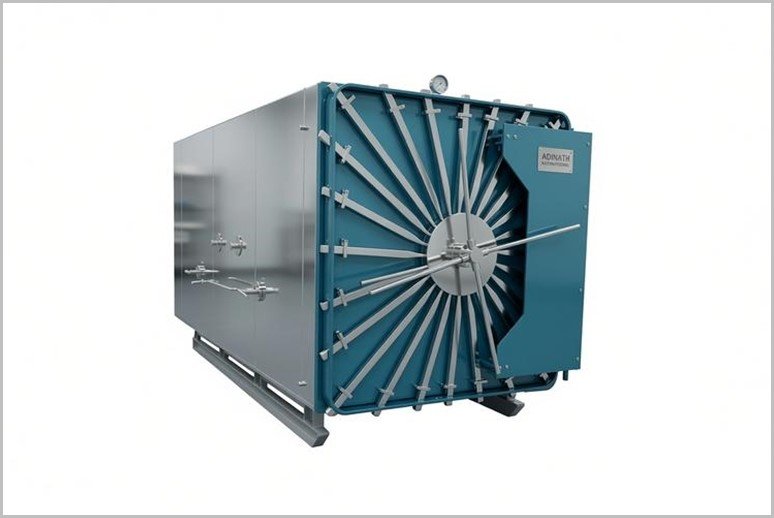
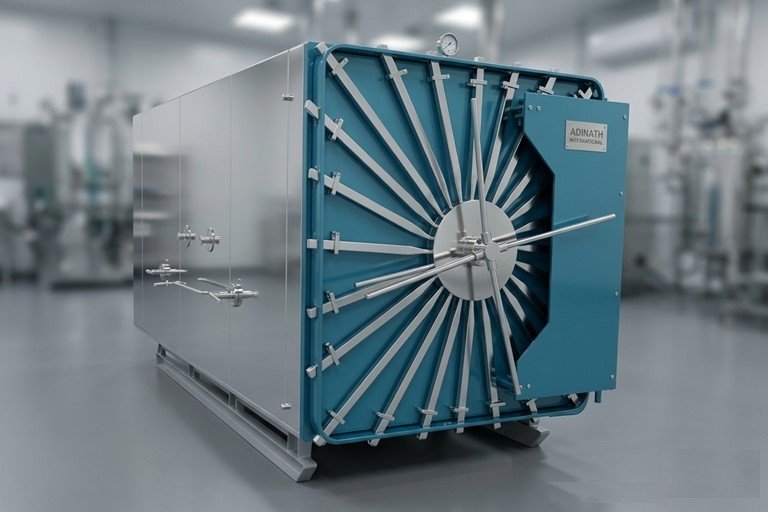
Healthcare facilities, laboratories, and medical device manufacturers require dependable solutions for sterilizing delicate instruments that cannot tolerate high heat or moisture. A 4 cubic feet EO gas sterilizer delivers an effective, compact option for low-temperature ethylene oxide sterilization. These systems are specifically designed to process heat-sensitive medical devices such as endoscopes, implants, electronics, multi-lumen instruments, catheters, and complex plastic components while achieving hospital-grade sterility.
The “4 cubic feet” designation refers to the sterilization chamber’s internal capacity, making these units popular tabletop or benchtop models. They are well-suited for hospitals, outpatient clinics, research labs, dental practices, and veterinary facilities with moderate sterilization volumes. By using ethylene oxide gas — a highly penetrating sterilant — these systems eliminate bacteria, viruses, fungi, and spores without damaging sensitive materials.
One of the most recognized models in this category is the EO Gas 4 by Andersen Sterilizers. This FDA-cleared system is trusted by professionals for its reliability, efficiency, and user-friendly operation. Other manufacturers also produce comparable 4 cubic feet EO sterilizers, often with customizable features for both clinical and industrial applications.
The process ensures deep penetration for sterility without damaging delicate items:
Key Advantages of Ethylene Oxide (ETO) Sterilization
Portfolio Classification of ETO Sterilizers
Model | AETOS – 2.6 | AETOS – 4.5 | AETOS – 8 |
Working Capacity in Cu. Ft. | 2.6 | 4.5 | 8 |
Working Volume | 70 Liters | 125 Liters | 200 Liters |
Chamber Size | 12” (W) x 12” (H) x 32”
| 12” (W) x 12” (H) x 54” (D) OR 15” (W) x 15” (H) x 36” (D) | 20” (W) x 18” (H) x 38” (D) OR 16” (W) x 16” (H) x 54” (D) |
Sterilant Gas | 40 grams cartridge | 100 grams cartridge | 170 grams cartridge |
Sterilization Cycle | Warm & Cold Cycles are possible. | Warm & Cold Cycles are possible. | Warm & Cold Cycles are possible. |
Aeration | In-built aeration facility provided. | In-built aeration facility provided. | In-built aeration facility provided. |
Utility | Compressed Air (100 psig) | Compressed Air (100 psig) | Compressed Air (100 psig) |
Power Supply | 1 K.W. | 2 K.W. | 2.5 K.W. |
Power Voltage | 220 volts, Single Phase, 50 Hertz | 220 volts, Single Phase, 50 Hertz | 220 volts, Single Phase, 50 Hertz |
* Power voltage can be adjusted as per customer’s domestic power voltage requirements.
* Rights of technical improvements & modification reserved.
* Illustrations & dimensions are shown for information purpose only.
The unit is designed around a sterilization chamber of approximately 4–4.5 cubic feet (roughly 125 liters). Typical chamber dimensions offered include options such as 12″ (W) × 12″ (H) × 54″ (D) or 15″ (W) × 15″ (H) × 36″ (D), making it a compact tabletop/benchtop system suitable for moderate-volume facilities.
It is specifically intended for heat- and moisture-sensitive items that cannot withstand steam autoclaving, including endoscopes, implants, multi-lumen instruments, catheters, complex plastic components, disposable syringes, IV infusion sets, urine collection bags, surgical kits, electronics, optics, rubber items, and certain food/agricultural products such as spices or packaged grains.
The process generally includes preconditioning (humidification), air removal by vacuum, injection of EO gas (often mixed with CO₂ or N₂) followed by an exposure/dwell period, and then purge plus active aeration to remove residual gas. Total cycle times are commonly in the range of 4–8 hours, with some configurations achieving as little as about 3.5 hours including aeration at higher temperatures.
EO sterilization runs at low temperatures (typically 30–50 °C or ambient to mild heat). This prevents thermal distortion, moisture damage, or degradation of delicate materials that would be harmed by high-heat steam or dry-heat methods.
Yes, in-built aeration is provided. After EO exposure, residual gas must be thoroughly removed so that sterilized items meet safety limits (e.g., OSHA/EPA residual exposure guidelines) and are ready for immediate or near-term use without separate off-gassing rooms.
Systems are offered in semi-automatic versions (analog push-buttons and manual controls) and fully automatic PLC-HMI versions with touchscreen interfaces for recipe selection, real-time parameter monitoring, batch tracking, and minimal operator intervention.
Product-contact surfaces and internal piping are typically fabricated from high-grade AISI 304 or 316 stainless steel for corrosion resistance and easy cleaning. Additional features commonly include explosion-proof design considerations, leak detection, automatic shutoffs, pneumatically actuated valves, and the use of inert diluents to reduce flammability risk.
It generally requires compressed air at about 100 psig and operates on single-phase power (commonly 220 V / 50 Hz, with power draw around 2 kW for the 4.5 cu ft model). Voltage can often be adjusted to local standards. Gas is supplied via unit-dose cartridges (e.g., 100-gram cartridges for the relevant model) rather than large external tanks.
It is suited to pharmaceutical, nutraceutical, herbal, Ayurvedic, biotech, cosmetic, and chemical industries, as well as hospitals, outpatient clinics, research laboratories, dental practices, and veterinary facilities that need reliable low-temperature terminal sterilization of moderate volumes of heat-sensitive goods.
Comprehensive qualification packages (IQ, OQ, and DQ protocols) can be supplied as optional deliverables to support regulatory compliance. The technology is designed to deliver validated sterilization cycles and is referenced in the context of hospital-grade sterility and relevant standards for EO processes.
More Sterilization Equipments
 2 Cubic Feet EO Gas Sterilizer
 3 Cubic Feet EO Sterilizer
 2 Cubic Feet Sterilizer
 Industrial EO Gas Sterilizer
Algeria | Angola | Argentina | Australia | Austria | Bahrain | Bangladesh | Belarus | Belgium | Bolivia | Botswana | Brazil | Bulgaria | Canada | Chile | China | Colombia | Costa Rica | Cuba | Czech Republic | Denmark | Dominican Republic | Ecuador | Egypt | El Salvador | Ethiopia | Finland | France | Germany | Ghana | Greece | Guatemala | Haiti | Honduras | Hong Kong | Hungary | India | Indonesia | Iran | Ireland | Israel | Italy | Ivory Coast | Japan | Jordan | Kazakhstan | Kenya | Kuwait | Lebanon | Libya | Malaysia | Mexico | Mongolia | Morocco | Mozambique | Myanmar | Netherlands | New Zealand | Nicaragua | Nigeria | Norway | Oman | Pakistan | Panama | Paraguay | Peru | Philippines | Poland | Portugal | Qatar | Romania | Russia | Saudi Arabia | Senegal | Slovakia | Singapore | South Africa | South Korea | South Sudan | Spain | Sri Lanka | Sweden | Switzerland | Taiwan | Tanzania | Thailand | Trinidad and Tobago | Tunisia | Turkey | Uganda | Ukraine | United Arab Emirates | United Kingdom | United States | Uruguay | Uzbekistan | Venezuela | Vietnam | Zambia | Zimbabwe
Connect with our engineering team to discuss your specific production requirements. We provide customized, cGMP-compliant machinery solutions designed to optimize your manufacturing facility and maximize output.
©Adinath International | Theme Developed By Pharma Machinery Manufacturer I Website updated on: 15 October 2026
Request A Quick Quote
4 Cubic Feet EO Gas Sterilizer
Please drop your requirements, one of our technical expert will contact you in next 24 working hours.
WhatsApp us
