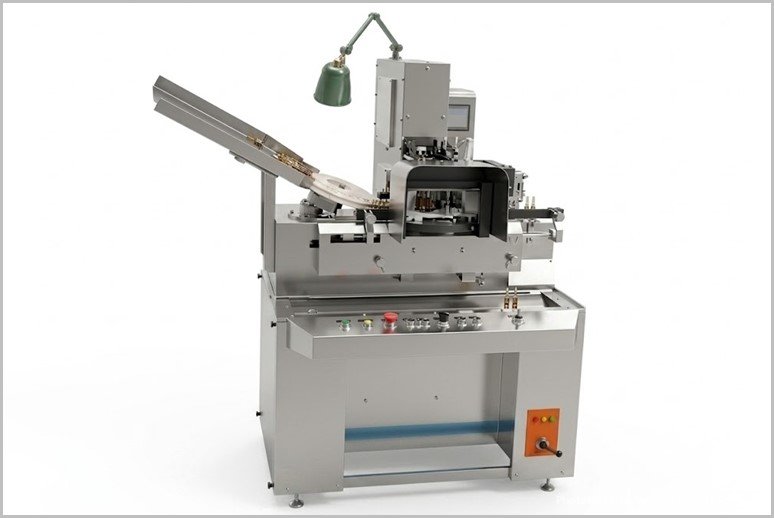
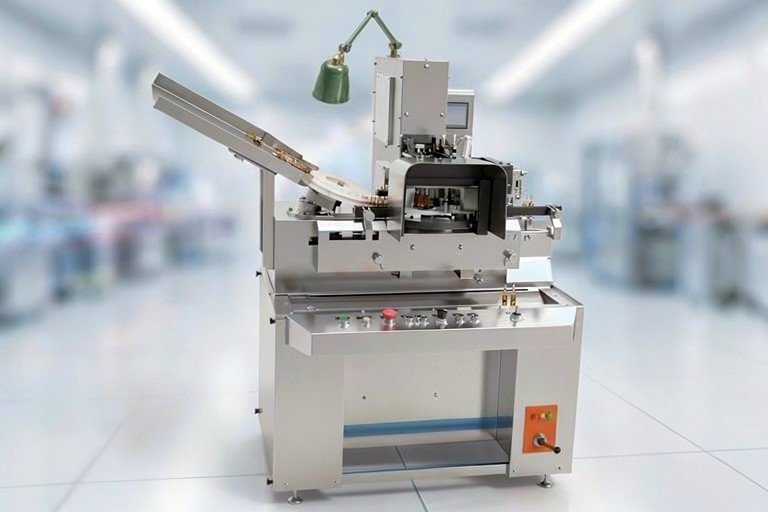
An Ampoule Vial Inspection Machine is a highly specialized piece of pharmaceutical equipment engineered to automatically inspect sealed ampoules and vials for any defects. These machines play a critical role in the pharmaceutical manufacturing process, particularly for injectable drugs where even minute imperfections can compromise product integrity and patient health. By combining advanced vision systems, precision sensors, and automated handling, modern ampoule vial inspection machines deliver unmatched accuracy in quality control.
Ampoules are small, sealed glass containers designed for single-dose liquid medications. Vials, on the other hand, are small bottles typically used for injectable drugs that may require multiple doses. Both are primary packaging formats for sterile pharmaceutical products. Because these containers hold medications that bypass the body’s natural defenses through direct injection, any contamination, cracks, particles, or sealing issues can lead to serious health risks. This is why regulatory bodies like the FDA, EMA, and WHO mandate rigorous inspection standards for injectable products.
In modern sterile manufacturing, 100% visual inspection of filled and sealed containers is a fundamental requirement under current Good Manufacturing Practices (cGMP). Guidelines such as the FDA’s recommendations on inspection of injectable products for visible particulates, EU GMP Annex 1, USP and , European Pharmacopoeia requirements, and WHO Technical Report Series emphasize the need to detect and remove units containing foreign particles, glass defects, improper fill levels, or compromised container integrity. Visible particulates remain a leading cause of recalls for sterile injectables, making reliable inspection essential for patient safety and regulatory compliance.
Ampoule vial inspection machines address this need through sophisticated automated visual inspection (AVI) technology. High-resolution industrial cameras, specialized illumination systems, and intelligent image-processing algorithms work together to examine each container from multiple angles. A common technique involves rapidly spinning the ampoule or vial and then abruptly stopping it. This motion creates a vortex that keeps free-moving particles in suspension while the container itself becomes stationary, allowing cameras to capture sequential images and detect contrast differences caused by glass shards, fibers, hair, white spots, or other foreign matter, often with sensitivity reaching 50 μm or better depending on the system and product.
Beyond particulate detection, these systems identify cosmetic and structural defects such as cracks, chips, scorched necks, carbon spots, abnormal liquid levels, seal imperfections, and micro-leaks. Some advanced models integrate high-voltage leak detection (HVLD) or other container-closure integrity testing methods to identify pinholes and microcracks that visual methods alone might miss. Machines typically handle containers ranging from 1 ml to 20 ml (or larger in specialized configurations) at production speeds of 200–600 pieces per minute, enabling seamless integration into high-throughput filling and packaging lines while maintaining low false-reject rates.
From an expertise and experience perspective, leading pharmaceutical equipment manufacturers design these systems with modular stations, servo-controlled handling, 21 CFR Part 11-compliant data logging, audit trails, and validation support using methods such as the Knapp test. This ensures consistent performance, full traceability, and readiness for regulatory audits. Operators benefit from user-friendly HMI interfaces that allow parameter adjustment for different products (clear liquids, suspensions, lyophilized cakes) while minimizing human subjectivity that can affect manual inspection.
By delivering objective, high-speed, and highly sensitive defect detection, an Ampoule Vial Inspection Machine strengthens the overall contamination control strategy required for aseptic processing. It protects product quality, supports regulatory compliance across global markets, and—most importantly—helps safeguard patient health by ensuring that only defect-free injectable products reach the market. Pharmaceutical manufacturers relying on validated automated inspection systems demonstrate a commitment to quality, reliability, and continuous improvement in sterile drug production.
Ampoules are loaded on to an inspection table out of trays. The ampoules are manually pushed on to an inclined infeed conveyor belt of sufficiently large capacity. Ampoules are picked up by a starwheel and fed to a revolving inspection drum consisting of two spinning stations and two inspection stations. Two ampoules are inspected at a time at the inspection station 1. Its status is recorded. The same ampoules are again inspected at the next inspection station 2. The ampoules then exit the inspection drum and are picked up by a starwheel and transfered to a linear screw. A sorter automatically separates the good and bad ampoules into individual outfeed hoppers.
Model | AVIM-300 |
Capacity | 300 Ampoules/Minute |
Electrical Specification | – |
Line Voltage | 415 V, 3 Phase, 50 Hz |
Installed Power | 3 H.P. |
Input Specification | – |
Diameter | 9mm to 12mm |
Height | 40mm to 60mm |
* Power voltage can be adjusted as per customer’s domestic power voltage requirements.
* Rights of technical improvements & modification reserved.
* Illustrations & dimensions are shown for information purpose only.
Ampoule Vial Inspection Machine primarily check for:
They are essential in sterile pharmaceutical production lines to comply with strict regulations like GMP.
An Ampoule Vial Inspection Machine is specialized pharmaceutical equipment designed to automatically inspect sealed ampoules and vials for defects. It uses advanced vision systems, precision sensors, and automated handling to detect issues such as foreign particles, cracks, chips, improper fill levels, seal imperfections, and other flaws that could compromise injectable product integrity and patient safety.
Regulatory bodies including the FDA, EMA, and WHO mandate rigorous inspection under cGMP guidelines (such as FDA recommendations on visible particulates, EU GMP Annex 1, USP, European Pharmacopoeia, and WHO Technical Report Series). Visible particulates are a leading cause of recalls for sterile injectables, so automated inspection ensures only defect-free units reach the market and helps protect patient health.
High-resolution industrial cameras, specialized illumination (including polarized light), and intelligent image-processing algorithms examine each container from multiple angles. A common method rapidly spins the ampoule or vial and then stops it, creating a vortex that suspends free-moving particles while the container is stationary. Cameras capture sequential images to detect contrast differences from glass shards, fibers, hair, white spots, or other foreign matter (sensitivity often reaching 50 μm or better). Systems also identify cosmetic/structural defects and, in advanced models, use high-voltage leak detection (HVLD) for pinholes and microcracks.
Ampoules are loaded from trays onto an inclined infeed conveyor. A starwheel feeds them into a revolving inspection drum with spinning stations and two inspection stations. Two ampoules are inspected at a time at the first station (status recorded), then re-inspected at the second station. They exit via another starwheel to a linear screw, after which a sorter automatically separates good and bad ampoules into individual outfeed hoppers. Each ampoule is checked twice.
Key features include suspended particle and fill volume checking, dual inspection of each ampoule, cost-effective and space-saving design, detection by polarized light, built-in validation parameter setting with easy product changeover, and online data logging. Machines support modular stations, servo-controlled handling, 21 CFR Part 11-compliant data logging, audit trails, and validation methods such as the Knapp test.c
Speeds typically range from 200–600 pieces per minute (for example, the AVIM-300 model handles 300 ampoules per minute). It accommodates containers from about 1 ml to 20 ml (or larger in specialized configurations), with input specifications such as diameters of 9 mm to 12 mm and heights of 40 mm to 60 mm. Electrical requirements are commonly 415 V, 3 Phase, 50 Hz with around 3 H.P. installed power (adjustable as needed).
Beyond free-moving particles, it identifies cracks, chips, scorched necks, carbon spots, abnormal liquid levels, seal imperfections, and micro-leaks. Advanced systems can integrate additional container-closure integrity testing to catch defects visual methods might miss.
It is applied in the pharmaceutical, nutraceutical, herbal, Ayurvedic, biotech, cosmetic, and chemical industries—anywhere sterile injectable or related products require high-reliability visual inspection of ampoules and vials.
Benefits include high throughput that integrates into filling and packaging lines, low false-reject rates, gentle handling to avoid damage, quick changeovers for different products (clear liquids, suspensions, lyophilized cakes), reduced human subjectivity compared to manual inspection, full traceability for audits, and overall support for contamination control strategies and regulatory compliance.
It features 21 CFR Part 11-compliant data logging, audit trails, and validation support. User-friendly HMI interfaces allow parameter adjustments for different products while minimizing subjectivity. The design helps manufacturers meet global regulatory expectations and demonstrate commitment to quality and patient safety in aseptic processing.
Algeria | Angola | Argentina | Australia | Austria | Bahrain | Bangladesh | Belarus | Belgium | Bolivia | Botswana | Brazil | Bulgaria | Canada | Chile | China | Colombia | Costa Rica | Cuba | Czech Republic | Denmark | Dominican Republic | Ecuador | Egypt | El Salvador | Ethiopia | Finland | France | Germany | Ghana | Greece | Guatemala | Haiti | Honduras | Hong Kong | Hungary | India | Indonesia | Iran | Ireland | Israel | Italy | Ivory Coast | Japan | Jordan | Kazakhstan | Kenya | Kuwait | Lebanon | Libya | Malaysia | Mexico | Mongolia | Morocco | Mozambique | Myanmar | Netherlands | New Zealand | Nicaragua | Nigeria | Norway | Oman | Pakistan | Panama | Paraguay | Peru | Philippines | Poland | Portugal | Qatar | Romania | Russia | Saudi Arabia | Senegal | Slovakia | Singapore | South Africa | South Korea | South Sudan | Spain | Sri Lanka | Sweden | Switzerland | Taiwan | Tanzania | Thailand | Trinidad and Tobago | Tunisia | Turkey | Uganda | Ukraine | United Arab Emirates | United Kingdom | United States | Uruguay | Uzbekistan | Venezuela | Vietnam | Zambia | Zimbabwe
Connect with our engineering team to discuss your specific production requirements. We provide customized, cGMP-compliant machinery solutions designed to optimize your manufacturing facility and maximize output.
©Adinath International | Theme Developed By Pharma Machinery Manufacturer I Website updated on: 15 October 2026
Request A Quick Quote
Ampoule Vial Inspection Machine
Please drop your requirements, one of our technical expert will contact you in next 24 working hours.
WhatsApp us


