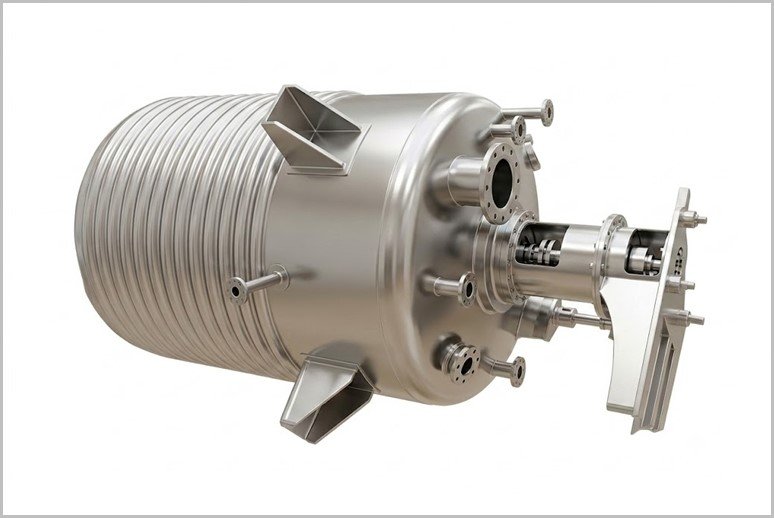
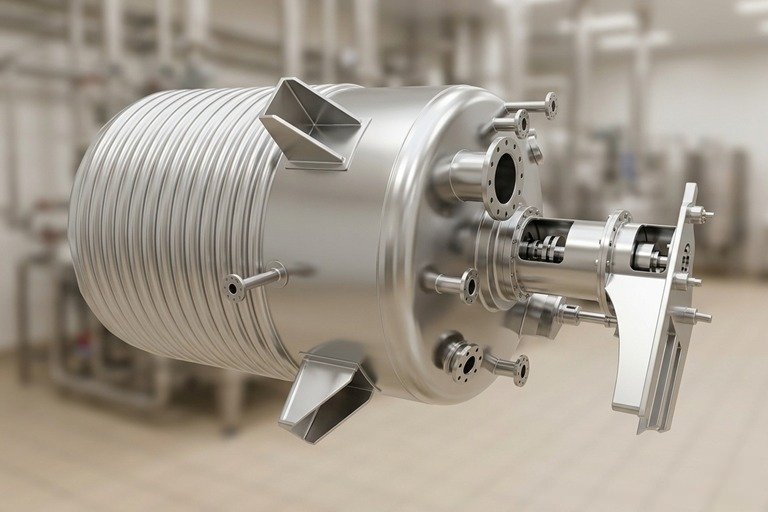
An acrylic resin reactor is an advanced, high-precision chemical reaction vessel specifically engineered to facilitate the complex polymerization processes required to manufacture commercial-grade acrylic resins. As core components within industrial chemical processing plants, these heavy-duty vessels manage reactions involving acrylic acid, methacrylic acid, and their associated ester derivatives (acrylic monomers).
With strict demands on safety, product uniformity, and thermal regulation, understanding the technical specifications and operational scope of an acrylic resin polymerization reactor is essential for chemical engineers, plant managers, and industrial procurement professionals.
What is an Acrylic Resin Reactor?
An acrylic resin reactor is a specialized high-precision chemical reaction vessel designed for the polymerization of acrylic monomers (such as acrylic acid, methacrylic acid, and their esters) to produce commercial-grade acrylic resins. It functions as a pressure vessel that safely manages exothermic polymerization cycles under controlled temperature, pressure, feed rates, and agitation.
These reactors are typically manufactured from high-grade AISI 304 or 316 stainless steel. Optional polished inner finishes are available to maximize corrosion resistance against reactive chemicals and solvents commonly used in acrylic resin production.
It features a heavy-duty jacketed heating and cooling system that can use steam, hot oil, or water, combined with efficient insulation. This setup maintains precise thermal profiles and safely manages the heat released during the exothermic polymerization reaction.
Custom-engineered agitators such as anchor, turbine, or pitch-blade impeller types are employed. These are driven by a flameproof motor and robust gearbox to ensure uniform mixing of high-viscosity resins, which is critical for achieving consistent molecular weight and product quality.
It is fitted with reliable mechanical seals that maintain safe operational pressure under both vacuum and pressurized conditions, effectively preventing VOC leakage during the reaction process.
Monomers (e.g., methyl acrylate or acrylic acid) and initiators are added, then heated to approximately 100°C (or higher for solvent-based systems) with continuous stirring. The exothermic reaction is carefully controlled to avoid runaway temperature increases. Solvents or water may be used for emulsion types, with vapors condensed and separated. The final products are typically water-based emulsions (for paints and adhesives) or solvent-based resins (for coatings).
Yes. It incorporates smooth internal weld joints, sanitary manways, and CIP (Clean-In-Place) compatibility, which help minimize residue buildup and reduce the time required between batches.
They are applied across the pharmaceutical, nutraceutical, herbal, Ayurvedic, biotech, cosmetic, and chemical industries—anywhere controlled polymerization of acrylic resins is required for industrial or commercial products.
Acrylic polymers require predictable molecular weights, uniform chain lengths, and targeted viscosities. Continuous monitoring and optimization of temperature, pressure, chemical feed rates, and mechanical agitation ensure product uniformity, safety, and consistent quality.
Yes. The reactor is engineered to support the polymerization processes needed for both thermoplastic and thermosetting acrylic resin variations, making it suitable for a wide range of end-use applications in coatings, adhesives, and related products.
More Other Machines
 Alkyd Resin Reactor
 Jacketed Reactor For Resin Paints
 Oil Heating Resin Reactor
 Reaction Kettle For Saturated Resin Jacket Reactor
Algeria | Angola | Argentina | Australia | Austria | Bahrain | Bangladesh | Belarus | Belgium | Bolivia | Botswana | Brazil | Bulgaria | Canada | Chile | China | Colombia | Costa Rica | Cuba | Czech Republic | Denmark | Dominican Republic | Ecuador | Egypt | El Salvador | Ethiopia | Finland | France | Germany | Ghana | Greece | Guatemala | Haiti | Honduras | Hong Kong | Hungary | India | Indonesia | Iran | Ireland | Israel | Italy | Ivory Coast | Japan | Jordan | Kazakhstan | Kenya | Kuwait | Lebanon | Libya | Malaysia | Mexico | Mongolia | Morocco | Mozambique | Myanmar | Netherlands | New Zealand | Nicaragua | Nigeria | Norway | Oman | Pakistan | Panama | Paraguay | Peru | Philippines | Poland | Portugal | Qatar | Romania | Russia | Saudi Arabia | Senegal | Slovakia | Singapore | South Africa | South Korea | South Sudan | Spain | Sri Lanka | Sweden | Switzerland | Taiwan | Tanzania | Thailand | Trinidad and Tobago | Tunisia | Turkey | Uganda | Ukraine | United Arab Emirates | United Kingdom | United States | Uruguay | Uzbekistan | Venezuela | Vietnam | Zambia | Zimbabwe
Connect with our engineering team to discuss your specific production requirements. We provide customized, cGMP-compliant machinery solutions designed to optimize your manufacturing facility and maximize output.
©Adinath International | Theme Developed By Pharma Machinery Manufacturer I Website updated on: 15 October 2026
Request A Quick Quote
Acrylic Resin Reactor
Please drop your requirements, one of our technical expert will contact you in next 24 working hours.
WhatsApp us
