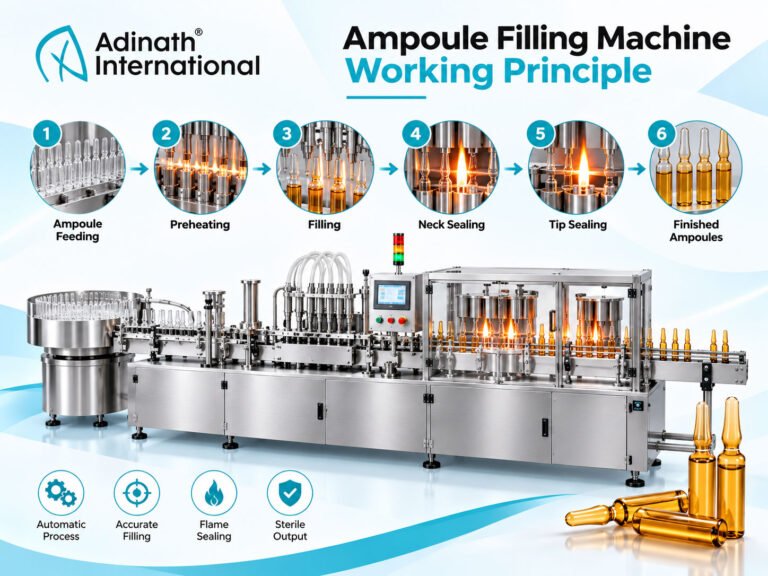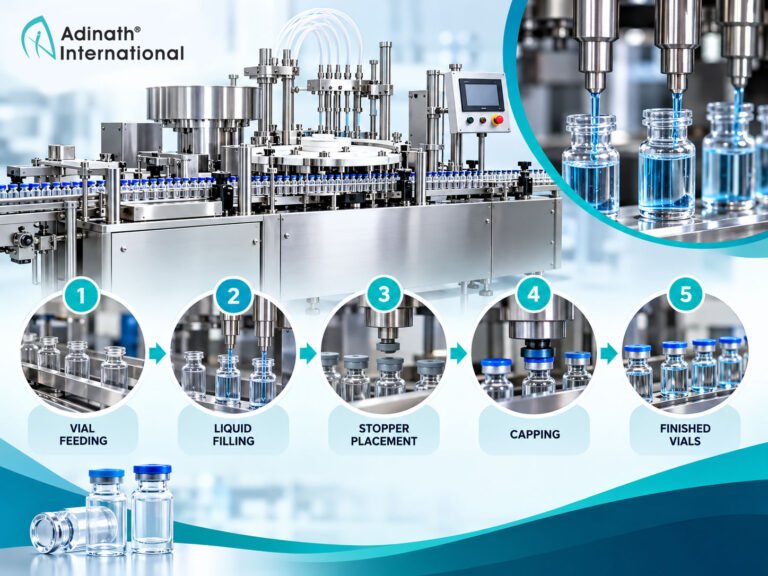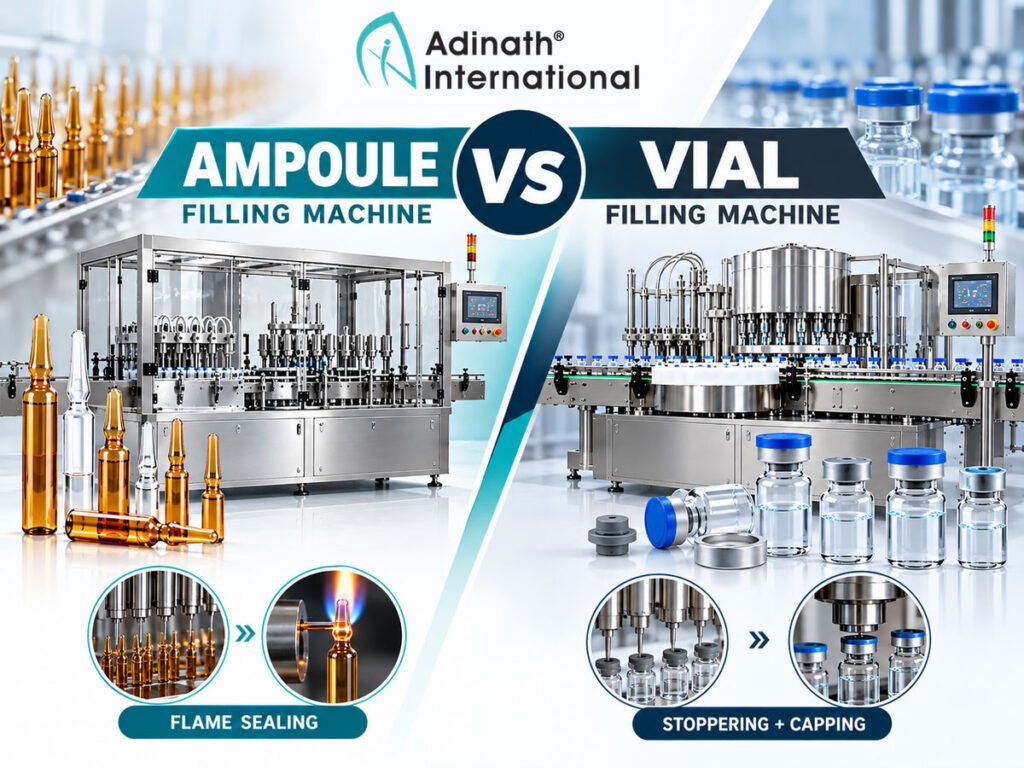
Ampoules and vials are the two classic glass containers for injectable liquids. Both are filled with a measured dose of sterile product, both are made in a wide range of sizes, and both need clean, depyrogenated glass. Yet the machines that fill them are built quite differently, because the two containers are closed in completely different ways. Comparing an ampoule vs vial filling machine is therefore mostly a comparison of closures, and of everything that follows from them.
This article explains the difference between ampoule and vial filling at the level a production engineer or buyer needs: the containers, the closure methods, the filling stations, the equipment before and after the filler, and the factors that usually decide which suits a product. It does not repeat the step-by-step working of each machine; those are covered in separate guides on this blog. Our ampoule fillers are listed under Ampoule Filling Machines, and you can browse all vial filling machines for the vial side.
Ampoules and vials at a glance
An ampoule is a small glass container with a narrow neck. After filling, the neck is melted shut with a flame, so the container is made entirely of glass and has no separate closure. To use the product, the neck is snapped off at a pre-scored or coloured break ring. Ampoules are single-dose containers: once opened, they cannot be closed again.
A vial is a small bottle, usually glass but sometimes plastic, with a wider mouth. It is closed with a rubber stopper, which is held in place by a crimped aluminium or flip-off seal. The product is withdrawn by piercing the stopper with a needle. Vials can be single-dose or multi-dose, and they can hold liquids, powders and freeze-dried products.
| Feature | Ampoule | Vial |
|---|---|---|
| Material | Glass only | Glass or plastic, plus rubber stopper and seal |
| Closure | Glass neck melted shut | Rubber stopper and crimped seal |
| Opening | Neck snapped off | Stopper pierced by a needle |
| Doses | Single dose | Single or multi-dose |
| Typical contents | Liquids | Liquids, powders, freeze-dried products |
| Product contact with closure | Glass only | Glass and rubber |
Closure: flame seal vs stopper and cap
The closure is the core of the ampoule vs vial comparison. It decides what the filling machine must do after dosing, which components touch the product, and which machines are needed downstream.
| No. | Part | Function |
|---|---|---|
| 1 | Ampoule body | Holds the liquid dose |
| 2 | Ampoule constriction and break ring | Weakened point where the neck is snapped open |
| 3 | Flame-sealed tip | Closed glass end formed by heating and pulling or fusing the neck |
| 4 | Vial body and neck | Holds the product; the neck flange carries the closure |
| 5 | Rubber stopper | Closes the vial mouth and can be pierced by a needle |
| 6 | Aluminium seal | Crimped under the flange to hold the stopper in place |
| 7 | Flip-off cap | Plastic cover removed before the stopper is pierced |
Flame sealing an ampoule
In the ampoule (parts 1 to 3), the closure is made from the container itself. The open neck is rotated in a gas-and-oxygen flame until the glass softens. In pull sealing, the tip is then gripped and drawn away, so the neck narrows and fuses; in tip sealing, the tip is melted closed without pulling. The result is an all-glass container with no rubber in contact with the product. The seal quality depends on flame setting, rotation and a dry neck.
Stoppering and capping a vial
In the vial (parts 4 to 7), the closure is assembled from separate components. A rubber stopper is pressed into the neck immediately after filling (part 5), and an aluminium seal is crimped under the neck flange by a cap sealing machine (parts 6 and 7). The stopper material must be compatible with the product, and the crimp must be tight enough to hold the stopper without damaging it. Because the stopper can be pierced and resealed, vials suit multi-dose use.
Filling station differences
The dosing principle is often similar on both machines. Both commonly use volumetric piston (syringe) pumps, and vial fillers may also use peristaltic pumps. The differences lie in how the container is presented, how the liquid enters it and what happens next.
- Needle vs nozzle. Ampoule necks are narrow, so filling is done through slim needles that enter the neck. Vial mouths are wider, so filling nozzles can be larger and can dive towards the bottom of the vial and rise with the liquid to reduce foaming.
- Keeping the neck dry. On an ampoule machine, liquid on the neck can spoil the flame seal. On a vial machine, liquid on the neck can stop the stopper seating. Both rely on clean needle or nozzle withdrawal and drip control.
- Gas purging. Ampoule machines often include pre- and post-gassing with an inert gas such as nitrogen, because the headspace is sealed in permanently. Vial fillers can also purge the headspace where the product requires it.
- Closing station. An ampoule machine has burners and sealing jaws. A vial machine has a stopper bowl, a chute and a stoppering station.
- Container transport. Ampoules are often moved in groups on reciprocating or wheel transport and rotated on rollers during sealing. Vials usually travel upright on a slat conveyor and are positioned by star wheels or stop gates.
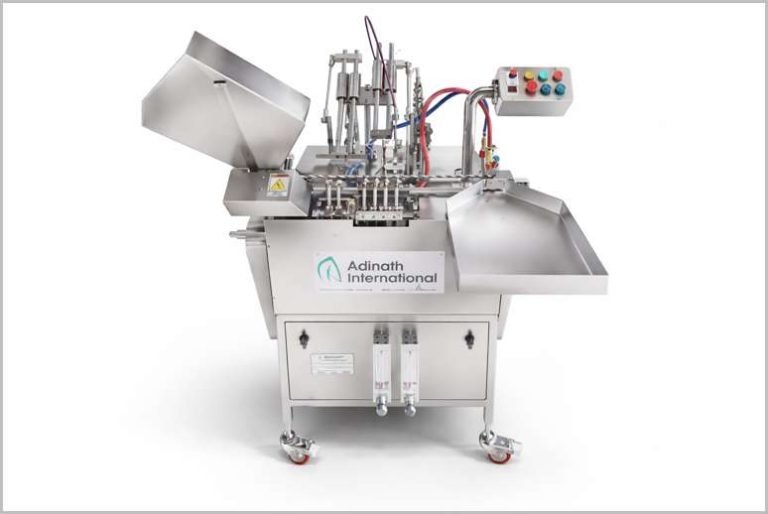
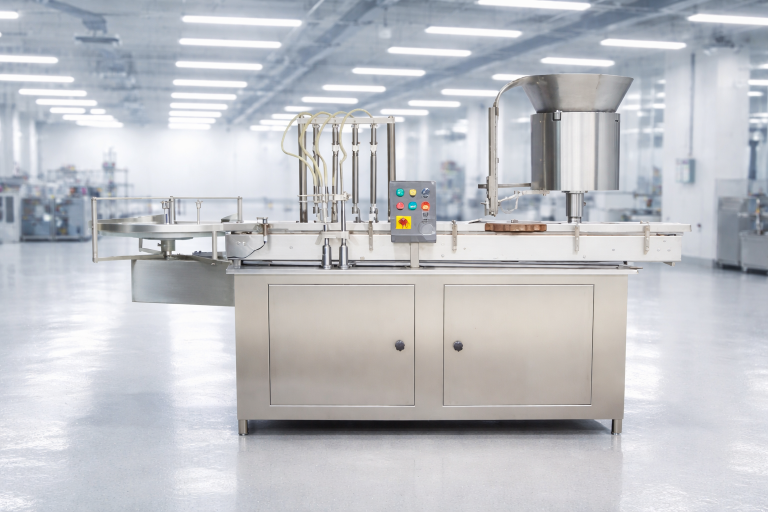
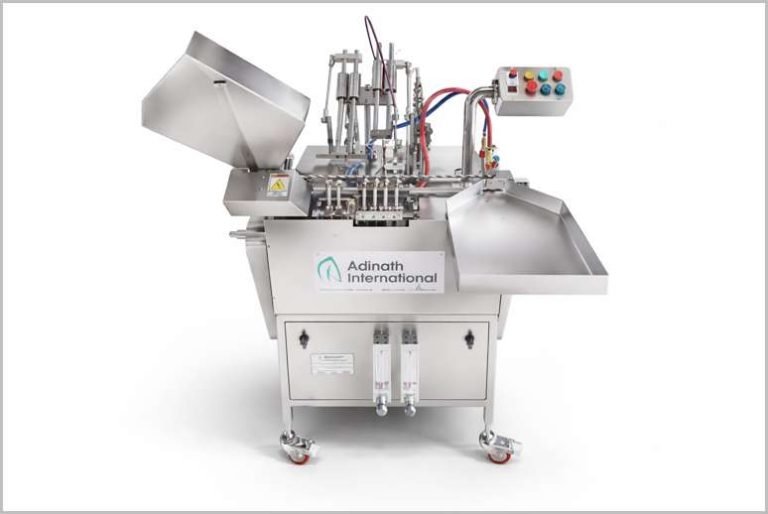
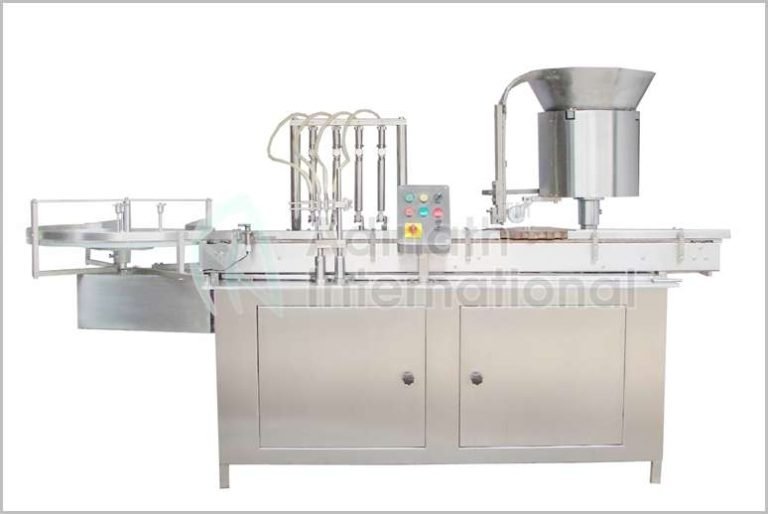
A typical ampoule filling machine fills and seals in one continuous sequence, as does the Ampoule Filling and Sealing Machine range. On the vial side, a standard vial filling machine fills and passes vials on, while Vial Filling and Rubber Stoppering Machine models combine filling and stoppering on one frame.
Upstream and downstream equipment
Both lines start the same way: containers are washed, then sterilised and depyrogenated, typically in a hot-air tunnel or oven, before filling. Ampoules and vials need different washing machines because their shapes and openings differ, but the purpose is the same.
After filling, the lines diverge:
- Ampoule line: washing, sterilising, filling and sealing, then inspection (for visible particles and seal integrity) and labelling. There is no separate closure machine, because the filler seals the ampoule.
- Vial line: washing, sterilising, filling and stoppering, cap sealing, then inspection and labelling. The cap sealer is an additional machine, and stoppers and seals are additional materials that must be prepared, for example washed and sterilised stoppers.
A vial line therefore usually has one more machine and more incoming components to manage. An ampoule line has fewer components but needs fuel gas and oxygen for the burners, with the safety and ventilation measures that go with an open flame. Both arrangements are also supplied as complete pharmaceutical filling lines.
Operating and changeover considerations
Beyond the equipment list, the two formats differ in day-to-day running. On an ampoule machine, the burners are the most sensitive area: flame settings have to be adjusted for each ampoule size and glass type, burner tips need regular cleaning, and seal appearance and integrity are checked throughout the run. Fuel gas and oxygen supplies must be installed and maintained to the site’s safety standards, and the heat from the flame affects the local environment around the machine.
On a vial machine, the stopper feed is usually the area that needs most attention. Stoppers must be supplied ready for use, the vibratory bowl and chute must suit the stopper design, and stopper seating is checked before the vials reach the cap sealer. Crimp quality is then checked at the sealing machine. A change of vial size involves change parts on both the filler and the cap sealer, and sometimes a change of stopper and seal size as well.
In both cases, size changes mean fitting the correct change parts and re-setting heights, and both rely on careful in-process checks of fill volume by weighing. Neither format is simpler in every respect; each moves the operating effort to a different part of the line.
Ampoule vs vial filling machine: comparison table
| Aspect | Ampoule filling machine | Vial filling machine |
|---|---|---|
| Closure method | Flame sealing of the glass neck | Rubber stopper, then crimped seal |
| Closing equipment | Burners and sealing jaws on the filler | Stopper bowl and station on the filler; separate cap sealer |
| Filling element | Slim needles into a narrow neck | Nozzles, often diving, into a wider mouth |
| Typical dosing | Piston (syringe) pumps | Piston or peristaltic pumps |
| Gas purging | Common, before and after filling | Optional, product-dependent |
| Utilities | Electricity, LPG and oxygen for the burners, nitrogen for gas flushing | Electricity, compressed air for pneumatic stoppering parts, nitrogen where flushing is used |
| Extra materials | None beyond the ampoule | Stoppers and aluminium seals |
| Container contents | Liquids | Liquids, powders, freeze-dried products |
| Dose type | Single dose | Single or multi-dose |
| Main quality focus at closing | Seal integrity and appearance | Stopper seating and crimp quality |
Utility needs vary between models and options; the table shows typical items only, so check the specification of the model you are considering.
Which suits your product
The choice between ampoules and vials is usually made by the product owner for reasons of formulation, dosing and market practice, not by the machine buyer. Still, the questions below help connect the product decision to the machine decision.
When ampoules are often chosen
- The product is a single-dose liquid.
- An all-glass container is preferred, with no rubber in contact with the product.
- The product and market already use ampoules, so users expect that format.
When vials are often chosen
- The product is multi-dose, or must be withdrawn with a syringe through a stopper.
- The product is a powder or is freeze-dried and reconstituted before use.
- Larger fill volumes are needed than ampoules normally offer.
- Plastic containers are preferred to reduce breakage.
Many manufacturers run both formats. In that case, the two lines share upstream concepts (washing and depyrogenation) but need separate washers, fillers and closing equipment. Size the lines separately, because ampoule and vial products rarely share the same batch sizes. Container compatibility, stability and regulatory requirements for the product itself are decisions for your formulation and quality teams.
Conclusion
The ampoule vs vial filling machine question comes down to the closure. An ampoule is sealed by melting its own glass neck, so its filler carries burners and often gas purging, and the line needs no separate closure machine. A vial is closed with a rubber stopper and an aluminium seal, so its filler carries a stoppering station and works with a cap sealer, and the line handles extra components. Dosing principles are similar; the filling element, transport, utilities and downstream equipment are not.
If you are planning an injectable line and want to compare the two formats for your product, our team can help you weigh the options. Send us an enquiry with your product type, container sizes, fill volumes and required output.
 Summarize this article with: