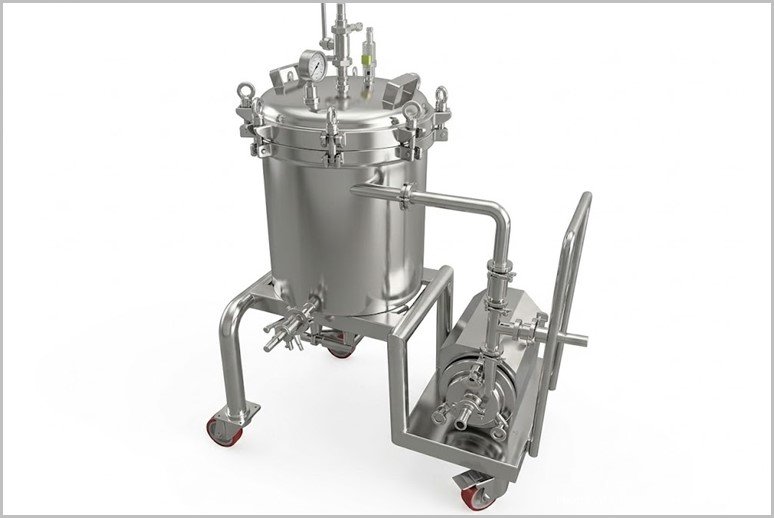
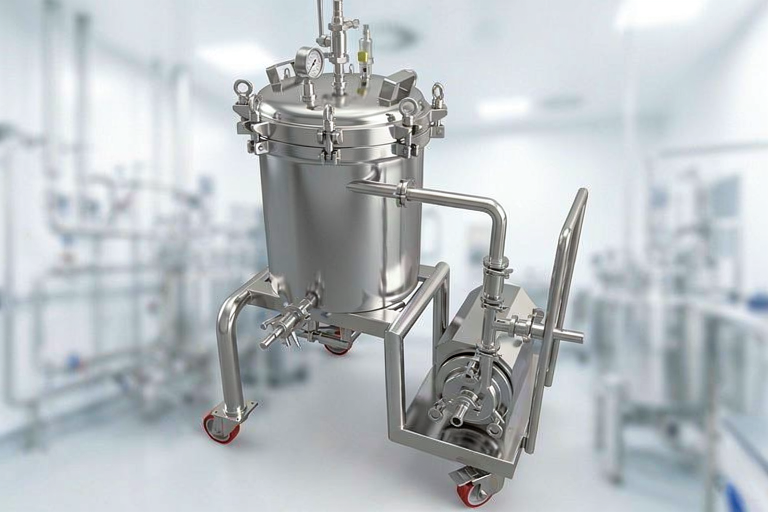
A Beverage Application Filter Press is an essential, high-performance solid-liquid separation system engineered specifically for the food and beverage processing industry. Designed primarily to clarify, polish, and purify liquids, this specialized filtration equipment removes suspended solids, fine turbidity, residual yeast, lees, pulp, and colloidal impurities.
From achieving crystal-clear clarity in commercial beers and fine wines to stabilizing fruit juices, edible oils, and distilled spirits, the filter press is critical for ensuring product brilliance, extended shelf life, and strict compliance with global food safety standards. This comprehensive technical guide explores the working principles, engineering features, and industrial significance of beverage filter presses.
Industry Expertise and Quality Assurance
The slurry (beverage containing solids) is pumped under pressure into chambers formed by a series of filter plates (often recessed chamber or plate-and-frame design) covered with filter cloths. The liquid (filtrate) passes through the cloths and exits via ports, while solids build up as a filter cake between the plates. Once chambers are full, pressure is released, plates are separated, and the dry cake is discharged. This batch process achieves high clarity and efficient dewatering.
In beverage production, these presses often feature food-grade stainless steel construction, FDA-compliant materials, sanitary designs for easy cleaning/sterilization, and options like membrane plates for extra squeezing or drip-free systems to maintain hygiene.
For detailed working process of filter press please view working video in top right section of this webpage.
Diameter of Plate | No. of Plates | Output LPH | Plate Height | Filtering Area m² | Cake Holding Space m³ | Motor | Size of Pump | Plate Thickness |
8 | 4 | 250 | 25mm | 0.1507 | 0.002893 | 1 H.P. | ½” | 1.2mm |
8 | 6 | 400 | 25mm | 0.1886 | 0.004340 | 1 H.P. | ½” | 1.2mm |
8 | 8 | 500 | 25mm | 0.2260 | 0.00579 | 1 H.P. | ½” | 1.2mm |
14 | 8 | 1000 | 38mm | 0.6130 | 0.02778 | 2 H.P. | 1″ | 1.2mm |
14 | 10 | 1200 | 38mm | 0.7960 | 003472 | 2 H.P. | 1″ | 1.2mm |
18S | 8 | 2500 | 50mm | 1.160 | 0.05007 | 3 H.P. | 1 ½” | 1.5mm |
18D | 15 | 5000 | 25mm | 2.169 | 0.04050 | 3 H.P. | 1 ½” | 1.5mm |
18D | 12 | 4000 | 50mm | 1.745 | 0.07801 | 3 H.P. | 1 ½” | 1.5mm |
18S | 23 | 7000 | 25mm | 3.338 | 0.06349 | 3 H.P. | 1 ½” | 1.5mm |
24D | 10 | 9000 | 2.53 | 0.14256 | 5 H.P. | 2″ | 1.5mm | |
24S | 18 | 16200 | 4.37 | 0.1132 | 5 H.P. | 2″ | 1.5mm | |
24D | 13 | 11700 | 3.22 | 0.18533 | 5 H.P. | 2″ | 1.5mm | |
24S | 24 | 21000 | 5.75 | 0.15081 | 5 H.P. | 2″ | 1.5mm |
Note:
* Power voltage can be adjusted as per customer’s domestic power voltage requirements.
* Rights of technical improvements & modification reserved.
* Illustrations & dimensions are shown for information purpose only.
Key features of filter presses designed for beverage applications (e.g., clarification/polishing of wine, beer, juices, cider, spirits, and similar liquids) emphasize hygienic design, product purity, ease of cleaning, and reliable solid-liquid separation while meeting food-grade standards.
Hygienic and Sanitary Construction
Filtration Performance and Flexibility
Operation and Automation
Additional Practical Features
These presses are widely used for juice/cider clarification, wine/beer polishing or lees filtration, spirit filtration, and related processes. Specific models (e.g., AQUACHEM EC-Beverage series or sheet filter presses) are engineered expressly for hygienic beverage duty, while general industrial presses can be adapted with appropriate materials and seals. Exact specifications (area, pressure, automation level) depend on throughput, product characteristics, and required clarity. Always verify against manufacturer data and local food-safety regulations for a given application.
A Beverage Application Filter Press is a high-performance solid-liquid separation system specifically engineered for the food and beverage industry. It clarifies, polishes, and purifies liquids by removing suspended solids, fine turbidity, residual yeast, lees, pulp, and colloidal impurities to deliver crystal-clear products with extended shelf life.
The slurry (beverage containing solids) is pumped under pressure into chambers formed by filter plates covered with filter cloths. The liquid filtrate passes through the cloths and exits via ports, while solids build up as a filter cake. Once the chambers are full, pressure is released, the plates are separated, and the dry cake is discharged. It is a batch process that achieves high clarity and efficient dewatering.
All contact parts are made from stainless steel SS 304, SS 316, or SS 316L with a high degree of finish. The design follows sanitary and food-grade standards to ensure hygiene, corrosion resistance, and compliance with food safety requirements.
It is ideal for commercial beers, fine wines, fruit juices, edible oils, distilled spirits, cider, and similar liquids. It is used for clarification, polishing, lees filtration, and removal of haze-forming particles while preserving product quality and flavor.
Available models feature plate diameters of 4, 8, 14, 18, 24, and 33 inches. Different configurations vary in the number of plates, filtering area, cake-holding capacity, and output rates to suit small pilot to larger industrial production needs.
Key features include maintenance without lifting the full cartridge, pressure gauge, safety valve and air vent, compatibility with centrifugal/gear/lobe pumps, minimum hold-up of unfiltered slurry for higher productivity, and construction to the latest engineering standards.
Output varies by model. For example, an 8-inch plate with 4 plates delivers around 250 LPH, while larger 24-inch configurations can reach 9,000–21,000 LPH (based on water with 5% activated carbon and polypropylene cloth). Actual rates depend on liquid viscosity, filter media, and sediment nature.
The press uses food-grade stainless steel, sealed/gasketed chambers, closed filtrate discharge systems, and designs that support Clean-in-Place (CIP) or easy manual cleaning and sterilization. Optional full stainless-steel enclosures further enhance cleanliness and corrosion resistance.
It delivers high product clarity and brilliance, extended shelf life, consistent quality, minimized product hold-up and waste, reduced downtime through sanitary design and automation options, and compliance with global food safety standards.
Yes. Filtration grade is adjustable by changing filter sheets, cloths, or media. Capacity is customizable through plate size, number of plates/chambers, and modular expansion. Options include membrane plates for extra squeezing and various pump types to match specific process requirements.
More Other Machines
 Cold Drinks Filter Press
 Filter Press
 Filter Press For Agriculture Liquid
 Filter Press For Syrup Plant
Algeria | Angola | Argentina | Australia | Austria | Bahrain | Bangladesh | Belarus | Belgium | Bolivia | Botswana | Brazil | Bulgaria | Canada | Chile | China | Colombia | Costa Rica | Cuba | Czech Republic | Denmark | Dominican Republic | Ecuador | Egypt | El Salvador | Ethiopia | Finland | France | Germany | Ghana | Greece | Guatemala | Haiti | Honduras | Hong Kong | Hungary | India | Indonesia | Iran | Ireland | Israel | Italy | Ivory Coast | Japan | Jordan | Kazakhstan | Kenya | Kuwait | Lebanon | Libya | Malaysia | Mexico | Mongolia | Morocco | Mozambique | Myanmar | Netherlands | New Zealand | Nicaragua | Nigeria | Norway | Oman | Pakistan | Panama | Paraguay | Peru | Philippines | Poland | Portugal | Qatar | Romania | Russia | Saudi Arabia | Senegal | Slovakia | Singapore | South Africa | South Korea | South Sudan | Spain | Sri Lanka | Sweden | Switzerland | Taiwan | Tanzania | Thailand | Trinidad and Tobago | Tunisia | Turkey | Uganda | Ukraine | United Arab Emirates | United Kingdom | United States | Uruguay | Uzbekistan | Venezuela | Vietnam | Zambia | Zimbabwe
Connect with our engineering team to discuss your specific production requirements. We provide customized, cGMP-compliant machinery solutions designed to optimize your manufacturing facility and maximize output.
©Adinath International | Theme Developed By Pharma Machinery Manufacturer I Website updated on: 15 October 2026
Request A Quick Quote
Beverage Application Filter Press
Please drop your requirements, one of our technical expert will contact you in next 24 working hours.
WhatsApp us
