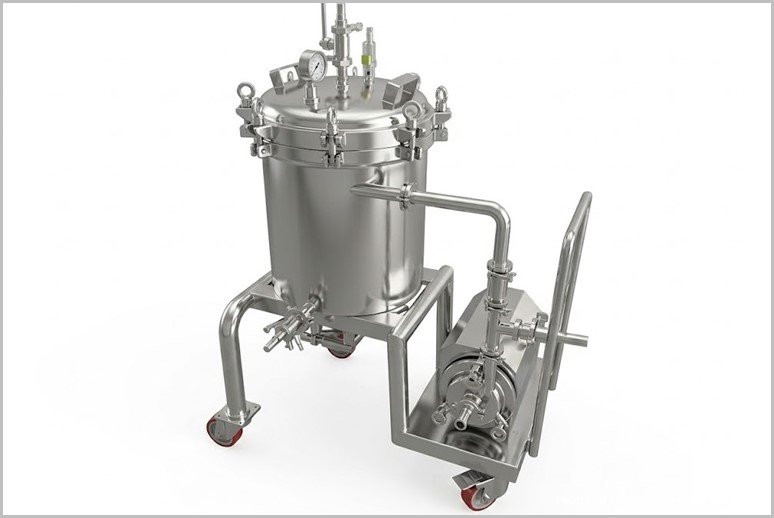
A filter press stands as one of the most effective and trusted industrial solutions for solid-liquid separation. This robust batch-process machine employs advanced pressure filtration technology to efficiently dewater slurries—mixtures of solid particles suspended in liquids—delivering two high-value outputs: a dense, low-moisture solid cake and a clear filtrate that can frequently be recycled or safely discharged in compliance with environmental standards.
In industries where precise control over moisture content and solids recovery is essential, the filter press has earned its reputation as a highly reliable dewatering equipment option. Unlike continuous systems that may sacrifice dryness for speed, a quality filter press applies controlled hydraulic or mechanical pressure to force liquid through filter media while retaining solids. The result is a compact cake with significantly reduced water content, often achieving dryness levels that other technologies struggle to match. This capability directly translates into lower disposal volumes, reduced transportation costs, and improved recovery of valuable materials or process water.
The operating principle is straightforward yet highly effective. Slurry is pumped into a series of recessed or membrane plates that form sealed chambers. As pressure builds, liquid is driven through the filter cloths, leaving solids behind. Once the filtration cycle completes, the plates open and the dry cake is discharged. Modern designs incorporate features such as automatic plate shifters, cloth washing systems, and membrane squeeze technology to further enhance cake dryness and operational efficiency. These advancements allow operators to achieve consistent performance across varying feed characteristics while minimizing manual intervention and downtime.
Across multiple sectors, the filter press proves indispensable. In mining and mineral processing, it recovers concentrate and dewaters tailings, supporting both resource recovery and responsible waste management. Wastewater treatment plants rely on it to produce drier sludge cakes that reduce landfill requirements and associated fees. Chemical processing facilities use filter presses to clarify process streams and recover catalysts or intermediates. Pharmaceutical manufacturers value the equipment for its ability to deliver high-purity solids under controlled, sanitary conditions. Food and beverage producers apply the technology for clarifying juices, recovering proteins, or dewatering by-products while meeting strict hygiene standards.
Beyond technical performance, investing in a well-engineered filter press delivers measurable operational and economic advantages. Higher solids content in the final cake lowers disposal costs and can create opportunities for beneficial reuse or sale of the dewatered material. Clear filtrate often returns to the process, reducing fresh water demand and supporting sustainability goals. The batch nature of the system also provides operators with greater control over product quality compared with continuous alternatives, an important consideration when regulatory compliance or product specifications are strict.
When selecting equipment, factors such as plate material, filter cloth selection, automation level, and pressure rating must align with the specific slurry characteristics and production requirements. Properly specified and maintained filter presses routinely deliver years of reliable service, reinforcing their position as a cornerstone of efficient solid-liquid separation strategies.
In summary, a filter press is far more than a simple dewatering device. It is a proven, high-performance industrial machine that combines pressure filtration expertise with practical economic benefits. For operations in mining, wastewater treatment, chemical processing, pharmaceuticals, or food manufacturing that demand high solids recovery and low residual moisture, a quality filter press remains one of the most dependable and cost-effective solutions available.
The liquid is fed into the filter of the machine and it is done under positive pressure. Now, the liquid travels downwards and passes through the opening on the sides of filter plates. The filter media holds back foreign particles and enables only clear filtrate to go past the central channel. This central channel is made by interlocking pressure cups to the outlet. The filtration process continues until the cake holding capacity gets saturated or the filtrate rate gets way slower than it must be. This happens due to decreasing cake resistance. Our meticulously designed filter press is cost-efficient. And you can bet on its efficiency – it helps save every precious drop.
Diameter of Plate | No. of Plates | Output LPH | Plate Height | Filtering Area m² | Cake Holding Space m³ | Motor | Size of Pump | Plate Thickness |
8 | 4 | 250 | 25mm | 0.1507 | 0.002893 | 1 H.P. | ½” | 1.2mm |
8 | 6 | 400 | 25mm | 0.1886 | 0.004340 | 1 H.P. | ½” | 1.2mm |
8 | 8 | 500 | 25mm | 0.2260 | 0.00579 | 1 H.P. | ½” | 1.2mm |
14 | 8 | 1000 | 38mm | 0.6130 | 0.02778 | 2 H.P. | 1″ | 1.2mm |
14 | 10 | 1200 | 38mm | 0.7960 | 003472 | 2 H.P. | 1″ | 1.2mm |
18S | 8 | 2500 | 50mm | 1.160 | 0.05007 | 3 H.P. | 1 ½” | 1.5mm |
18D | 15 | 5000 | 25mm | 2.169 | 0.04050 | 3 H.P. | 1 ½” | 1.5mm |
18D | 12 | 4000 | 50mm | 1.745 | 0.07801 | 3 H.P. | 1 ½” | 1.5mm |
18S | 23 | 7000 | 25mm | 3.338 | 0.06349 | 3 H.P. | 1 ½” | 1.5mm |
24D | 10 | 9000 | 2.53 | 0.14256 | 5 H.P. | 2″ | 1.5mm | |
24S | 18 | 16200 | 4.37 | 0.1132 | 5 H.P. | 2″ | 1.5mm | |
24D | 13 | 11700 | 3.22 | 0.18533 | 5 H.P. | 2″ | 1.5mm | |
24S | 24 | 21000 | 5.75 | 0.15081 | 5 H.P. | 2″ | 1.5mm |
Note:
* Power voltage can be adjusted as per customer’s domestic power voltage requirements.
* Rights of technical improvements & modification reserved.
* Illustrations & dimensions are shown for information purpose only.
A Filter Press is a batch-process industrial machine used for solid-liquid separation. Slurry is pumped under positive pressure into a series of recessed or membrane plates that form sealed chambers. Liquid is forced through filter cloths or media, while solids are retained as a dense, low-moisture cake. Clear filtrate exits through a central channel formed by interlocking pressure cups. The cycle continues until the cake capacity is reached or the flow rate slows significantly.
It delivers high solids recovery and low residual moisture in the cake, reducing disposal volumes and transportation costs. Clear filtrate can often be recycled, lowering fresh water demand. The batch process offers better control over product quality than continuous systems, supports sustainability goals, and provides reliable dewatering across varying slurry characteristics.
It is widely applied in the pharmaceutical, nutraceutical, herbal, Ayurvedic, biotech, cosmetic, and chemical industries. It is also used in mining/mineral processing for concentrate recovery and tailings dewatering, wastewater treatment for drier sludge cakes, and food & beverage for clarifying juices or recovering proteins while meeting hygiene standards.
All contact parts are made from stainless steel grades SS 304, SS 316, or SS 316L. These materials provide corrosion resistance, a high degree of finish, and crystal-clear filtration suitable for sanitary applications.
Available models include plate diameters of 4, 8, 14, 18, 24, and 33 inches. Different numbers of plates, heights, filtering areas, and cake-holding capacities are offered to match required output rates (measured in LPH under specified test conditions).
The Filter Press can be supplied with centrifugal, gear, or lobe pumps. Standard fittings include a pressure gauge, safety valve, and air vent for safe and controlled operation.
Maintenance can be carried out without lifting the entire cartridge; only the head needs to be lifted. The design follows the latest engineering standards for ease of access and reduced downtime.
Optional features include a flame-proof motor and starter, viewing glass and sampling port, PU wheels for mobility, and filter media customized according to the client’s requirements.
Filtration rate depends on the viscosity of the liquid, the quality of the filter pads or cloths (e.g., polypropylene), and the nature of the sediments in the slurry. The flow rates in technical specifications are typically based on water with 5% activated carbon. Power voltage can also be adjusted to local requirements.
It offers superior cake dryness compared with many continuous systems, minimum hold-up of unfiltered slurry (boosting productivity), high solids recovery, and long-term reliability when properly specified. These advantages translate into lower operating costs, better resource recovery, and compliance with environmental and quality standards.
More Other Machines
 Beverage Application Filter Press
 Cold Drinks Filter Press
 Filter Press For Agriculture Liquid
 Filter Press For Syrup Plant
Algeria | Angola | Argentina | Australia | Austria | Bahrain | Bangladesh | Belarus | Belgium | Bolivia | Botswana | Brazil | Bulgaria | Canada | Chile | China | Colombia | Costa Rica | Cuba | Czech Republic | Denmark | Dominican Republic | Ecuador | Egypt | El Salvador | Ethiopia | Finland | France | Germany | Ghana | Greece | Guatemala | Haiti | Honduras | Hong Kong | Hungary | India | Indonesia | Iran | Ireland | Israel | Italy | Ivory Coast | Japan | Jordan | Kazakhstan | Kenya | Kuwait | Lebanon | Libya | Malaysia | Mexico | Mongolia | Morocco | Mozambique | Myanmar | Netherlands | New Zealand | Nicaragua | Nigeria | Norway | Oman | Pakistan | Panama | Paraguay | Peru | Philippines | Poland | Portugal | Qatar | Romania | Russia | Saudi Arabia | Senegal | Slovakia | Singapore | South Africa | South Korea | South Sudan | Spain | Sri Lanka | Sweden | Switzerland | Taiwan | Tanzania | Thailand | Trinidad and Tobago | Tunisia | Turkey | Uganda | Ukraine | United Arab Emirates | United Kingdom | United States | Uruguay | Uzbekistan | Venezuela | Vietnam | Zambia | Zimbabwe
Connect with our engineering team to discuss your specific production requirements. We provide customized, cGMP-compliant machinery solutions designed to optimize your manufacturing facility and maximize output.
©Adinath International | Theme Developed By Pharma Machinery Manufacturer I Website updated on: 15 October 2026
Request A Quick Quote
Filter Press
Please drop your requirements, one of our technical expert will contact you in next 24 working hours.
WhatsApp us
