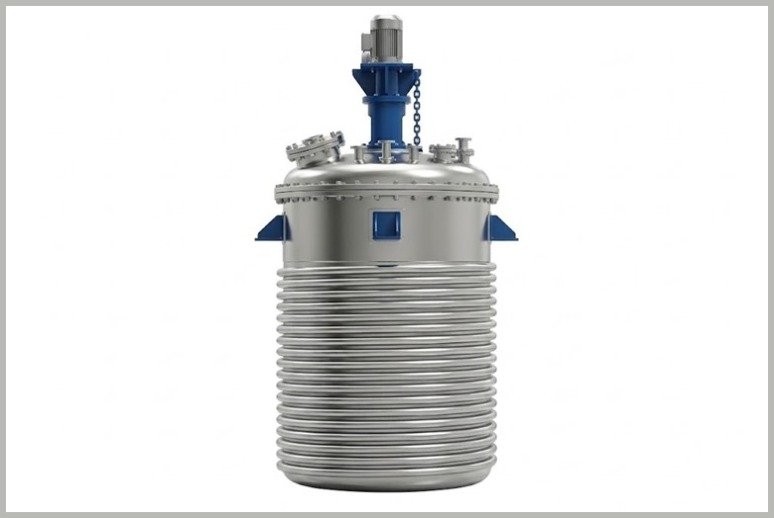
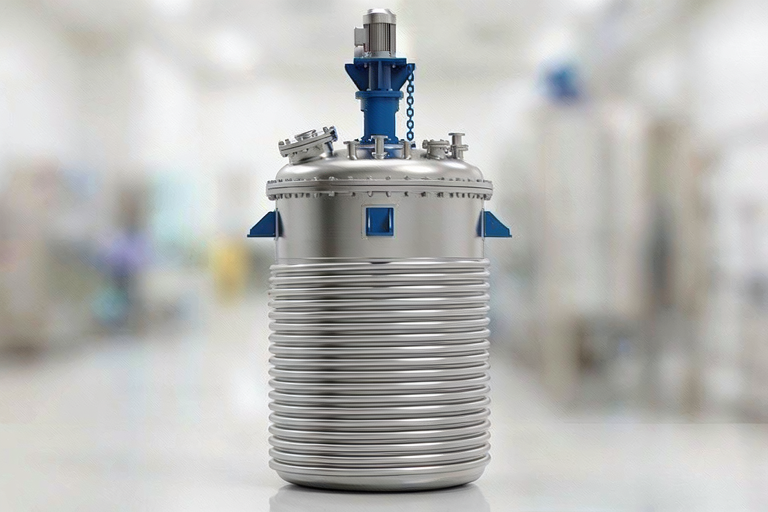
In today’s competitive industrial landscape, the EEATA Chemical Stainless Steel Reaction Vessel stands out as a high-performance solution for controlled chemical reactions, mixing, blending, and material processing. Also widely known as a stainless steel reactor or reactor vessel, this specialized industrial container is engineered to maintain precise conditions of temperature, pressure, and agitation, ensuring optimal reaction outcomes across diverse manufacturing sectors.
Whether you operate in pharmaceuticals, petrochemicals, food processing, or specialty chemicals, investing in a reliable stainless steel reaction vessel can significantly enhance efficiency, product quality, and operational safety. EEATA’s reactors are designed with cutting-edge technology and premium-grade materials to meet the demanding requirements of modern chemical engineering.
It is a high-performance industrial container (also called a stainless steel reactor or reactor vessel) engineered for controlled chemical reactions, mixing, blending, and material processing. It maintains precise temperature, pressure, and agitation conditions to deliver optimal results across manufacturing sectors.
They are usually made from high-grade austenitic stainless steel such as SS 304/304L or, more commonly for corrosive or high-purity applications, SS 316/316L. Higher alloys (duplex stainless steels, Hastelloy, Alloy 20, etc.) are used for aggressive media. Low-carbon “L” grades improve weldability and reduce sensitization risk.
SS 316/316L provides superior resistance to pitting and crevice corrosion (especially from chlorides) due to the addition of 2–3% molybdenum, along with excellent resistance to a wide range of acids, alkalis, organic solvents, and process chemicals.
A wide range of agitators can be fitted, including anchor, paddle, pitched-blade turbine, propeller, hydrofoil, helical ribbon, or high-shear homogenizers, selected according to process needs.
They commonly operate from –20 °C to +250/300 °C or higher (depending on design and heating medium) and safely under pressure up to several bar, with high-pressure designs reaching 10–25+ bar or more, as well as vacuum conditions.
Jacketed designs (full or half-pipe/limpet coil) enable efficient heat transfer using steam, hot oil, water, chilled brine, or thermic fluid. Internal coils can be added for faster heating/cooling or high-viscosity duties, supporting both exothermic and endothermic reactions with precise control.
They are widely applied in the pharmaceutical, nutraceutical, herbal, Ayurvedic, biotech, cosmetic, chemical, petrochemical, food processing, and specialty chemicals industries.
Stainless steel vessels offer better heat-transfer rates, higher pressure ratings, greater impact resistance, long service life with relatively low maintenance, and easier cleaning/sterilization, while remaining suitable for GMP or non-GMP configurations.
Vessels feature a cylindrical vertical shell with torispherical or elliptical dish ends, capacities ranging from laboratory/pilot scale (a few litres) to large industrial sizes (tens of thousands of litres), multiple nozzles, and fabrication to international codes (ASME, PED, DIN, IS, cGMP, etc.) with radiography, pressure testing, and surface-finish control. Optional insulation with outer SS cladding is available.
Yes. Smooth, polished (often mirror or electro-polished) internal surfaces minimize product adhesion, facilitate CIP/SIP cleaning, reduce contamination risk, and make them ideal for pharmaceutical, fine chemical, food, and biotech applications where product purity is critical. They are also compatible with automation (PLC/HMI for temperature, pressure, speed, and data logging).
Algeria | Angola | Argentina | Australia | Austria | Bahrain | Bangladesh | Belarus | Belgium | Bolivia | Botswana | Brazil | Bulgaria | Canada | Chile | China | Colombia | Costa Rica | Cuba | Czech Republic | Denmark | Dominican Republic | Ecuador | Egypt | El Salvador | Ethiopia | Finland | France | Germany | Ghana | Greece | Guatemala | Haiti | Honduras | Hong Kong | Hungary | India | Indonesia | Iran | Ireland | Israel | Italy | Ivory Coast | Japan | Jordan | Kazakhstan | Kenya | Kuwait | Lebanon | Libya | Malaysia | Mexico | Mongolia | Morocco | Mozambique | Myanmar | Netherlands | New Zealand | Nicaragua | Nigeria | Norway | Oman | Pakistan | Panama | Paraguay | Peru | Philippines | Poland | Portugal | Qatar | Romania | Russia | Saudi Arabia | Senegal | Slovakia | Singapore | South Africa | South Korea | South Sudan | Spain | Sri Lanka | Sweden | Switzerland | Taiwan | Tanzania | Thailand | Trinidad and Tobago | Tunisia | Turkey | Uganda | Ukraine | United Arab Emirates | United Kingdom | United States | Uruguay | Uzbekistan | Venezuela | Vietnam | Zambia | Zimbabwe
Connect with our engineering team to discuss your specific production requirements. We provide customized, cGMP-compliant machinery solutions designed to optimize your manufacturing facility and maximize output.
©Adinath International | Theme Developed By Pharma Machinery Manufacturer I Website updated on: 15 October 2026
Request A Quick Quote
Chemical Stainless Steel Reaction Vessel
Please drop your requirements, one of our technical expert will contact you in next 24 working hours.
WhatsApp us


