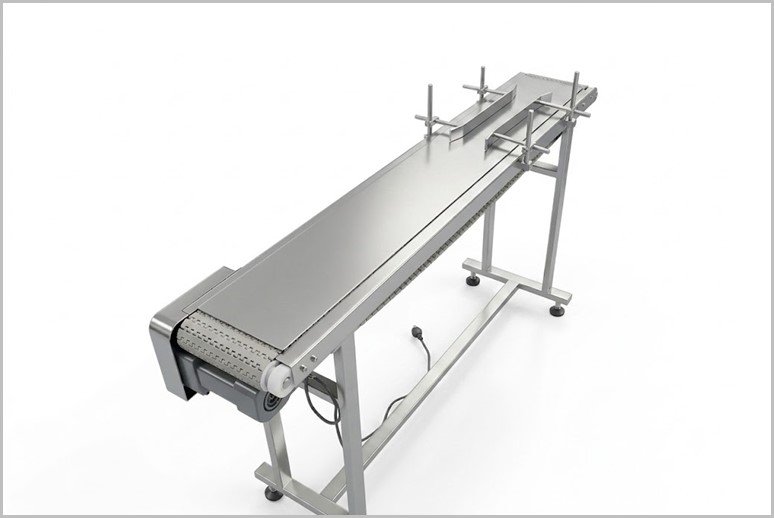
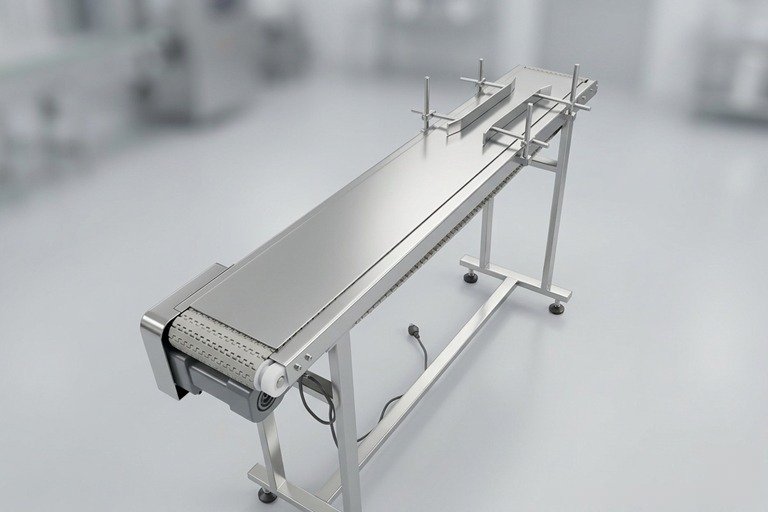
In modern industrial manufacturing, efficient material handling is the backbone of production lines across pharmaceutical, food processing, chemical, and packaging sectors. Among the various automation components utilized in factory floors, the Stainless-Steel Belt Conveyor stands out as a pinnacle of engineering reliability. Designed to streamline movement, optimize workflow, and maintain strict sanitary conditions, these systems transport items seamlessly across horizontal, inclined, or complex multi-tier configurations.
Comprehensive Structural Architecture
A high-performance stainless steel belt conveyor is engineered using precision components that guarantee structural integrity and long-term operational success:
Belt Width | Tailored (depends on product dimensions) |
Belt Speed | Customized according to production requirement |
Material | SS (Stainless steel) 304/SS 316 |
Electricity | 3-phase: 415v; 50Hz |
Machine Length | Length can vary depending on industry needs |
* Power voltage can be adjusted as per customer’s domestic power voltage requirements.
* Rights of technical improvements & modification reserved.
* Illustrations & dimensions are shown for information purpose only.
It is a durable material-handling system designed for efficient, sanitary transport of products in industrial settings. It is widely used in pharmaceutical, nutraceutical, herbal, Ayurvedic, biotech, cosmetic, chemical, food processing, and packaging industries for moving items horizontally, on inclines, or in multi-tier configurations while maintaining hygiene.
The frame is primarily built from high-grade stainless steel (SS 304 or SS 316) for strength and corrosion resistance. It can also be offered in mild steel (MS). Belts may be stainless-steel (solid, perforated, or wire-mesh), plastic modular, PVC-coated canvas, or endless rubberized types, depending on the application. Contact surfaces often use 16-gauge SS 304 sheet with a matt finish.
An electric motor (often with gear reducer) drives the head/drive pulley. Friction between the pulley and the belt moves the continuous loop. Product is loaded on the upper (carrying) side near the tail end, transported to the discharge/head end, and the empty belt returns underneath on return idlers. A take-up device maintains proper tension for reliable tracking and to prevent slippage.
It is fully customizable in belt speed, length, height, and width to match specific production needs. Belt width is tailored to product dimensions, and length varies according to industry requirements. A 3-speed pulley system allows easy regulation of belt speed.
It is ideal for frequent washdowns, resists bacteria buildup and chemical/moisture corrosion, withstands extreme temperatures (up to 300°C+ for metal belts), handles heavy loads and harsh conditions, is rust-proof and low-maintenance (reducing downtime), and meets hygiene standards for food (FDA/USDA) and pharmaceutical industries.
It typically operates on 3-phase, 415 V, 50 Hz electricity. Power voltage can be adjusted to match the customer’s local supply requirements.
It uses an industrial-grade (often explosion-proof) electric motor connected to precision pulleys and rollers, a reduction gearbox for jerk-free and silent running, self-aligning bearings for trouble-free roller rotation, and a take-up/tensioning system (screw, gravity, or automatic) for consistent belt tracking.
Yes. It transports both bulk materials and finished products and is suitable for high-heat, vacuum, caustic, or sterile environments. Stainless-steel or specialized belts are chosen for extreme thermal or hygienic conditions.
It features a robust frame made from 32 mm square pipe (SS 304 or MS) with matt finish or high-quality paint, combined with a 16-gauge SS 304 sheet structure. These elements provide excellent load-bearing strength and resistance to environmental degradation.
Yes. Its stainless-steel construction, resistance to corrosion and bacteria, easy-clean design for washdowns, and compliance with pharmaceutical GMP and food hygiene standards make it well-suited for sterile and regulated production environments.
More Other Machines
 Stainless Steel Wire Mesh Conveyor
 Chemical Stainless Steel Reaction Vessel
 Plastic Modular Belt Conveyor
 Rubber Belt Conveyor
Algeria | Angola | Argentina | Australia | Austria | Bahrain | Bangladesh | Belarus | Belgium | Bolivia | Botswana | Brazil | Bulgaria | Canada | Chile | China | Colombia | Costa Rica | Cuba | Czech Republic | Denmark | Dominican Republic | Ecuador | Egypt | El Salvador | Ethiopia | Finland | France | Germany | Ghana | Greece | Guatemala | Haiti | Honduras | Hong Kong | Hungary | India | Indonesia | Iran | Ireland | Israel | Italy | Ivory Coast | Japan | Jordan | Kazakhstan | Kenya | Kuwait | Lebanon | Libya | Malaysia | Mexico | Mongolia | Morocco | Mozambique | Myanmar | Netherlands | New Zealand | Nicaragua | Nigeria | Norway | Oman | Pakistan | Panama | Paraguay | Peru | Philippines | Poland | Portugal | Qatar | Romania | Russia | Saudi Arabia | Senegal | Slovakia | Singapore | South Africa | South Korea | South Sudan | Spain | Sri Lanka | Sweden | Switzerland | Taiwan | Tanzania | Thailand | Trinidad and Tobago | Tunisia | Turkey | Uganda | Ukraine | United Arab Emirates | United Kingdom | United States | Uruguay | Uzbekistan | Venezuela | Vietnam | Zambia | Zimbabwe
Connect with our engineering team to discuss your specific production requirements. We provide customized, cGMP-compliant machinery solutions designed to optimize your manufacturing facility and maximize output.
©Adinath International | Theme Developed By Pharma Machinery Manufacturer I Website updated on: 15 October 2026
Request A Quick Quote
Stainless Steel Belt Conveyor
Please drop your requirements, one of our technical expert will contact you in next 24 working hours.
WhatsApp us
