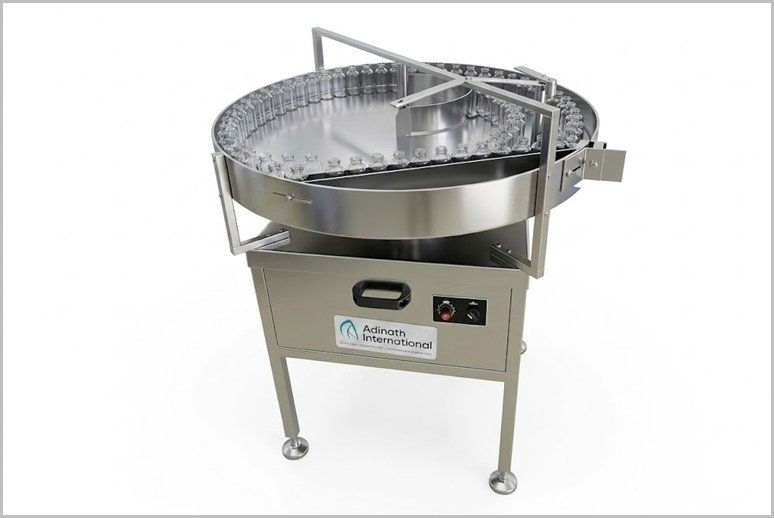
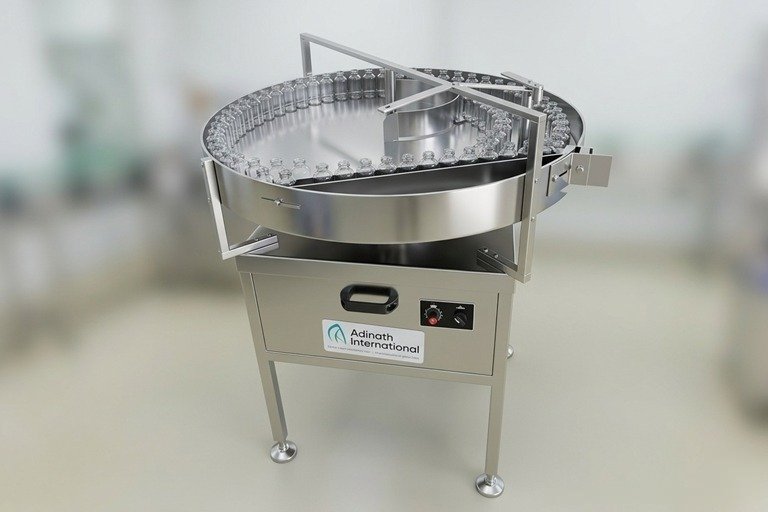
A Round Bottle Unscrambler is a specialized automated machine designed for modern packaging and bottling production lines. It efficiently sorts, orients, and feeds empty round bottles—typically made of plastic or glass—into an upright, single-file arrangement on a conveyor belt. This prepares the containers for seamless downstream processes such as filling, capping, labeling, or sealing. By replacing manual sorting of bulk, randomly oriented bottles, the machine significantly boosts operational efficiency, reduces labor costs, and supports high-speed production rates that commonly range from 40 to over 400 bottles per minute, depending on the model, bottle dimensions, and material.
In high-volume manufacturing environments, handling empty bottles manually creates bottlenecks, inconsistencies, and increased risk of contamination or damage. A Round Bottle Unscrambler addresses these challenges through precise mechanical and sensor-based systems. Bottles are typically loaded in bulk into a large hopper or rotary table. From there, specialized mechanisms—such as centrifugal discs, star wheels, belt elevators, or vibrating feeders—separate and elevate the containers. Orientation systems then detect and correct the position of each bottle so that the neck faces upward and the base sits firmly on the conveyor. Advanced models incorporate photoelectric sensors, vision systems, or mechanical guides to ensure consistent orientation even with slight variations in bottle shape or size within the round category.
The benefits of integrating a Round Bottle Unscrambler extend far beyond simple sorting. Manufacturers experience measurable gains in throughput because the machine continuously supplies bottles at a steady, controlled rate that matches the speed of filling and capping equipment. Labor requirements drop substantially, as operators no longer need to spend time manually placing bottles upright. This reduction in human handling also improves workplace safety and hygiene standards, which is especially critical in food, beverage, pharmaceutical, cosmetic, and personal-care industries where product integrity and regulatory compliance matter. Reduced manual intervention further lowers the chance of bottle damage, spills, or misfeeds that can halt an entire line.
Modern Round Bottle Unscramblers are engineered for flexibility and reliability. Many units accommodate a range of bottle diameters and heights with quick-change tooling or adjustable guides, allowing the same machine to handle multiple product SKUs. Stainless-steel construction and sanitary design features meet stringent cleanability requirements in regulated sectors. Variable-speed drives, overload protection, and integration-ready controls (often PLC-based with HMI interfaces) enable smooth synchronization with upstream bulk-handling systems and downstream packaging equipment. Energy-efficient motors and low-noise operation contribute to sustainable plant performance while maintaining the high speeds demanded by competitive markets.
From an operational standpoint, the return on investment is clear. Facilities that previously relied on manual labor or semi-automatic methods report faster changeovers, fewer production stops, and more consistent line efficiency. The ability to run at 40–400+ bottles per minute means producers can scale output without proportional increases in staffing or floor space. When paired with complementary equipment such as bottle rinsers, fillers, cappers, and labelers, a Round Bottle Unscrambler becomes a foundational element of a fully automated packaging line.
Selecting the right Round Bottle Unscrambler requires attention to bottle specifications, desired line speed, available floor space, and integration needs. Reputable manufacturers provide detailed performance data, application engineering support, and proven track records across diverse industries. Proper installation, operator training, and routine maintenance ensure long-term reliability and protect the investment.
In summary, a Round Bottle Unscrambler transforms disordered bulk bottles into a continuous, oriented flow ready for high-speed processing. It delivers measurable improvements in efficiency, labour utilization, product quality, and overall line productivity—making it an indispensable solution for any packaging operation seeking to compete in today’s demanding manufacturing landscape.
Many models are rotary-style accumulation tables (simpler for round bottles, using rotation to push bottles into order), while advanced ones handle higher speeds with servo controls or pucks for stability.
* Power voltage can be adjusted as per customer’s domestic power voltage requirements.
* Rights of technical improvements & modification reserved.
* Illustrations & dimensions are shown for information purpose only.
It takes randomly oriented empty bottles (often dumped in bulk) and automatically aligns them neck-up (or as required), rejecting any upside-down or misaligned ones. This eliminates manual sorting, reduces labor, and ensures smooth, high-speed operation in industries such as pharmaceuticals, food & beverages, cosmetics, and chemicals.
A Round Bottle Unscrambler is a specialized automated machine that sorts, orients, and feeds empty round bottles (typically plastic or glass) from bulk random orientation into an upright, single-file arrangement on a conveyor. This prepares them for downstream processes such as filling, capping, labeling, or sealing.
It primarily handles round plastic bottles made of PET, HDPE, LDPE, PP, and similar materials. Typical size range is diameter 25–100 mm and height 30–220 mm. Many models also accommodate slight variations and, in some cases, square, oval, or rectangular shapes.
Speeds typically range from 40 to over 400 bottles per minute (commonly 100–300 bpm), depending on the model, bottle dimensions, and material. Some advanced units can reach 50–600+ bottles per minute.
Bottles are loaded into a bulk hopper or elevator, which feeds them to a rotary turntable or disc. Centrifugal force and guides separate them. An orientation mechanism (hooks, chutes, cams, or pockets) corrects position so necks face upward; upside-down bottles are rejected (often via air blowers). Properly oriented bottles then discharge in single file onto the conveyor, synchronized with the line.
It eliminates manual sorting bottlenecks, reduces labor costs, improves hygiene and workplace safety, minimizes bottle damage or contamination, ensures consistent high-speed supply to filling/capping equipment, and boosts overall line efficiency and throughput.
Bottle-contact parts and the frame are typically made of SS 304 (or SS 316) stainless steel for durability, hygiene, and GMP/cGMP compliance. This makes it ideal for pharmaceutical, food, beverage, cosmetic, nutraceutical, herbal, Ayurvedic, biotech, and chemical applications.
Most models offer tool-less or quick-change tooling/adjustable guides, allowing changeovers in under 5–20 minutes without mold changes. PLC controls with HMI and memory for multiple job recipes further simplify switching between SKUs.
It features PLC control with touch-screen HMI, variable-speed drives (VFD), automatic speed synchronization, overload protection, photoelectric sensors or vision systems for orientation and jam detection, automatic inverted-bottle rejection, stainless-steel frame with transparent safety shields, low-noise/vibration-free design, and optional features such as ionized air rinse, low-level alarms, and acrylic enclosures.
Yes. It is designed with a compact footprint, integration-ready controls, and variable-speed synchronization to work seamlessly with upstream bulk-handling systems and downstream equipment such as rinsers, fillers, cappers, and labelers. Machine height is adjustable to match the production line.
It is widely used in the pharmaceutical, nutraceutical, herbal, Ayurvedic, biotech, cosmetic, and chemical industries. Its primary function is to take randomly oriented empty bottles dumped in bulk and automatically align them neck-up (rejecting misoriented ones), ensuring a continuous, oriented flow for high-speed automated packaging while reducing labor and improving consistency.
More Other Machines
 Automatic Bottle Unscrambler
 Bottle Unscrambler Machine
 PET Bottle Unscrambler
 Plastic Bottle Unscrambler
Algeria | Angola | Argentina | Australia | Austria | Bahrain | Bangladesh | Belarus | Belgium | Bolivia | Botswana | Brazil | Bulgaria | Canada | Chile | China | Colombia | Costa Rica | Cuba | Czech Republic | Denmark | Dominican Republic | Ecuador | Egypt | El Salvador | Ethiopia | Finland | France | Germany | Ghana | Greece | Guatemala | Haiti | Honduras | Hong Kong | Hungary | India | Indonesia | Iran | Ireland | Israel | Italy | Ivory Coast | Japan | Jordan | Kazakhstan | Kenya | Kuwait | Lebanon | Libya | Malaysia | Mexico | Mongolia | Morocco | Mozambique | Myanmar | Netherlands | New Zealand | Nicaragua | Nigeria | Norway | Oman | Pakistan | Panama | Paraguay | Peru | Philippines | Poland | Portugal | Qatar | Romania | Russia | Saudi Arabia | Senegal | Slovakia | Singapore | South Africa | South Korea | South Sudan | Spain | Sri Lanka | Sweden | Switzerland | Taiwan | Tanzania | Thailand | Trinidad and Tobago | Tunisia | Turkey | Uganda | Ukraine | United Arab Emirates | United Kingdom | United States | Uruguay | Uzbekistan | Venezuela | Vietnam | Zambia | Zimbabwe
Connect with our engineering team to discuss your specific production requirements. We provide customized, cGMP-compliant machinery solutions designed to optimize your manufacturing facility and maximize output.
©Adinath International | Theme Developed By Pharma Machinery Manufacturer I Website updated on: 15 October 2026
Request A Quick Quote
Round Bottle Unscrambler
Please drop your requirements, one of our technical expert will contact you in next 24 working hours.
WhatsApp us
