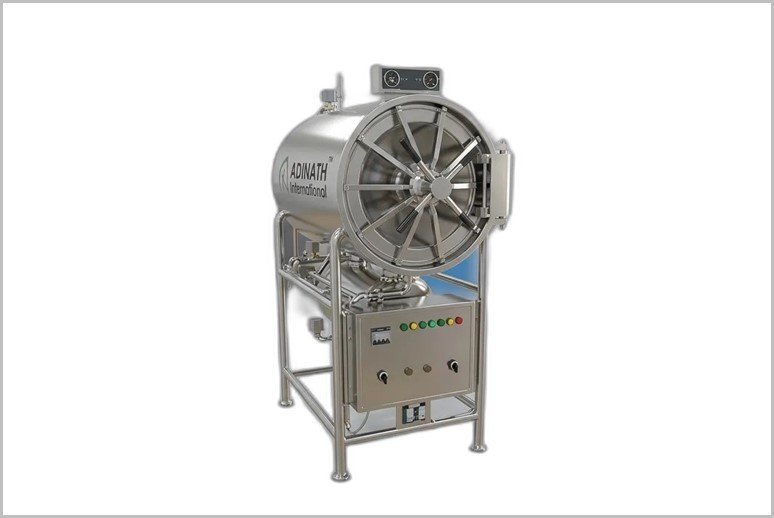
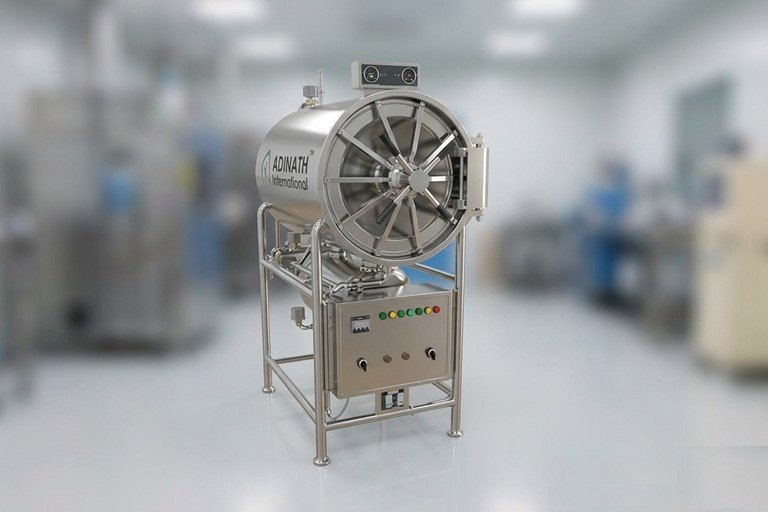
A cylindrical autoclave, also known as a horizontal cylindrical autoclave or steam sterilizer, is a robust high-pressure sterilization device widely used in hospitals, laboratories, pharmaceutical manufacturing, and industrial facilities. It leverages the power of saturated steam under controlled pressure and temperature to completely eliminate microorganisms, including bacteria, viruses, fungi, and highly resistant spores. This makes the cylindrical autoclave an essential tool in environments where stringent hygiene and infection control are non-negotiable.
The cylindrical chamber design is a hallmark of these systems. Its geometry provides excellent structural strength to withstand high internal pressures while promoting even steam distribution and circulation. This results in uniform heating throughout the load and superior steam penetration into wrapped instruments, porous materials, and complex items — ensuring consistent and thorough sterilization results every cycle.
Cylindrical autoclaves function like advanced pressure cookers, invented in 1879 by Charles Chamberland. The process involves:
* Power voltage can be adjusted as per customer’s domestic power voltage requirements.
* Rights of technical improvements & modification reserved.
* Illustrations & dimensions are shown for information purpose only.
A cylindrical autoclave (also called a horizontal cylindrical autoclave or steam sterilizer) is a high-pressure device that uses saturated steam under controlled temperature and pressure to eliminate bacteria, viruses, fungi, and resistant spores. Its cylindrical chamber design offers superior structural strength for high pressures, more even steam distribution, and better penetration into wrapped or complex loads compared with rectangular or vertical designs.
It is widely used in hospitals, laboratories, pharmaceutical manufacturing, and industrial facilities for sterilizing surgical instruments, glassware, liquids, dressings, and other heat- and moisture-stable items. Key industries include pharmaceutical, nutraceutical, herbal, Ayurvedic, biotech, cosmetic, and chemical manufacturing.
Items are loaded on perforated trays. The automated cycle typically includes water addition, pre-vacuum to remove air, heating to 121–134 °C under pressure (around 15–30 psi / ~0.22 MPa) for 15–30 minutes, post-vacuum drying, exhaust, and cooling. The process mimics an advanced pressure cooker and ensures thorough sterilization followed by safe unloading.
The temperature range is adjustable between 121 °C and 134 °C. Standard operating pressure is approximately 0.22 MPa (roughly 15–30 psi), conditions proven effective for reliable microbial kill.
Chamber diameters range from 400 mm to 700 mm and depths from 600 mm to 1300 mm, giving useful volumes from about 79 liters up to 500 liters. Power configurations (e.g., 9 kW / 380 V, 50 Hz) can be adapted to local voltage requirements.
The unit features a counterbalanced multi-point radial locking mechanism that allows effortless, one-handed hermetic sealing with uniform gasket compression. Additional safety elements include pressure-relief valves, over-pressure protection, low-water cut-offs, hydraulic testing to 2.5× working pressure, and an automated pneumatic pressure-sensing circuit in the door gasket.
A high-density aerospace-grade ceramic-fiber thermal jacket covered by a mirror-polished SS 304 outer shroud keeps external surface temperatures below 45 °C, reduces heat loss to the cleanroom, lowers energy consumption, and improves operator safety during continuous high-temperature cycles.
A high-definition touchscreen PLC provides multi-level access control (biometric or password), tamper-proof data encryption, automated batch reports, paperless audit trails, USB/network export, and real-time remote monitoring. Early-warning diagnostics detect micro-deflations or gasket wear before a cycle is compromised.
An integrated closed-loop cooling and rapid-venting system with a high-efficiency stainless-steel condenser can cut overall cycle time by up to 30 % versus conventional units while capturing and cooling high-purity condensate, reducing water consumption and thermal shock to drain lines.
The chamber is typically triple-walled stainless steel (SS 304) with an inner process chamber, steam jacket, and insulated outer casing. Factory-fitted multi-sensor calibration ports with tri-clamp sanitary caps allow rigorous IQ/OQ thermal mapping without compromising chamber integrity or requiring temporary modifications.
More Sterilization Equipments
 Horizontal Cylindrical Autoclave
 Cement Autoclave
 Ethylene Oxide Cylindrical Sterilizer
 Horizontal Autoclave Rectangular
Algeria | Angola | Argentina | Australia | Austria | Bahrain | Bangladesh | Belarus | Belgium | Bolivia | Botswana | Brazil | Bulgaria | Canada | Chile | China | Colombia | Costa Rica | Cuba | Czech Republic | Denmark | Dominican Republic | Ecuador | Egypt | El Salvador | Ethiopia | Finland | France | Germany | Ghana | Greece | Guatemala | Haiti | Honduras | Hong Kong | Hungary | India | Indonesia | Iran | Ireland | Israel | Italy | Ivory Coast | Japan | Jordan | Kazakhstan | Kenya | Kuwait | Lebanon | Libya | Malaysia | Mexico | Mongolia | Morocco | Mozambique | Myanmar | Netherlands | New Zealand | Nicaragua | Nigeria | Norway | Oman | Pakistan | Panama | Paraguay | Peru | Philippines | Poland | Portugal | Qatar | Romania | Russia | Saudi Arabia | Senegal | Slovakia | Singapore | South Africa | South Korea | South Sudan | Spain | Sri Lanka | Sweden | Switzerland | Taiwan | Tanzania | Thailand | Trinidad and Tobago | Tunisia | Turkey | Uganda | Ukraine | United Arab Emirates | United Kingdom | United States | Uruguay | Uzbekistan | Venezuela | Vietnam | Zambia | Zimbabwe
Connect with our engineering team to discuss your specific production requirements. We provide customized, cGMP-compliant machinery solutions designed to optimize your manufacturing facility and maximize output.
©Adinath International | Theme Developed By Pharma Machinery Manufacturer I Website updated on: 15 October 2026
Request A Quick Quote
Cylindrical Autoclave
Please drop your requirements, one of our technical expert will contact you in next 24 working hours.
WhatsApp us
