Shampoo Manufacturing Plant involves a combination of market analysis, raw material sourcing, process engineering, and financial planning. Shampoo, a viscous liquid hair care product, is typically formulated with surfactants, conditioners, preservatives, and fragrances. The global shampoo market is growing due to rising demand for personal care products, driven by urbanization, increasing disposable incomes, and trends toward natural/herbal variants. This guide draws from established project reports to outline key aspects for establishing a small-to-medium-scale plant.
If you need details on specific models and pricing, let me know!
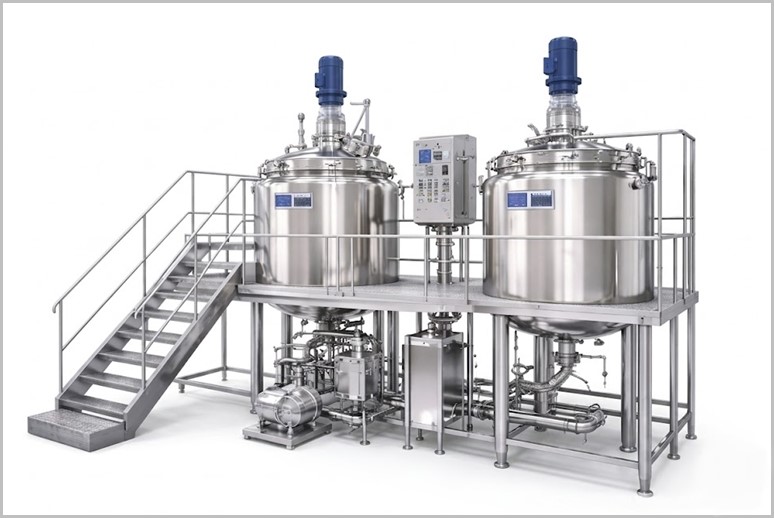
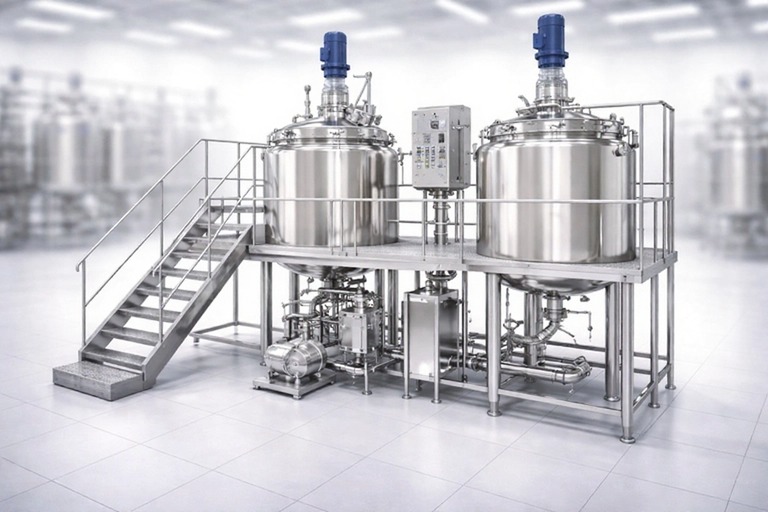
The primary shampoo production vessel has a slow speed anchor agitator and a special agitator assembly. For the best shampoo quality, contra- or semi-contra-rotating pots are recommended. The main shampoo production vessel has a dished bottom, and it is also welded at the top. Numerous nozzles, valves, and manholes are further components of the machine.
Premixing Vessel
The cylindrical premixing vessel has a dished top and bottom as well. Additionally, the top is welded. This vessel comes with a high-speed homogenizer if necessary, as well as a high-speed cowl or saw cutting type agitator. Depending on your demands, you can have one premixing vessel or two vessels. In addition, there’s a jacket for warmth.
Storage Vessel
This vessel, which has the same capacity as the producing vessel, is used to store shampoos. You can have many storage vessels because you might need to keep different types of shampoo. The bottom valve of the vessel is made with high-end din fittings.
Pumps & Pipelines
Pumps are another feature of the shampoo production line that are used to transfer materials from the premixing vessel to the manufacturing vessel. For the purpose of transferring surfactants to premix or main vessel, storage vessel to main vessel, and filling machine to storage vessel, transfer pumps are required. The machine that makes herbal shampoo has an electro-polished pipeline with all of its joints meeting DIN standards.
Control Panel & Automation
Push buttons, lights, circuit breakers, and advanced starters are all included on the control panel. Its pneumatically operated valves and PLC-based automation guarantee continuous, faultless functioning.
A Shampoo Manufacturing Plant is a specialized system designed for producing viscous liquid hair care products such as shampoos, conditioners, body washes, and similar personal care formulations. It uses high-shear mixing, emulsification, and precise temperature control to ensure consistent quality, stability, and regulatory compliance (cGMP) for cosmetic and pharmaceutical manufacturers.
The process involves premixing surfactants and other ingredients in premixing vessels, then transferring them to the main manufacturing vessel equipped with anchor agitators and high-speed homogenizers. Phases are blended under controlled temperature, homogenized for uniform texture and foam stability, and finally moved to storage vessels before filling. The closed-loop system minimizes contamination.
It is primarily used in the Cosmetic, Pharmaceutical, Ayurvedic, Herbal, and Nutraceutical industries. It is ideal for manufacturing a wide range of personal care liquids including medicated shampoos, herbal formulations, and premium hair care products.
United States | Canada | Mexico | Brazil | Argentina | Chile | Colombia | Peru | Germany | United Kingdom | France | Italy | Spain | Netherlands | Belgium | Switzerland | Sweden | Austria | Denmark | Norway | Poland | Finland | Czech Republic | Hungary | Portugal | Ireland | Greece | Slovakia | Romania | Bulgaria | China | Japan | India | South Korea | Indonesia | Vietnam | Thailand | Malaysia | Philippines | Singapore | Bangladesh | Pakistan | Saudi Arabia | United Arab Emirates | Israel | Turkey | Iran | Qatar | Kuwait | South Africa | Nigeria | Egypt | Algeria | Morocco | Kenya | Ghana | Tunisia | Australia | New Zealand | Russia | Ukraine | Belarus | Kazakhstan | Taiwan | Hong Kong | South Sudan | Uzbekistan | Oman | Jordan | Bahrain | Sri Lanka | Myanmar | Lebanon | Mongolia | Ethiopia | Libya | Angola | Zambia | Zimbabwe | Mozambique | Ivory Coast | Senegal | Uganda | Tanzania | Botswana | Ecuador | Venezuela | Bolivia | Paraguay | Uruguay | Trinidad and Tobago | Panama | Guatemala | Costa Rica | Honduras | El Salvador | Nicaragua | Dominican Republic | Haiti | Cuba
Connect with our engineering team to discuss your specific production requirements. We provide customized, cGMP-compliant machinery solutions designed to optimize your manufacturing facility and maximize output.
Algeria | Angola | Argentina | Australia | Austria | Bahrain | Bangladesh | Belarus | Belgium | Bolivia | Botswana | Brazil | Bulgaria | Canada | Chile | China | Colombia | Costa Rica | Cuba | Czech Republic | Denmark | Dominican Republic | Ecuador | Egypt | El Salvador | Ethiopia | Finland | France | Germany | Ghana | Greece | Guatemala | Haiti | Honduras | Hong Kong | Hungary | India | Indonesia | Iran | Ireland | Israel | Italy | Ivory Coast | Japan | Jordan | Kazakhstan | Kenya | Kuwait | Lebanon | Libya | Malaysia | Mexico | Mongolia | Morocco | Mozambique | Myanmar | Netherlands | New Zealand | Nicaragua | Nigeria | Norway | Oman | Pakistan | Panama | Paraguay | Peru | Philippines | Poland | Portugal | Qatar | Romania | Russia | Saudi Arabia | Senegal | Slovakia | Singapore | South Africa | South Korea | South Sudan | Spain | Sri Lanka | Sweden | Switzerland | Taiwan | Tanzania | Thailand | Trinidad and Tobago | Tunisia | Turkey | Uganda | Ukraine | United Arab Emirates | United Kingdom | United States | Uruguay | Uzbekistan | Venezuela | Vietnam | Zambia | Zimbabwe
Connect with our engineering team to discuss your specific production requirements. We provide customized, cGMP-compliant machinery solutions designed to optimize your manufacturing facility and maximize output.
©Adinath International | Theme Developed By Pharma Machinery Manufacturer I Website updated on: 31 August 2026
WhatsApp us
