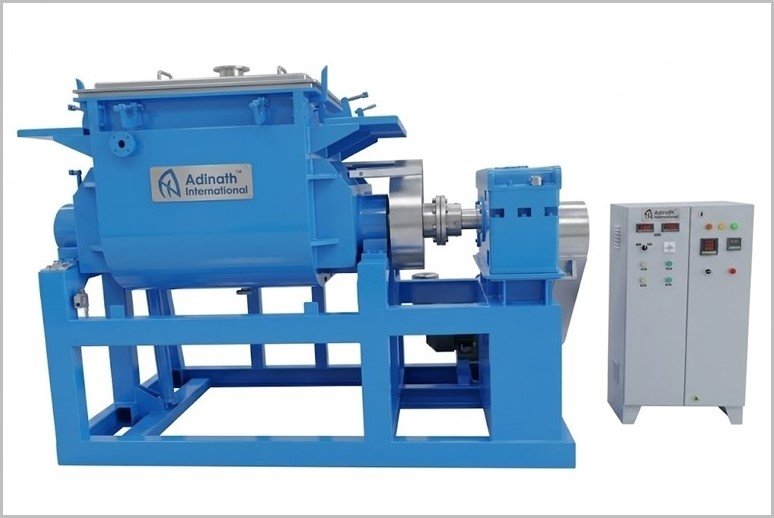
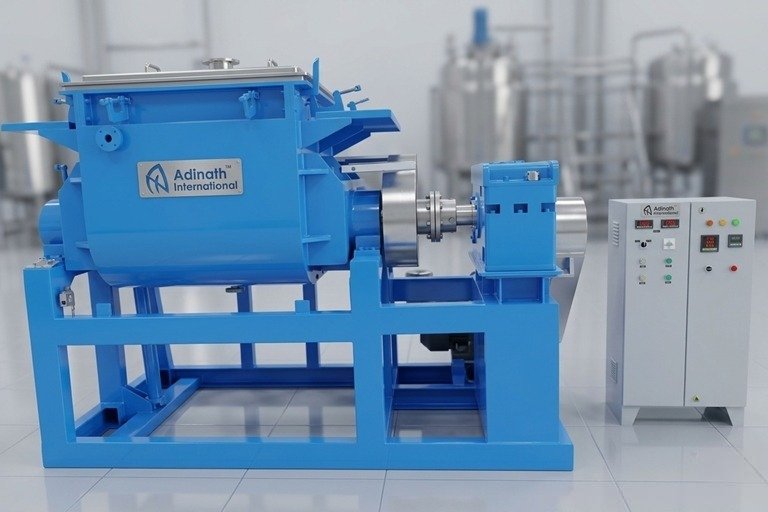
A Rubber Compound Kneader, also widely known as a Dispersion Kneader, Banbury Mixer, or Internal Mixer, is a high-performance industrial machine designed for efficient rubber processing. It expertly blends raw rubber (both natural and synthetic) with various additives such as carbon black, silica, and other fillers, vulcanizing agents, plasticizers, processing oils, and accelerators to create a uniform, high-quality rubber compound.
The primary goal of a rubber compound kneader is to achieve perfect dispersion and homogeneity, resulting in rubber materials with superior properties including excellent elasticity, outstanding durability, high tensile strength, and exceptional wear resistance. This advanced mixing technology plays a critical role in major industries like tire manufacturing, automotive rubber parts (seals, gaskets, hoses, and O-rings), footwear production, conveyor belt manufacturing, and a wide range of technical rubber goods.
Whether you’re looking for reliable rubber mixing equipment, a heavy-duty Banbury mixer, or a precision dispersion kneader for consistent compound quality, this machine remains the industry standard for achieving optimal performance and productivity in rubber processing.
Configuration Type | Operational Mechanics | Velocity Ratio | Viscosity Range & Typical Applications |
Tangential Layout | Paddles spin independently inside the trough, meeting tangentially. | Leading-to-trailing ratio of | Heavy, high-viscosity media including industrial adhesives, rubber polymers, pigment pastes, and dyes. |
Overlapping Layout | Paddles cross paths directly above the center ridge, requiring exact phase lock. | (Identical speeds) | Lighter, free-flowing, or creeping substances such as cosmetic creams, pharmaceutical ointments, clay coatings, and carbon pastes. |
Model | Capacity – Liters | Motor (H.P.) | ||
Working Capacity approx. | Gross Capacity approx. | General | Heavy Duty | |
ASM – 50 | 50 Liters | 80 Liters | 5 H.P. | 7.5 H.P. |
ASM – 75 | 75 Liters | 110 Liters | 7.5 H.P. | 10 H.P. |
ASM – 100 | 100 Liters | 150 Liters | 10 H.P. | 15 H.P. |
ASM – 150 | 150 Liters | 200 Liters | 15 H.P. | 20 H.P. |
ASM – 200 | 200 Liters | 300 Liters | 20 H.P. | 25 H.P. |
ASM – 400 | 400 Liters | 550 Liters | 30 H.P. | 40 H.P. |
ASM – 500 | 500 Liters | 750 Liters | 40 H.P. | 50 H.P. |
ASM – 750 | 750 Liters | 1150 Liters | 50 H.P. | 60 H.P. |
ASM – 1000 | 1000 Liters | 1500 Liters | 60 H.P. | 70 H.P. |
ASM – 1500 | 1500 Liters | 2100 Liters | 75 H.P. | 80 H.P. |
ASM – 2000 | 2000 Liters | 2600 Liters | 80 H.P. | 90 H.P. |
ASM – 3000 | 3000 Liters | 3800 Liters | 100 H.P. | 120 H.P. |
* Power voltage can be adjusted as per customer’s domestic power voltage requirements.
* Rights of technical improvements & modification reserved.
* Illustrations & dimensions are shown for information purpose only.
The process is faster and more consistent than open mill mixing, with better dispersion, reduced air incorporation, and higher productivity.
A Rubber Compound Kneader, also known as a Dispersion Kneader, Banbury Mixer, or Internal Mixer, is a high-performance industrial machine designed to blend raw natural or synthetic rubber with additives such as carbon black, silica, fillers, vulcanizing agents, plasticizers, processing oils, and accelerators. It produces uniform, high-quality rubber compounds with superior elasticity, durability, tensile strength, and wear resistance.
It is widely used in tire manufacturing, automotive rubber parts (seals, gaskets, hoses, O-rings), footwear production, conveyor belt manufacturing, and various technical rubber goods industries where consistent compound quality is essential.
It uses tangential ‘Z’ (Sigma) shaped kneading blades that rotate at different speeds (typically 3:2 ratio) inside the trough. This creates intense shearing, kneading, folding, stretching, and recombining actions for thorough dispersion. The closed chamber and optional ram lid enhance mixing efficiency.
It is available in Stainless Steel 316, Stainless Steel 304, and Mild Steel. Stainless Steel models can be finished to matt or mirror polish as per requirements, while Mild Steel versions feature red oxide primer and epoxy paint. PTFE shaft seals are provided for compatibility.
Models range from 50 liters working capacity (ASM-50) up to 3000 liters (ASM-3000), with corresponding gross capacities and motor options from 5 HP to 120 HP (general and heavy-duty variants). Custom voltages are available to suit customer requirements.
Jacketed troughs with mineral wool insulation and cladding support heating or cooling applications using steam, hot oil, or water. This prevents scorching and maintains optimal mixing conditions for temperature-sensitive rubber compounds.
Discharge can be manual (hand-wheel operated tilting) or automatic (hydraulic tilting). Additional options include bottom valves or an extrusion screw. The tilting design also facilitates easy cleaning and color changes.
It delivers excellent uniformity and dispersion of fillers, short mixing cycles (typically 6-12 minutes per batch), energy efficiency for high-viscosity materials, reduced air incorporation, and better consistency compared to open mill mixing.
Tangential ‘Z’ blades are standard, ideal for high-viscosity rubber compounds. They rotate at different speeds and meet tangentially for superior shearing and uniform mixing with minimal product sticking due to the tight gap between blades and trough.
On-demand options include liquid spray systems for additives, vacuum systems for de-aeration, blade cooling, and more. These allow customization for specific rubber processing needs while maintaining high productivity and compound quality.
Algeria | Angola | Argentina | Australia | Austria | Bahrain | Bangladesh | Belarus | Belgium | Bolivia | Botswana | Brazil | Bulgaria | Canada | Chile | China | Colombia | Costa Rica | Cuba | Czech Republic | Denmark | Dominican Republic | Ecuador | Egypt | El Salvador | Ethiopia | Finland | France | Germany | Ghana | Greece | Guatemala | Haiti | Honduras | Hong Kong | Hungary | India | Indonesia | Iran | Ireland | Israel | Italy | Ivory Coast | Japan | Jordan | Kazakhstan | Kenya | Kuwait | Lebanon | Libya | Malaysia | Mexico | Mongolia | Morocco | Mozambique | Myanmar | Netherlands | New Zealand | Nicaragua | Nigeria | Norway | Oman | Pakistan | Panama | Paraguay | Peru | Philippines | Poland | Portugal | Qatar | Romania | Russia | Saudi Arabia | Senegal | Slovakia | Singapore | South Africa | South Korea | South Sudan | Spain | Sri Lanka | Sweden | Switzerland | Taiwan | Tanzania | Thailand | Trinidad and Tobago | Tunisia | Turkey | Uganda | Ukraine | United Arab Emirates | United Kingdom | United States | Uruguay | Uzbekistan | Venezuela | Vietnam | Zambia | Zimbabwe
Connect with our engineering team to discuss your specific production requirements. We provide customized, cGMP-compliant machinery solutions designed to optimize your manufacturing facility and maximize output.
©Adinath International | Theme Developed By Pharma Machinery Manufacturer I Website updated on: 15 October 2026
Request A Quick Quote
Rubber Compound Kneader
Please drop your requirements, one of our technical expert will contact you in next 24 working hours.
WhatsApp us


