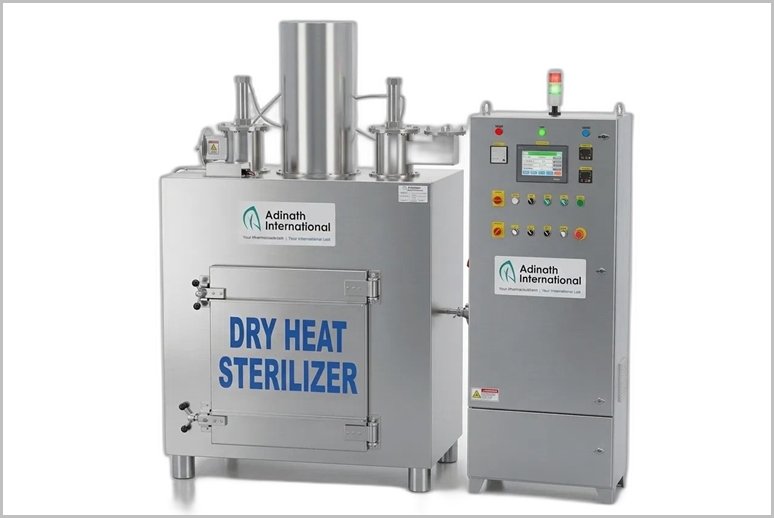
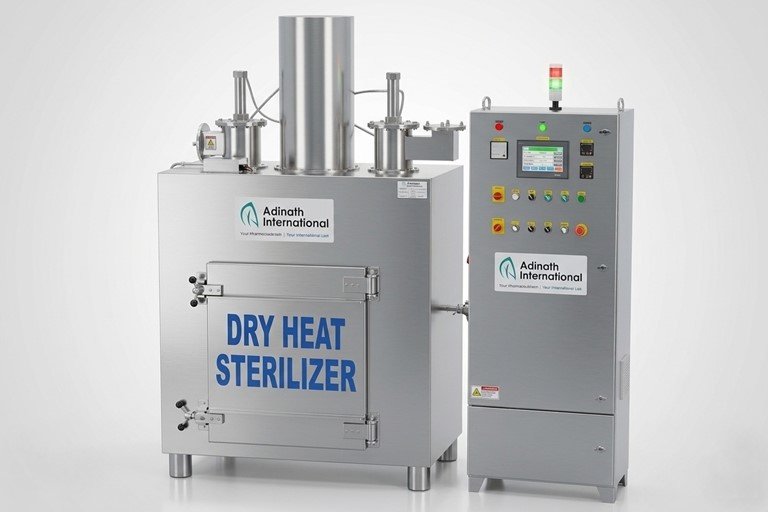
An EO cartridge sterilizer is a small and easy-to-use medical device designed for low-temperature ethylene oxide (EO) gas sterilization. It is specifically built to safely handle equipment that is sensitive to heat and moisture, such as surgical instruments, flexible endoscopes, electronics, plastics, catheters, lenses, and other delicate medical devices that cannot withstand the high temperatures of steam autoclaves.
The system utilizes pre-filled, single-use EO cartridges that release a controlled amount of pure ethylene oxide gas into a sealed chamber. This cartridge-based design makes the sterilization process simpler by removing the need for large gas cylinders, complicated tubing, valves, or manual gas management, which in turn lowers the risk of operational errors, leaks, and environmental waste.
Considerations and Safety
It is a compact, low-temperature ethylene oxide (EO) gas sterilizer designed specifically for items that cannot tolerate steam autoclaves, such as surgical instruments, flexible endoscopes, electronics, plastics, catheters, and lenses. Pre-filled single-use EO cartridges deliver controlled pure ethylene oxide gas into a sealed chamber, enabling effective sterilization without high heat or excessive moisture.
Single-use EO cartridges eliminate the need for large gas cylinders, complex tubing, valves, or manual gas handling. The cartridge is punctured only after the door is hermetically sealed and vacuum integrity is confirmed, reducing risks of leaks, operational errors, and environmental waste.
A motorized door stays mechanically and software-locked throughout sterilization and aeration. PLC automation tightly controls humidity, gas concentration, temperature, and vacuum. Electrochemical EO sensors trigger emergency exhaust and shut off supply valves on detecting leakage, while high-integrity FDA-compliant silicone door gaskets maintain an airtight seal.
No. It features an integrated continuous vacuum-assisted post-sterilization purge cycle that removes residual EO from the load inside the same chamber, eliminating the need to transfer items to a separate aeration room.
It uses cartridges without CFC/HCFC propellants and supports dedicated exhaust ports compatible with catalytic abaters or scrubbers. When paired with abators, EO emissions can be reduced by over 99%, supporting near-zero-emission, OSHA-compliant operation.
The internal chamber, product racks, and exterior cladding are made from heavy-gauge AISI 316L (mirror-polished) and AISI 304 stainless steel to resist corrosion and simplify cleaning. Contact parts meet pharmaceutical-grade requirements.
Yes. The PLC-driven system allows password-protected storage and recall of custom recipes tailored to specific heat-sensitive devices, plastics, or surgical kits, ensuring precise and repeatable cycles.
A built-in thermal printer plus USB/Ethernet ports record complete batch data, including time-stamped pressure, temperature, and humidity curves, supporting 21 CFR Part 11 compliance. IQ/OQ/DQ documentation can also be provided.
Cycles can be as short as approximately 3.5 hours with precise cartridge dosing. Chamber temperatures are typically maintained in the 37–63 °C range (commonly around 50–55 °C) with controlled humidity (often 40–80 % RH) for effective EO penetration.
It is widely applied in pharmaceutical, nutraceutical, herbal, Ayurvedic, biotech, cosmetic, and chemical industries, as well as hospitals and medical-device manufacturing, for sterilizing heat- and moisture-sensitive items such as disposable syringes, IV sets, gloves, complex tubing, porous materials, fiber optics, rubber, and fabrics.
More Sterilization Equipments
 2 Cubic Feet EO Gas Sterilizer
 3 Cubic Feet EO Sterilizer
 4 Cubic Feet EO Gas Sterilizer
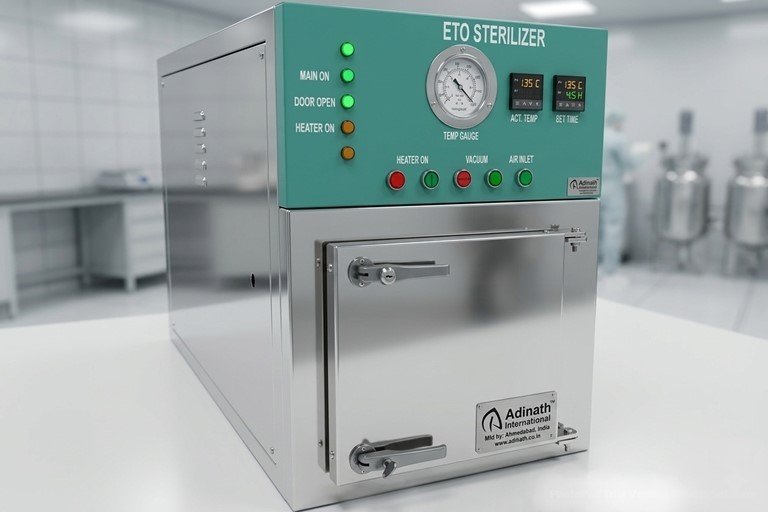 EO Sterilizer Machine
Algeria | Angola | Argentina | Australia | Austria | Bahrain | Bangladesh | Belarus | Belgium | Bolivia | Botswana | Brazil | Bulgaria | Canada | Chile | China | Colombia | Costa Rica | Cuba | Czech Republic | Denmark | Dominican Republic | Ecuador | Egypt | El Salvador | Ethiopia | Finland | France | Germany | Ghana | Greece | Guatemala | Haiti | Honduras | Hong Kong | Hungary | India | Indonesia | Iran | Ireland | Israel | Italy | Ivory Coast | Japan | Jordan | Kazakhstan | Kenya | Kuwait | Lebanon | Libya | Malaysia | Mexico | Mongolia | Morocco | Mozambique | Myanmar | Netherlands | New Zealand | Nicaragua | Nigeria | Norway | Oman | Pakistan | Panama | Paraguay | Peru | Philippines | Poland | Portugal | Qatar | Romania | Russia | Saudi Arabia | Senegal | Slovakia | Singapore | South Africa | South Korea | South Sudan | Spain | Sri Lanka | Sweden | Switzerland | Taiwan | Tanzania | Thailand | Trinidad and Tobago | Tunisia | Turkey | Uganda | Ukraine | United Arab Emirates | United Kingdom | United States | Uruguay | Uzbekistan | Venezuela | Vietnam | Zambia | Zimbabwe
Connect with our engineering team to discuss your specific production requirements. We provide customized, cGMP-compliant machinery solutions designed to optimize your manufacturing facility and maximize output.
©Adinath International | Theme Developed By Pharma Machinery Manufacturer I Website updated on: 15 October 2026
Request A Quick Quote
EO Cartridge Sterilizer
Please drop your requirements, one of our technical expert will contact you in next 24 working hours.
WhatsApp us
