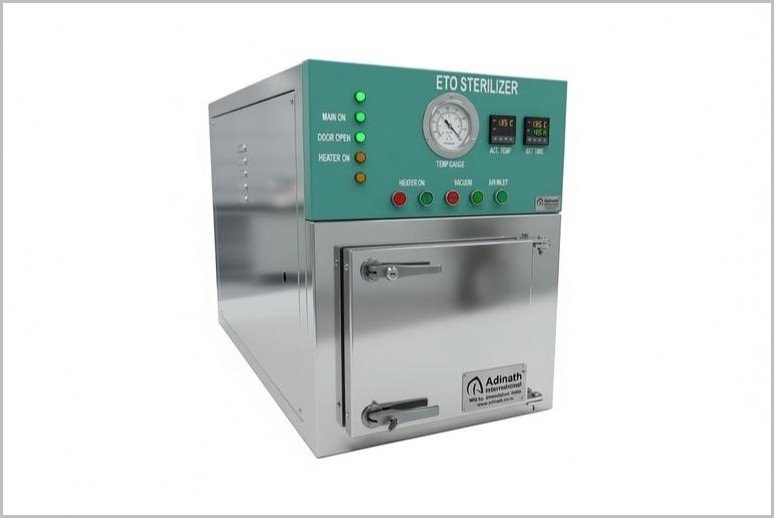
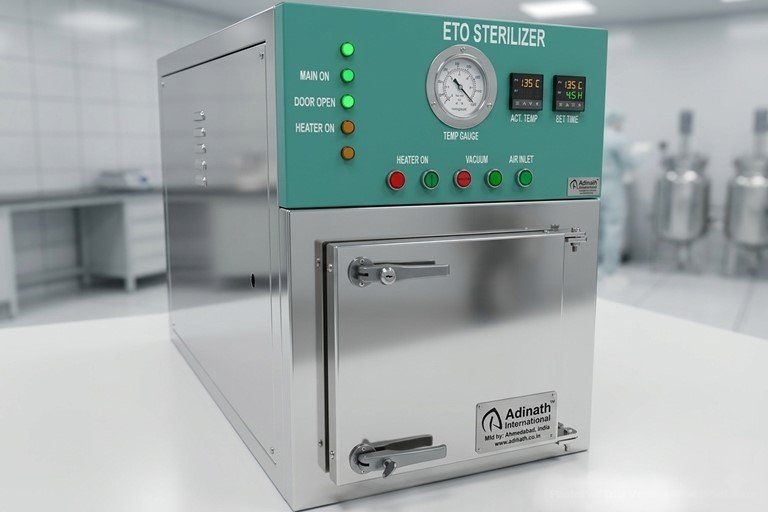
A Medical ETO Sterilizer, also known as an Ethylene Oxide Sterilizer, is a highly specialized sterilization system used across healthcare and medical device industries. It employs ethylene oxide (ETO) gas to achieve complete sterilization of delicate, heat-sensitive, or moisture-sensitive instruments and materials that cannot withstand traditional high-temperature methods.
Ethylene oxide sterilization is a low-temperature gas sterilization process that effectively eliminates bacteria, viruses, fungi, and even highly resistant bacterial spores. ETO is a colorless, flammable gas with powerful alkylating properties. It penetrates deep into complex materials, disrupting the DNA and proteins of microorganisms, ensuring thorough sterilization without leaving harmful residues when properly aerated.
This method is particularly valuable because it operates at low temperatures (typically 30–60°C) and does not require moisture, making it ideal for sensitive items. Unlike steam autoclaves or dry heat sterilizers, ETO sterilizers preserve the integrity of plastics, electronics, optics, rubber, and multi-layered packaging.
Core Technology & Distinctive Advantages
Ethylene Oxide (ETO) sterilization serves as an indispensable alternative to traditional thermal autoclaves by utilizing a low-temperature (approx. 50°C), moisture-free environment. This ambient-to-mild thermal profile safeguards heat-sensitive and expensive medical assets from thermal degradation.
Key performance benefits include:
Available Equipment Models & Control Variants
As an established Indian manufacturer, our portfolio encompasses two distinct configurations designed to suit diverse operational budgets and facility requirements:
Model | AETOS – 2.6 | AETOS – 4.5 | AETOS – 8 |
Working Capacity in Cu. Ft. | 2.6 | 4.5 | 8 |
Working Volume | 70 Liters | 125 Liters | 200 Liters |
Chamber Size | 12” (W) x 12” (H) x 32”
| 12” (W) x 12” (H) x 54” (D) OR 15” (W) x 15” (H) x 36” (D) | 20” (W) x 18” (H) x 38” (D) OR 16” (W) x 16” (H) x 54” (D) |
Sterilant Gas | 40 grams cartridge | 100 grams cartridge | 170 grams cartridge |
Sterilization Cycle | Warm & Cold Cycles are possible. | Warm & Cold Cycles are possible. | Warm & Cold Cycles are possible. |
Aeration | In-built aeration facility provided. | In-built aeration facility provided. | In-built aeration facility provided. |
Utility | Compressed Air (100 psig) | Compressed Air (100 psig) | Compressed Air (100 psig) |
Power Supply | 1 K.W. | 2 K.W. | 2.5 K.W. |
Power Voltage | 220 volts, Single Phase, 50 Hertz | 220 volts, Single Phase, 50 Hertz | 220 volts, Single Phase, 50 Hertz |
* Power voltage can be adjusted as per customer’s domestic power voltage requirements.
* Rights of technical improvements & modification reserved.
* Illustrations & dimensions are shown for information purpose only.
Because ethylene oxide is a toxic and potentially carcinogenic gas, reputable manufacturers of medical ETO sterilizers incorporate advanced safety features such as:
Facilities must comply with strict international standards including ISO 11135, FDA guidelines, and EU MDR requirements. Trained personnel follow detailed protocols for cycle validation, biological indicators, and chemical indicators to ensure every load meets rigorous sterility requirements.
It operates at low temperatures (typically 30–60°C, often around 50°C) in a moisture-free or controlled-humidity environment using ethylene oxide gas. This prevents thermal degradation or warping of plastics, electronics, optics, rubber, catheters, endoscopes, intraocular lenses, and other delicate items that cannot tolerate steam autoclaves or dry heat.
ETO is a colorless gas with strong alkylating properties. It penetrates materials and packaging, disrupting the DNA and proteins of microorganisms. It effectively kills bacteria, viruses, fungi, and highly resistant bacterial spores, delivering thorough sterilization when followed by proper aeration.
Capacities range from small units (e.g., 0.5 m³) up to large industrial sizes (40 m³). Specific models include AETOS-2.6 (≈70 liters / 2.6 cu. ft.), AETOS-4.5 (≈125 liters / 4.5 cu. ft.), and AETOS-8 (≈200 liters / 8 cu. ft.), with modular stainless-steel chambers that can be adapted to different facility layouts.
Semi-automatic models use analog push-buttons and electromechanical switches for straightforward operator control. Fully automatic versions feature PLC control with a touchscreen HMI, pre-programmed recipes, real-time parameter monitoring, and hands-free cycle management for higher precision and repeatability.
Complete sterilization plus degassing/aeration cycles average around 8 hours (or longer depending on load and parameters). Cycles include preconditioning/humidification, EO gas exposure (often 4–8 hours), and residual gas removal via vacuum and air flushing (several additional hours), with both warm and cold cycle options available.
It is ideal for single-use medical consumables such as infusion sets, hypodermic syringes, surgical packs, catheters, urinary drainage bags, gloves, complex tubing, multi-layered packaging, and porous materials. It is also compatible with most plastics, metals, composites, and certain packaged food or agricultural items.
Product-wetted and internal chamber components are made from high-grade AISI 304 or 316 stainless steel for corrosion resistance and easy sanitation. Chambers are modular, pressure/vacuum-rated, and designed for cGMP compliance, with optional IQ/OQ/DQ validation packages.
Aeration is essential to safely remove toxic residual ethylene oxide from both the chamber and the sterilized items. Units include in-built aeration facilities, vacuum systems, air introduction, negative-pressure design, and exhaust/abatement features to meet safety and environmental requirements.
Key safety elements include automated leak detection, real-time monitoring of gas concentration/temperature/humidity, efficient aeration, proper ventilation, and negative-pressure chambers. Facilities must follow standards such as ISO 11135, FDA guidelines, and EU MDR, using biological and chemical indicators for cycle validation.
They serve pharmaceutical, nutraceutical, herbal, Ayurvedic, biotech, cosmetic, and chemical industries, as well as hospitals and medical-device manufacturing. They are especially valuable for heat-sensitive hospital supplies, complex medical devices, and even some packaged cereals, dried fruits, or spices in related sectors.
Algeria | Angola | Argentina | Australia | Austria | Bahrain | Bangladesh | Belarus | Belgium | Bolivia | Botswana | Brazil | Bulgaria | Canada | Chile | China | Colombia | Costa Rica | Cuba | Czech Republic | Denmark | Dominican Republic | Ecuador | Egypt | El Salvador | Ethiopia | Finland | France | Germany | Ghana | Greece | Guatemala | Haiti | Honduras | Hong Kong | Hungary | India | Indonesia | Iran | Ireland | Israel | Italy | Ivory Coast | Japan | Jordan | Kazakhstan | Kenya | Kuwait | Lebanon | Libya | Malaysia | Mexico | Mongolia | Morocco | Mozambique | Myanmar | Netherlands | New Zealand | Nicaragua | Nigeria | Norway | Oman | Pakistan | Panama | Paraguay | Peru | Philippines | Poland | Portugal | Qatar | Romania | Russia | Saudi Arabia | Senegal | Slovakia | Singapore | South Africa | South Korea | South Sudan | Spain | Sri Lanka | Sweden | Switzerland | Taiwan | Tanzania | Thailand | Trinidad and Tobago | Tunisia | Turkey | Uganda | Ukraine | United Arab Emirates | United Kingdom | United States | Uruguay | Uzbekistan | Venezuela | Vietnam | Zambia | Zimbabwe
Connect with our engineering team to discuss your specific production requirements. We provide customized, cGMP-compliant machinery solutions designed to optimize your manufacturing facility and maximize output.
©Adinath International | Theme Developed By Pharma Machinery Manufacturer I Website updated on: 15 October 2026
Request A Quick Quote
Medical ETO Sterilizer
Please drop your requirements, one of our technical expert will contact you in next 24 working hours.
WhatsApp us


