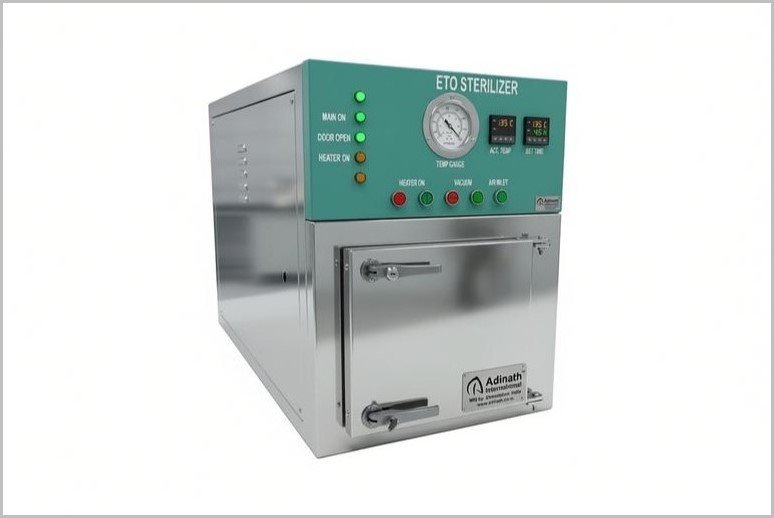
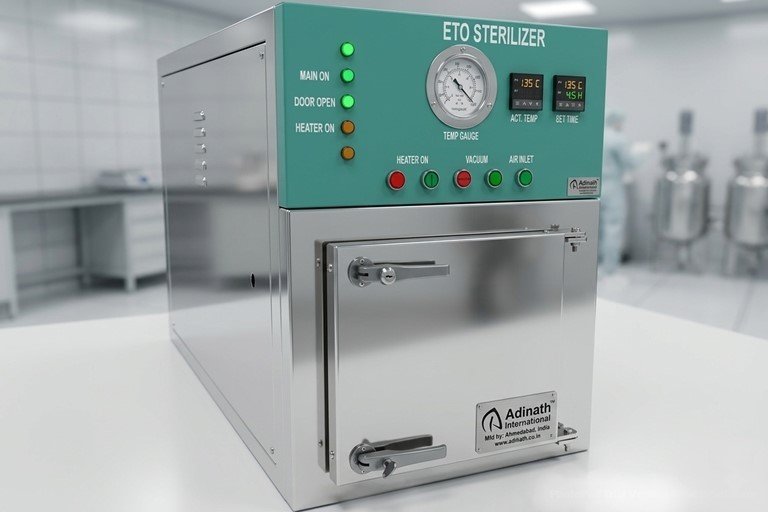
Hospital medical sterilizers are indispensable devices in modern healthcare facilities, playing a vital role in eliminating microorganisms from medical instruments, surgical tools, supplies, and critical surfaces. By achieving complete sterilization — the total destruction of all forms of microbial life, including bacteria, viruses, fungi, and highly resistant spores — these systems significantly reduce the risk of healthcare-associated infections (HAIs). Unlike disinfection, which only reduces microbial load, true sterilization ensures a sterility assurance level (SAL) of 10⁻⁶, making instruments safe for invasive procedures and protecting vulnerable patients.
Hospitals rely on high-quality medical sterilizer equipment to maintain strict infection prevention protocols. Effective sterilization is a cornerstone of patient safety, regulatory compliance, and operational excellence in operating rooms, central sterile supply departments (CSSD), emergency units, and outpatient clinics.
A typical steam sterilization cycle in a hospital medical sterilizer includes several critical phases:
Advanced units feature digital controls, real-time monitoring, data logging, and cycle documentation to support traceability and audits.
Model | AETOS – 2.6 | AETOS – 4.5 | AETOS – 8 |
Working Capacity in Cu. Ft. | 2.6 | 4.5 | 8 |
Working Volume | 70 Liters | 125 Liters | 200 Liters |
Chamber Size | 12” (W) x 12” (H) x 32”
| 12” (W) x 12” (H) x 54” (D) OR 15” (W) x 15” (H) x 36” (D) | 20” (W) x 18” (H) x 38” (D) OR 16” (W) x 16” (H) x 54” (D) |
Sterilant Gas | 40 grams cartridge | 100 grams cartridge | 170 grams cartridge |
Sterilization Cycle | Warm & Cold Cycles are possible. | Warm & Cold Cycles are possible. | Warm & Cold Cycles are possible. |
Aeration | In-built aeration facility provided. | In-built aeration facility provided. | In-built aeration facility provided. |
Utility | Compressed Air (100 psig) | Compressed Air (100 psig) | Compressed Air (100 psig) |
Power Supply | 1 K.W. | 2 K.W. | 2.5 K.W. |
Power Voltage | 220 volts, Single Phase, 50 Hertz | 220 volts, Single Phase, 50 Hertz | 220 volts, Single Phase, 50 Hertz |
* Power voltage can be adjusted as per customer’s domestic power voltage requirements.
* Rights of technical improvements & modification reserved.
* Illustrations & dimensions are shown for information purpose only.
Investing in high-performance hospital medical sterilizers delivers measurable benefits: reduced infection rates, faster instrument turnaround, lower operational costs, and enhanced staff confidence. In today’s healthcare landscape, where patient safety and quality outcomes are paramount, these devices represent a critical investment in clinical excellence.
This guide draws from established principles of sterilization science and global healthcare best practices. For optimal results, healthcare facilities should consult certified biomedical engineers, follow manufacturer-validated cycles, and implement rigorous quality assurance programs. Choosing the right hospital medical sterilizer is fundamental to delivering safe, high-quality patient care.
A hospital medical sterilizer is a critical device that achieves complete sterilization—the total destruction of all microbial life, including bacteria, viruses, fungi, and highly resistant spores—on medical instruments, surgical tools, supplies, and critical surfaces. Unlike disinfection (which only reduces microbial load), true sterilization delivers a sterility assurance level (SAL) of 10⁻⁶. This significantly lowers the risk of healthcare-associated infections (HAIs) and is a cornerstone of patient safety, regulatory compliance, and operational excellence in operating rooms, central sterile supply departments (CSSDs), emergency units, and outpatient clinics.
They feature robust stainless-steel construction (typically SS 304, SS 316, or 316L) for excellent corrosion resistance, hygiene, and durability under repeated high-pressure cycles. Double-walled or triple-walled/jacketed chambers with high-quality insulation minimize heat loss, maintain temperature uniformity, reduce energy use, and shorten cycle times. Smooth, crevice-free internal surfaces and removable trays further support easy cleaning and low contamination risk.
A typical steam sterilization cycle includes: conditioning (air removal via vacuum pulses for deep steam penetration); the sterilization phase (precise temperature and pressure held for validated exposure times); drying (vacuum or jacket-assisted to prevent moisture-related issues); and cooling with automatic interlocks for safe unloading. Advanced units add digital controls, real-time monitoring, data logging, and full cycle documentation for traceability and audits.
Standard cycles operate at 121°C (15–30 minutes) or 134°C (3–5 minutes) at corresponding pressures (typically 15–30 psi / 1–2 bar). Multiple cycle options include gravity displacement, pre-vacuum, liquid, and flash/immediate-use cycles. These achieve an SAL of 10⁻⁶ and accommodate different hospital loads such as wrapped instruments, porous packs, and liquids.
Key protections include door interlocking systems that prevent opening under pressure, over-pressure and over-temperature cut-offs with visual/audible alarms, pressure-relief valves, low-water-level protection, and vacuum breakers. Units also support operator training requirements (e.g., PPE use) and integrate with hospital infection-control workflows such as those in CSSDs.
A high-performance vacuum system (with pre-vacuum and post-vacuum options) thoroughly removes air, enabling superior steam penetration into porous, complex, or wrapped loads. It also supports effective drying that minimizes wet packs—critical for maintaining sterility of surgical instruments and textiles used in operating theatres.
Yes, optional dual-door pass-through configurations are available. These enable strict separation of clean and sterile zones, supporting infection-control protocols by allowing materials to move from a non-sterile loading side to a sterile unloading side while maintaining barrier integrity—especially valuable in central sterile supply departments.
Fully automatic PLC or microprocessor-based systems with digital/touchscreen displays provide precise monitoring of temperature, pressure, time, and cycle status, plus programmable cycles for different load types. Integrated data logging, printer, or USB connectivity delivers complete cycle documentation, audit trails, and compliance support for standards such as ISO 17665, AAMI ST79/ST8, and CE.
Units range from compact models suitable for clinics or smaller departments to larger-capacity versions for high-throughput CSSDs. Horizontal (or vertical) front-loading designs allow easy loading of instrument trays, carts, or bulk loads via trolleys, improving ergonomics and workflow efficiency in busy operating theatres and sterile processing areas.
They are essential in operating rooms, central sterile supply departments (CSSDs), emergency units, outpatient clinics, and other areas requiring sterile instruments and supplies. By ensuring instruments are safe for invasive procedures, they help protect vulnerable patients, support regulatory compliance, and maintain high standards of infection prevention across modern healthcare facilities.
Algeria | Angola | Argentina | Australia | Austria | Bahrain | Bangladesh | Belarus | Belgium | Bolivia | Botswana | Brazil | Bulgaria | Canada | Chile | China | Colombia | Costa Rica | Cuba | Czech Republic | Denmark | Dominican Republic | Ecuador | Egypt | El Salvador | Ethiopia | Finland | France | Germany | Ghana | Greece | Guatemala | Haiti | Honduras | Hong Kong | Hungary | India | Indonesia | Iran | Ireland | Israel | Italy | Ivory Coast | Japan | Jordan | Kazakhstan | Kenya | Kuwait | Lebanon | Libya | Malaysia | Mexico | Mongolia | Morocco | Mozambique | Myanmar | Netherlands | New Zealand | Nicaragua | Nigeria | Norway | Oman | Pakistan | Panama | Paraguay | Peru | Philippines | Poland | Portugal | Qatar | Romania | Russia | Saudi Arabia | Senegal | Slovakia | Singapore | South Africa | South Korea | South Sudan | Spain | Sri Lanka | Sweden | Switzerland | Taiwan | Tanzania | Thailand | Trinidad and Tobago | Tunisia | Turkey | Uganda | Ukraine | United Arab Emirates | United Kingdom | United States | Uruguay | Uzbekistan | Venezuela | Vietnam | Zambia | Zimbabwe
Connect with our engineering team to discuss your specific production requirements. We provide customized, cGMP-compliant machinery solutions designed to optimize your manufacturing facility and maximize output.
©Adinath International | Theme Developed By Pharma Machinery Manufacturer I Website updated on: 15 October 2026
Request A Quick Quote
Hospital Medical Sterilizer
Please drop your requirements, one of our technical expert will contact you in next 24 working hours.
WhatsApp us


