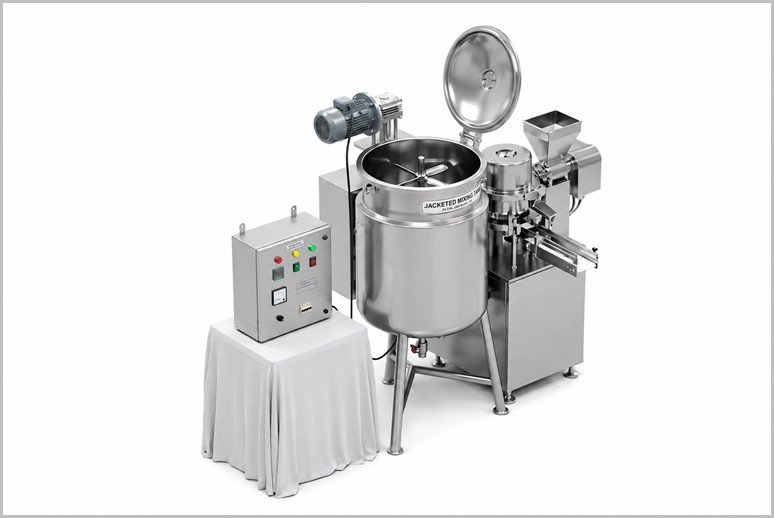
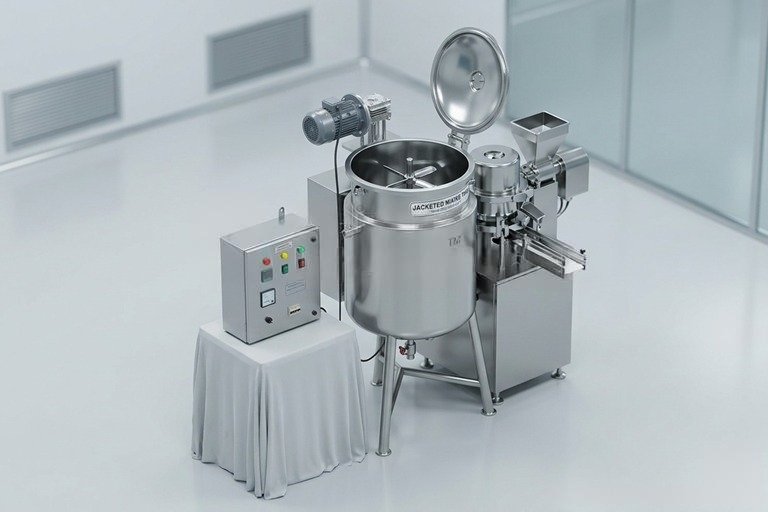
In modern industrial processing, manufacturing, and fluid management, choosing the right containment infrastructure is vital for operational efficiency and safety. Among various storage and processing solutions, the open-top vessel (commonly referred to as an open-top tank) serves a critical role. Unlike fully sealed or pressurized tanks, open-top systems are engineered without a traditional fixed roof, offering distinct functional advantages for fluid handling, mixing, and temporary containment.
What is an Open-Top Vessel?
An open-top vessel is a cylindrical or rectangular container manufactured from robust structural materials—such as cross-linked polyethylene, linear polyethylene, fiberglass-reinforced plastic (FRP), stainless steel, or carbon steel. Characterized by an open rim, these vessels often feature a reinforced upper stiffening lip to maintain structural rigidity. While some configurations remain entirely open to the atmosphere, others can be paired with lightweight, shoe-box style, or hinged covers designed for easy manual or mechanical operation.
Conclusion
Open-top vessels remain an indispensable engineering solution for operations requiring dynamic fluid access, frequent batch mixing, and effortless maintenance. By understanding their structural options and material capabilities, industries can optimize their liquid handling workflows while ensuring long-term reliability and compliance.
Open-Top Industrial/Chemical Tanks
Cylindrical or rectangular tanks used in processing, storage, or mixing chemicals, often made from polyethylene (PE), fiberglass (FRP), or stainless steel.
Picture a simple open tank sitting outdoors or in a plant, with its top freely exposed to the air. The liquid inside feels the weight of everything above it — the liquid itself plus the ordinary air pressure from the atmosphere pressing down on its free surface.
That total downward push creates a pressure at the bottom of the tank. The deeper the liquid, the greater this bottom pressure becomes, simply because a taller column of liquid weighs more. The shape of the tank (wide or narrow) does not change this bottom pressure; only the height of the liquid surface and how heavy the liquid is (its density) matter.
To turn this into a useful level reading, a pressure sensor (or the high-pressure side of a differential-pressure transmitter) is connected at or near the bottom. Because the tank is open, the low-pressure side of the instrument is simply left open to the same outside air. The atmospheric pressure therefore appears equally on both sides of the sensor and cancels itself out. What remains is only the extra pressure caused by the liquid column.
The instrument converts that remaining pressure into a continuous signal that represents how full the tank is. As the liquid rises or falls, the bottom pressure rises or falls in exact step with it, giving a reliable, real-time indication of level.
This arrangement is simple, robust, and widely used for storage tanks, sumps, and process vessels that are vented to atmosphere. The key insight is that the open top makes the atmospheric pressure a common factor that cancels automatically, leaving only the pure “weight of the liquid height” for the instrument to measure.
Description | Specification |
Capacity | 5 Liters to 50000 Liters |
Power Supply | 0.5 H. P. to 100 H. P. |
Power Voltage | 440 volts, 3 phase, 50 hertz. |
Gearbox | Helical type / similar |
Stirrer Type | Pitch/Paddle/Hydrofoil/Anchor type Stirrer |
Stirrer MOC | Stainless Steel 304/316/316L |
Stirrer RPM | Suitable RPM based on process requirements. |
Stirrer Mounting Orientation | Top Mounted or Bottom Mounted |
No. of blades | Two |
Shaft Diameter | Suitable Diameter |
* Power voltage can be adjusted as per customer’s domestic power voltage requirements.
* Rights of technical improvements & modification reserved.
* Illustrations & dimensions are shown for information purpose only.
A Top Open Vessel is engineered for chemical, pharmaceutical, and industrial applications that require frequent cleaning, manual raw material charging, and versatile internal access. Below are the key design and operational features that define these vessels:
A Top Open Vessel (also called an open-top tank) is a cylindrical or rectangular container without a traditional fixed roof. It is designed for fluid handling, mixing, temporary containment, and processes that need easy access. It can remain fully open to the atmosphere or be fitted with lightweight, shoe-box style, or hinged covers.
Contact parts are typically made from Stainless Steel 304, 316, or 316L. Other construction options include cross-linked polyethylene, linear polyethylene, fiberglass-reinforced plastic (FRP), and carbon steel. Surfaces are often polished to a sanitary finish for hygiene and corrosion resistance.
Capacities range from 5 liters up to 20,000 liters (with technical specifications listing up to 50,000 liters). Custom sizes can be provided based on process requirements.
Key features include all contact parts in SS 304/316/316L, availability in standard and vacuum-rated models, optional jacket with heaters for heating, customizable discharge height, heavy-duty legs (no foundation needed), optional flush-bottom ball valve, standard or flameproof/explosion-proof motors, adjustable RPM, and optional PLC with graphical user interface.
Because the top is open to the atmosphere, atmospheric pressure acts equally on the liquid surface and on the reference side of a pressure sensor (or differential-pressure transmitter) mounted near the bottom. This cancels out, so the sensor measures only the hydrostatic pressure from the liquid column, which is directly proportional to liquid height and density, providing a reliable continuous level reading.
Stirrer types include Pitch, Paddle, Hydrofoil, and Anchor. They can be top-mounted or bottom-mounted. The agitator assembly is often supported by an independent bridge, gantry, or floor-mounted framework. Gearboxes are typically helical, and RPM can be customized to process needs. Power ranges from 0.5 HP to 100 HP.
They are widely used in the Pharmaceutical, Nutraceutical, Herbal, Ayurvedic, Biotech, Cosmetic, and Chemical industries for applications such as chemical blending, liquid storage, fermentation, plating, and general containment.
Advantages include easy access for cleaning and maintenance, simplified charging of raw materials (especially solids and powders), flexible agitator and drive mounting, cost-effective fabrication, convenient in-process inspection and sampling, and easier integration of auxiliary equipment such as nozzles, vapor outlets, or vacuum lines.
Yes. They can be fitted with outer heating/cooling jackets (dimple jacket, conventional jacket, or half-pipe coils) for circulating thermal oil, steam, or chilled water. This enables precise temperature control for reactions, polymerization, resin processing, and other temperature-sensitive applications. Jacketed versions with heaters are available as an option.
Yes. They can be customized for capacity, discharge height, stirrer type and RPM, motor type (standard or flameproof), voltage (typically 440 V, 3-phase, 50 Hz, adjustable to local requirements), nozzle and port configuration, surface finish, and optional features such as PLC controls or flush-bottom valves. Technical improvements and modifications are reserved by the manufacturer.
Algeria | Angola | Argentina | Australia | Austria | Bahrain | Bangladesh | Belarus | Belgium | Bolivia | Botswana | Brazil | Bulgaria | Canada | Chile | China | Colombia | Costa Rica | Cuba | Czech Republic | Denmark | Dominican Republic | Ecuador | Egypt | El Salvador | Ethiopia | Finland | France | Germany | Ghana | Greece | Guatemala | Haiti | Honduras | Hong Kong | Hungary | India | Indonesia | Iran | Ireland | Israel | Italy | Ivory Coast | Japan | Jordan | Kazakhstan | Kenya | Kuwait | Lebanon | Libya | Malaysia | Mexico | Mongolia | Morocco | Mozambique | Myanmar | Netherlands | New Zealand | Nicaragua | Nigeria | Norway | Oman | Pakistan | Panama | Paraguay | Peru | Philippines | Poland | Portugal | Qatar | Romania | Russia | Saudi Arabia | Senegal | Slovakia | Singapore | South Africa | South Korea | South Sudan | Spain | Sri Lanka | Sweden | Switzerland | Taiwan | Tanzania | Thailand | Trinidad and Tobago | Tunisia | Turkey | Uganda | Ukraine | United Arab Emirates | United Kingdom | United States | Uruguay | Uzbekistan | Venezuela | Vietnam | Zambia | Zimbabwe
Connect with our engineering team to discuss your specific production requirements. We provide customized, cGMP-compliant machinery solutions designed to optimize your manufacturing facility and maximize output.
©Adinath International | Theme Developed By Pharma Machinery Manufacturer I Website updated on: 01 September 2026
WhatsApp us
