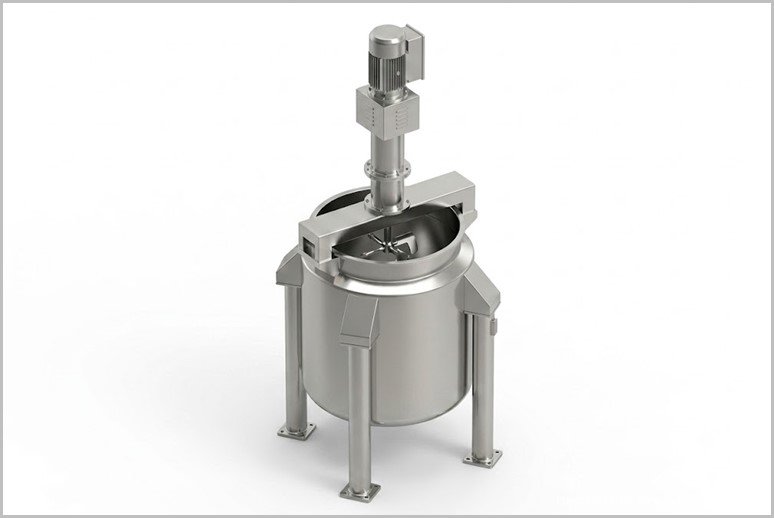
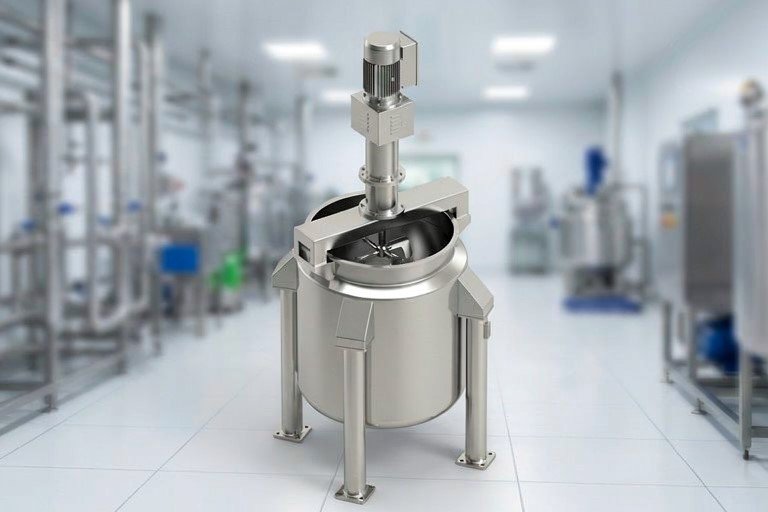
Modern agriculture relies heavily on precision, efficiency, and resource optimization. As farming practices shift toward data-driven nutrient management, the equipment used to prepare and apply crop inputs must meet the highest standards of reliability. Among these essential tools, fertilizer agitators play a critical, yet often underappreciated, role in farm operations.
Agitators for fertilizers are specialized mechanical or hydraulic devices engineered to mix, homogenize, and maintain fertilizer solutions or materials in suspension. By preventing sedimentation, clumping, and phase separation, these systems ensure that every drop of liquid or every broadcast of dry material delivers a precise, uniform blend of nutrients to crops.
Whether integrated into large-scale commercial fertigation systems, industrial storage tanks, tractor-mounted sprayers, or broadcast spreaders, agitators are foundational to achieving maximum crop yield and protecting agricultural investments.
Why Fertilizer Agitators Are Essential for Crop Health?
To understand the value of an agitator, one must examine the behavior of modern fertilizers. Many water-soluble fertilizers, suspension fertilizers, and complex liquid blends consist of diverse chemical compounds with varying densities and solubility rates. Left unmixed, heavier elements quickly settle at the bottom of a tank while lighter components remain at the top. This separation creates severe operational and agronomic challenges:
Nutrient Inconsistency: Without continuous mixing, plants receive uneven doses of macro and micronutrients. This can result in localized nutrient deficiencies, stunted growth, or, conversely, chemical burn from over-concentration.
Clogging and Equipment Damage: Sediment buildup can clog delicate drip irrigation emitters, spray nozzles, and filter screens. This leads to costly downtime, manual labor for cleaning, and premature equipment replacement.
Chemical Instability: Certain agricultural formulations require active suspension to prevent active ingredients from precipitating out of the solution entirely, rendering the application useless.
By maintaining a continuous, homogeneous mix, fertilizer agitators eliminate these risks, ensuring consistent performance from the first minute of application to the last.
Conclusion
Fertilizer agitators are indispensable assets in modern agricultural ecosystems. By guaranteeing uniform nutrient distribution, preventing costly equipment clogs, and supporting precise fertigation, they empower growers to maximize efficiency and crop performance.
An agitator designed for fertilizer manufacturing and mixing (such as NPK blending, granulation, slurry mixing, or liquid fertilizer dissolution) requires robust engineering to handle corrosive raw materials, high viscosities, and abrasive suspended solids.
Agitators for fertilizers are specialized mechanical or hydraulic devices engineered to mix, homogenize, and keep fertilizer solutions or materials in suspension. They prevent sedimentation, clumping, and phase separation so that liquid or dry fertilizer applications deliver a precise, uniform nutrient blend.
Modern fertilizers often contain compounds with different densities and solubility rates. Without continuous mixing, heavier elements settle while lighter ones rise, causing nutrient inconsistency, equipment clogging, and chemical instability. Agitators maintain a homogeneous mix from start to finish of application, supporting better crop yields and protecting equipment investments.
They prevent nutrient inconsistency (uneven macro- and micronutrient delivery that can cause deficiencies or chemical burn), clogging of drip emitters, spray nozzles, and filters from sediment buildup, and chemical instability where active ingredients precipitate out of solution and become ineffective.
Key features include uniform mixing and homogenization of solid fertilizers with water or liquid nutrients; prevention of sedimentation; bidirectional (radial + axial) flow for full tank coverage and elimination of dead zones; corrosion-resistant materials such as polypropylene (PP) turbines and stainless-steel or PE-coated shafts; low energy consumption without vortices, turbulence, or vibrations; ability to handle variable viscosities; flexible mounting (flange/clamp and telescopic supports); and options for single-phase, three-phase, or 12 V DC motors.
By ensuring complete and uniform dissolution of solid fertilizers and maintaining homogeneous nutrient solutions, they deliver consistent nutrient distribution. This improves application efficiency, reduces waste, supports precise fertigation, and promotes better crop health and yield.
They typically use corrosion-resistant materials, including polypropylene (PP) turbines and stainless-steel or PE-coated shafts. Heavy-duty designs may include reinforced bearings, high gearbox factors, and free-hanging shafts suitable for abrasive or aggressive fertilizer slurries.
Yes. They are designed to handle liquids of variable viscosity effectively while generating intense radial and axial currents that eliminate stagnant zones, all with efficient, low-energy operation that avoids excessive turbulence or vortices.
They are integrated into large-scale commercial fertigation systems, industrial storage tanks, tractor-mounted sprayers, and broadcast spreaders. They also support quick re-suspension of settled material after storage periods.
Advantages include complete uniform dissolution of solid fertilizers, prevention of particle settling at the tank bottom, generation of intense currents that eliminate stagnant zones, effective handling of varying viscosities, and efficient mixing with minimum energy consumption and without forming vortices or excessive turbulence. This leads to longer equipment life and more reliable nutrient delivery.
They feature flange/clamp mounting and telescopic supports for easy adaptation to different tank sizes. Power options include single-phase, three-phase, or 12 V DC motors, allowing use across varied farm and industrial power setups while supporting heavy-duty operation with corrosive or abrasive fertilizers.
Algeria | Angola | Argentina | Australia | Austria | Bahrain | Bangladesh | Belarus | Belgium | Bolivia | Botswana | Brazil | Bulgaria | Canada | Chile | China | Colombia | Costa Rica | Cuba | Czech Republic | Denmark | Dominican Republic | Ecuador | Egypt | El Salvador | Ethiopia | Finland | France | Germany | Ghana | Greece | Guatemala | Haiti | Honduras | Hong Kong | Hungary | India | Indonesia | Iran | Ireland | Israel | Italy | Ivory Coast | Japan | Jordan | Kazakhstan | Kenya | Kuwait | Lebanon | Libya | Malaysia | Mexico | Mongolia | Morocco | Mozambique | Myanmar | Netherlands | New Zealand | Nicaragua | Nigeria | Norway | Oman | Pakistan | Panama | Paraguay | Peru | Philippines | Poland | Portugal | Qatar | Romania | Russia | Saudi Arabia | Senegal | Slovakia | Singapore | South Africa | South Korea | South Sudan | Spain | Sri Lanka | Sweden | Switzerland | Taiwan | Tanzania | Thailand | Trinidad and Tobago | Tunisia | Turkey | Uganda | Ukraine | United Arab Emirates | United Kingdom | United States | Uruguay | Uzbekistan | Venezuela | Vietnam | Zambia | Zimbabwe
Connect with our engineering team to discuss your specific production requirements. We provide customized, cGMP-compliant machinery solutions designed to optimize your manufacturing facility and maximize output.
©Adinath International | Theme Developed By Pharma Machinery Manufacturer I Website updated on: 15 October 2026
Request A Quick Quote
Agitators for Fertilizers
Please drop your requirements, one of our technical expert will contact you in next 24 working hours.
WhatsApp us


