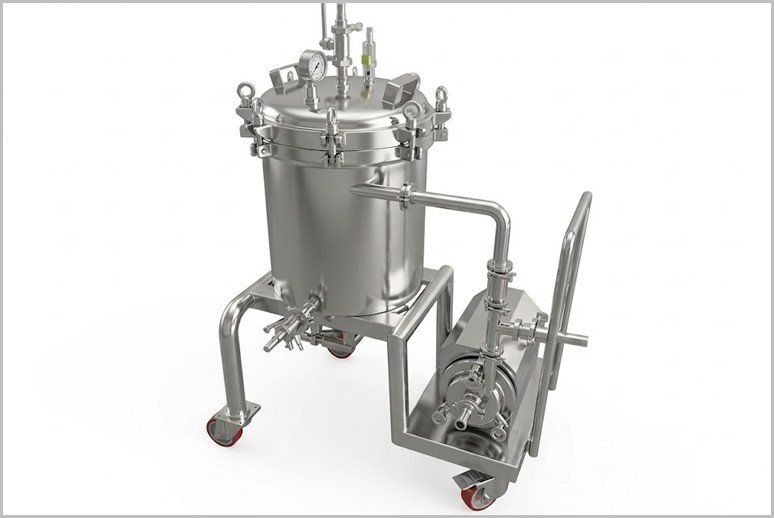
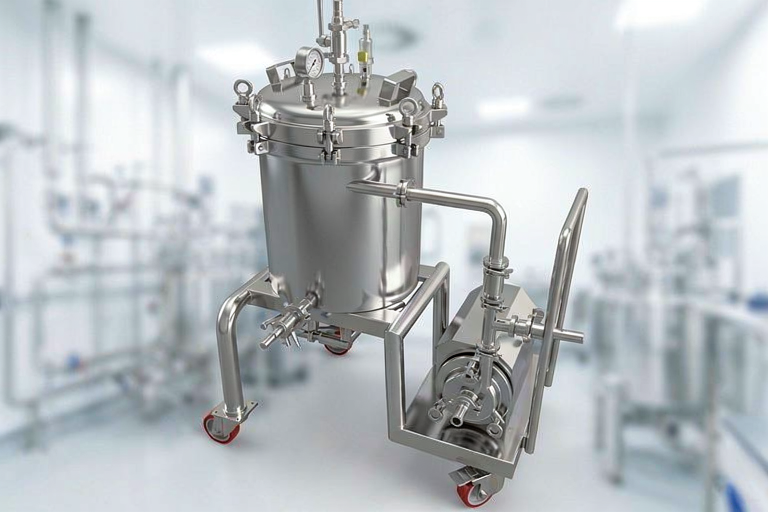
An industrial filter press is a high-performance mechanical system designed for efficient solid-liquid separation via pressure filtration. Across demanding sectors—such as wastewater treatment, chemical processing, mining, and pharmaceuticals—this heavy-duty equipment plays a pivotal role in dewatering slurries, recovering valuable materials, and purifying liquids. Understanding how a filter press functions, its operational phases, and its core engineering advantages helps industrial operators optimize facility workflows and achieve maximum cost-efficiency.
How an Industrial Filter Press Works: The Mechanics of Pressure Filtration
The core function of a filter press revolves around utilizing applied pressure to segregate liquid and solid phases from a heterogeneous mixture. The step-by-step operational cycle unfolds through distinct mechanical phases:
Filtration Process
Product Advantages
Diameter of Plate | No. of Plates | Output LPH | Plate Height | Filtering Area m² | Cake Holding Space m³ | Motor | Size of Pump | Plate Thickness |
8 | 4 | 250 | 25mm | 0.1507 | 0.002893 | 1 H.P. | ½” | 1.2mm |
8 | 6 | 400 | 25mm | 0.1886 | 0.004340 | 1 H.P. | ½” | 1.2mm |
8 | 8 | 500 | 25mm | 0.2260 | 0.00579 | 1 H.P. | ½” | 1.2mm |
14 | 8 | 1000 | 38mm | 0.6130 | 0.02778 | 2 H.P. | 1″ | 1.2mm |
14 | 10 | 1200 | 38mm | 0.7960 | 003472 | 2 H.P. | 1″ | 1.2mm |
18S | 8 | 2500 | 50mm | 1.160 | 0.05007 | 3 H.P. | 1 ½” | 1.5mm |
18D | 15 | 5000 | 25mm | 2.169 | 0.04050 | 3 H.P. | 1 ½” | 1.5mm |
18D | 12 | 4000 | 50mm | 1.745 | 0.07801 | 3 H.P. | 1 ½” | 1.5mm |
18S | 23 | 7000 | 25mm | 3.338 | 0.06349 | 3 H.P. | 1 ½” | 1.5mm |
24D | 10 | 9000 | 2.53 | 0.14256 | 5 H.P. | 2″ | 1.5mm | |
24S | 18 | 16200 | 4.37 | 0.1132 | 5 H.P. | 2″ | 1.5mm | |
24D | 13 | 11700 | 3.22 | 0.18533 | 5 H.P. | 2″ | 1.5mm | |
24S | 24 | 21000 | 5.75 | 0.15081 | 5 H.P. | 2″ | 1.5mm |
Note:
* Power voltage can be adjusted as per customer’s domestic power voltage requirements.
* Rights of technical improvements & modification reserved.
* Illustrations & dimensions are shown for information purpose only.
This results in very dry cakes (often 25–40% moisture or lower) and clear filtrate, making it efficient for dewatering.
An Online Filter Press is a high-performance industrial mechanical system designed for efficient solid-liquid separation through pressure filtration. It is used to dewater slurries, recover valuable materials, and purify liquids in demanding sectors such as wastewater treatment, chemical processing, mining, and pharmaceuticals.
The process involves several phases: a heavy-duty pump feeds pressurized slurry into sealed chambers formed by interlocking filter plates covered with filter cloths. Under hydraulic pressure, liquid (filtrate) passes through the cloth while solids form a dense filter cake. Once full, the plates open and the cake is discharged (manually or automatically), ready for the next cycle.
Key features include easy servicing (only the cover needs lifting, not the cartridge), compliance with the latest industry standards, availability in plate diameters of 4, 8, 14, 18, 24, and 33 inches, compatibility with centrifugal/gear/lobe pumps, built-in pressure gauge/safety valve/air vent, crystal-clear filtration results, SS 304/316/316L product-contact parts, and minimal hold-up of unfiltered slurry for higher productivity.
All product-contact components are manufactured from high-grade stainless steel—SS 304, SS 316, or SS 316L—to ensure corrosion resistance, durability, and suitability for hygienic applications.
The Online Filter Press is offered with plate diameters of 4, 8, 14, 18, 24, and 33 inches. Different models vary in the number of plates, filtering area, cake-holding capacity, motor power, and pump size to match various output requirements (measured in LPH).
Liquid enters under positive pressure and flows downward through side openings in the filter plates. Filter media traps impurities while clean filtrate moves into a central channel formed by interlocking pressure cups linked to the outlet. Filtration continues until cake capacity is reached or the rate drops significantly due to increased resistance.
It is cost-efficient with high economic value and delivers high efficiency by preventing waste and recovering every drop of filtrate. It produces very dry filter cakes (often 25–40% moisture or lower) and clear filtrate, optimizing industrial workflows and reducing operational costs.
It is widely applied in the pharmaceutical, nutraceutical, herbal, Ayurvedic, biotech, cosmetic, and chemical industries, as well as wastewater treatment, mining, and other processes requiring reliable solid-liquid separation.
After filtration, the hydraulic system retracts the plates. The solid cake is discharged either manually or by automated systems. The process is batch-based, with cycles lasting from about 30 minutes to several hours depending on the material being filtered. Optional air or water blow-through can further dry the cake.
Flow rates (given for water with 5% activated carbon using polypropylene cloth) depend on the viscosity of the liquid, the quality of the filter media/pads, and the nature of the sediments. Power voltage can be adjusted to meet local requirements, and technical specifications may be modified as needed.
More Other Machines
 Beverage Application Filter Press
 Cold Drinks Filter Press
 Filter Press
 Filter Press For Agriculture Liquid
Algeria | Angola | Argentina | Australia | Austria | Bahrain | Bangladesh | Belarus | Belgium | Bolivia | Botswana | Brazil | Bulgaria | Canada | Chile | China | Colombia | Costa Rica | Cuba | Czech Republic | Denmark | Dominican Republic | Ecuador | Egypt | El Salvador | Ethiopia | Finland | France | Germany | Ghana | Greece | Guatemala | Haiti | Honduras | Hong Kong | Hungary | India | Indonesia | Iran | Ireland | Israel | Italy | Ivory Coast | Japan | Jordan | Kazakhstan | Kenya | Kuwait | Lebanon | Libya | Malaysia | Mexico | Mongolia | Morocco | Mozambique | Myanmar | Netherlands | New Zealand | Nicaragua | Nigeria | Norway | Oman | Pakistan | Panama | Paraguay | Peru | Philippines | Poland | Portugal | Qatar | Romania | Russia | Saudi Arabia | Senegal | Slovakia | Singapore | South Africa | South Korea | South Sudan | Spain | Sri Lanka | Sweden | Switzerland | Taiwan | Tanzania | Thailand | Trinidad and Tobago | Tunisia | Turkey | Uganda | Ukraine | United Arab Emirates | United Kingdom | United States | Uruguay | Uzbekistan | Venezuela | Vietnam | Zambia | Zimbabwe
Connect with our engineering team to discuss your specific production requirements. We provide customized, cGMP-compliant machinery solutions designed to optimize your manufacturing facility and maximize output.
©Adinath International | Theme Developed By Pharma Machinery Manufacturer I Website updated on: 15 October 2026
Request A Quick Quote
Online Filter Press
Please drop your requirements, one of our technical expert will contact you in next 24 working hours.
WhatsApp us
