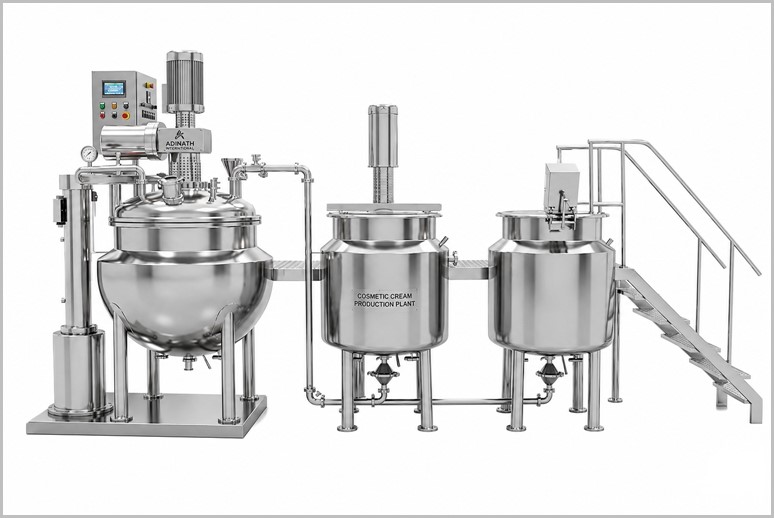
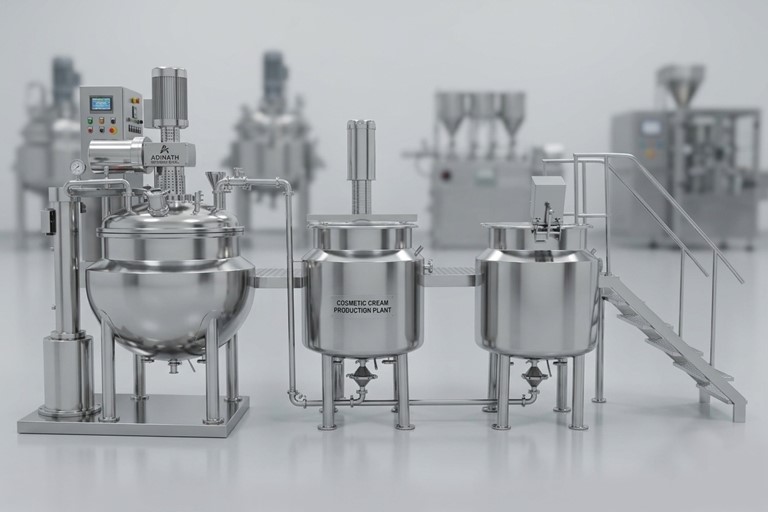
Ointment Manufacturing Plants are specialized facilities designed for producing semi-solid topical formulations such as ointments, creams, gels, lotions, and pastes used in pharmaceutical, cosmetic, and dermatological applications. These plants ensure precise mixing, emulsification, and homogenization to create uniform products that meet regulatory standards like WHO-GMP, FDA, and ISO certifications. The global demand for ointments is growing due to rising skin health awareness, with plants typically handling batch sizes from 20 kg to 2,000 kg. Setting up such a plant involves careful planning to balance cost, efficiency, and compliance.
If you need details on specific models and pricing, let me know!
A comprehensive range of additional features can be provided to increase the flexibility of the Mixer Each option is supplied fully integrated in to the control system of the unit with appropriate safety features.

* Power voltage can be adjusted as per customer’s domestic power voltage requirements.
* Rights of technical improvements & modification reserved.
* Illustrations & dimensions are shown for information purpose only.
Establishing a plant requires a structured approach, from market analysis to operational rollout. Below is a step-by-step guide:
An Ointment Manufacturing Plant is a complete processing facility designed for producing semi-solid topical formulations such as ointments, creams, gels, lotions, and pastes. It is used in pharmaceutical, cosmetic, Ayurvedic, herbal, nutraceutical, and biotech industries. The plant ensures precise mixing, emulsification, homogenization, and compliance with cGMP, WHO-GMP, and FDA standards, with typical batch sizes ranging from 20 kg to 2,000 kg.
The process typically involves separate pre-mix vessels for wax/oil and water phases. Ingredients are heated/cooled in insulated jackets, then combined using semi-contra rotary agitators with scrapers and high-speed emulsifiers for uniform mixing and homogenization. Product is transferred via vacuum or pumps, with options for recirculation, hydraulic lifting for recovery, and integrated CIP cycles. The system ensures consistent quality with minimal manual intervention.
It is widely used in the Pharmaceutical, Cosmetic, Ayurvedic, Herbal, Nutraceutical, and Biotech industries. It is ideal for manufacturing dermatological products, medicated creams, gels, and other topical semi-solid formulations requiring high standards of hygiene, uniformity, and stability.
It offers high efficiency with low manpower requirements, excellent product uniformity through advanced emulsification, and full cGMP compliance with easy cleaning (CIP/SIP) and sterilization features. The modular, vacuum-based design minimizes contamination, supports flexible batch sizes, and includes options for automation and validation, making it cost-effective and scalable for regulatory-compliant production.
More Manufacturing Plants
 Alkyd Resin Manufacturing Plant
 Cosmetic Manufacturing Plant
 Cream Manufacturing Plant
 Injectable Manufacturing Plant
Algeria | Angola | Argentina | Australia | Austria | Bahrain | Bangladesh | Belarus | Belgium | Bolivia | Botswana | Brazil | Bulgaria | Canada | Chile | China | Colombia | Costa Rica | Cuba | Czech Republic | Denmark | Dominican Republic | Ecuador | Egypt | El Salvador | Ethiopia | Finland | France | Germany | Ghana | Greece | Guatemala | Haiti | Honduras | Hong Kong | Hungary | India | Indonesia | Iran | Ireland | Israel | Italy | Ivory Coast | Japan | Jordan | Kazakhstan | Kenya | Kuwait | Lebanon | Libya | Malaysia | Mexico | Mongolia | Morocco | Mozambique | Myanmar | Netherlands | New Zealand | Nicaragua | Nigeria | Norway | Oman | Pakistan | Panama | Paraguay | Peru | Philippines | Poland | Portugal | Qatar | Romania | Russia | Saudi Arabia | Senegal | Slovakia | Singapore | South Africa | South Korea | South Sudan | Spain | Sri Lanka | Sweden | Switzerland | Taiwan | Tanzania | Thailand | Trinidad and Tobago | Tunisia | Turkey | Uganda | Ukraine | United Arab Emirates | United Kingdom | United States | Uruguay | Uzbekistan | Venezuela | Vietnam | Zambia | Zimbabwe
Connect with our engineering team to discuss your specific production requirements. We provide customized, cGMP-compliant machinery solutions designed to optimize your manufacturing facility and maximize output.
©Adinath International | Theme Developed By Pharma Machinery Manufacturer I Website updated on: 15 October 2026
Request A Quick Quote
Ointment Manufacturing Plant
Please drop your requirements, one of our technical expert will contact you in next 24 working hours.
WhatsApp us
