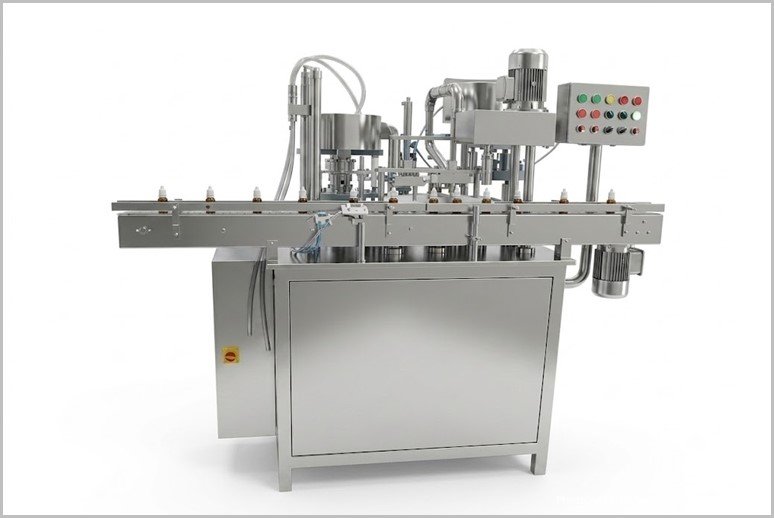
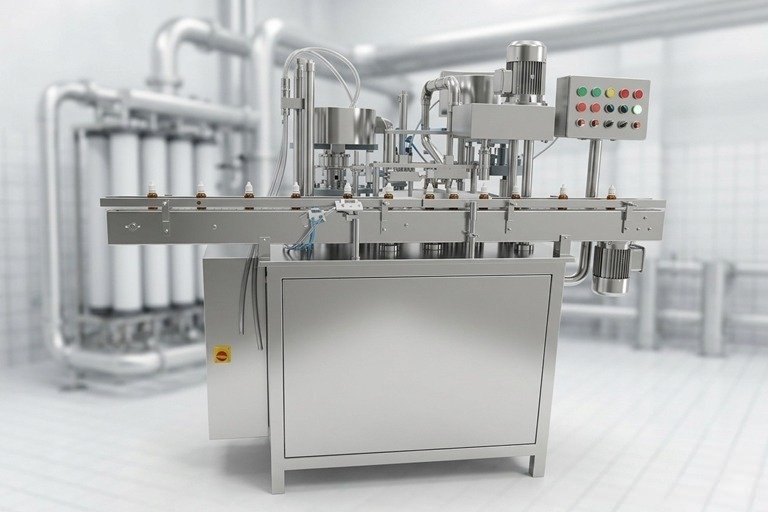
The manufacturing of sterile ophthalmic pharmaceuticals requires uncompromising precision, strict contamination control, and high-speed efficiency. At the heart of this sterile packaging line is the Automatic Eye Drop Filling Machine—a specialized, high-tech pharmaceutical packaging system engineered for the precise dispensing and sealing of eye drops, ear drops, nasal sprays, and other low-viscosity liquid medications into small plastic or glass vials. Because ophthalmic products are introduced directly into sensitive mucosal tissues, the production process must adhere to stringent regulatory frameworks and Current Good Manufacturing Practice (cGMP) standards. This guide examines the engineering principles, operational workflows, and critical features that define modern automatic eye drop filling machinery.
What is an Automatic Eye Drop Filling Machine?
An automatic eye drop filling machine is a fully integrated, multi-station packaging system designed to handle small-dose containers—typically ranging from 2ml to 30ml, with 5ml to 10ml being the industry standard for commercial eye drop bottles. Rather than relying on manual intervention, which introduces human error and microbial contamination risks, these automated systems streamline the entire packaging sequence:
Container feeding and orientation
Precise volumetric liquid dispensing
Dropper tip (nozzle/plug) insertion
Screw-capping or tamper-evident sealing
Housed with a PLC based touch screen interface, the machine allows for real-time viewing and change of parameters. With the Automatic Eye Drop Filling and Capping Machine, very little energy is consumed, which results in less operating unit cost.
It has robust safety features, including automated shutdowns for inconsistencies, detection of cap misalignment at the time of placement, and data logging for regulatory compliance. With its modular design for quick maintenance and fast changeovers between different bottle formats.
Model | AI-EFCM |
Filling Accuracy | ±0.5% |
Volume of Bottle | 5ml to 100ml (Optional) |
Production Speed | 120 bph maximum |
Compatible Materials | Glass and plastic bottles |
Control System | PLC-based, Digital Interface |
Electrical Specification | 3-phase, 415V, 50 Hz |
Other Options | HEPA filtration; flushing with nitrogen |
* Power voltage can be adjusted as per customer’s domestic power voltage requirements.
* Rights of technical improvements & modification reserved.
* Illustrations & dimensions are shown for information purpose only.
Eye Drop Filling Machine are essential in pharmaceutical manufacturing for efficiency, consistency, and contamination control, reducing manual labor while ensuring product safety and dosage accuracy.
It is a fully integrated, multi-station pharmaceutical packaging system designed for precise volumetric filling, dropper tip/plug insertion, and screw capping of small-dose containers (typically 2–30 ml, commonly 5–10 ml) used for eye drops, ear drops, nasal sprays, and similar low-viscosity sterile liquids in plastic or glass vials.
It handles container feeding and orientation, precise liquid dispensing, automatic insertion of dropper tips or inner plugs, and torque-controlled screw capping or tamper-evident sealing, all with minimal human intervention to reduce contamination risk.
Filling accuracy is typically ±0.5% to ±1% using volumetric piston, peristaltic, or servo-driven pumps. The common filling range is 0.1 ml to 50 ml (with models supporting 5–100 ml optionally), ideal for standard eye-drop bottles.
All liquid-contact parts are made of SS 316 / SS 316L, while the machine body and structure use SS 304 with a matt finish. It is engineered for cGMP compliance, sterile environments (including Class 100 laminar airflow), and easy sterilization or autoclaving of change parts.
Key safety systems include “No vial/bottle – No fill” and “No cap – Machine stop” interlocks, sensors for defect detection and rejection, overload protection, fault alarms, and options for nitrogen/inert gas pre- and post-gassing to maintain product integrity.
Standard models operate at approximately 40–60 bottles per minute, with higher-end versions reaching 100+ bottles per minute (or up to 120 bottles per hour in the referenced AI-EFCM model specifications, depending on configuration and bottle size).
It features a PLC-based system with a digital touchscreen HMI for real-time parameter adjustment, recipe storage, and monitoring. Changeover for different bottle sizes, fill volumes, or cap types is quick, with easily removable key parts designed for minimal downtime.
Options include nitrogen flushing, HEPA filtration, in-line sterilization, laminar airflow compatibility, and CIP/SIP cleaning compatibility. These help extend shelf life, prevent oxidation, and support aseptic production environments.
It is primarily used in the pharmaceutical industry for ophthalmic products, and is also suitable for nutraceutical, herbal, Ayurvedic, biotech, cosmetic, and chemical industries requiring precise filling of small-volume liquid containers.
Yes. It has a modular, compact single-body design that integrates easily with upstream and downstream equipment such as bottle unscramblers, air washers, labeling machines, cartoners, and inspection systems for a complete sterile packaging line.
More Other Machines
 Eye Drop Filler Capper
 Eye Drop Filler Machine
 Automatic Ampoule Inspection Machine
 Automatic Bottle Unscrambler
Algeria | Angola | Argentina | Australia | Austria | Bahrain | Bangladesh | Belarus | Belgium | Bolivia | Botswana | Brazil | Bulgaria | Canada | Chile | China | Colombia | Costa Rica | Cuba | Czech Republic | Denmark | Dominican Republic | Ecuador | Egypt | El Salvador | Ethiopia | Finland | France | Germany | Ghana | Greece | Guatemala | Haiti | Honduras | Hong Kong | Hungary | India | Indonesia | Iran | Ireland | Israel | Italy | Ivory Coast | Japan | Jordan | Kazakhstan | Kenya | Kuwait | Lebanon | Libya | Malaysia | Mexico | Mongolia | Morocco | Mozambique | Myanmar | Netherlands | New Zealand | Nicaragua | Nigeria | Norway | Oman | Pakistan | Panama | Paraguay | Peru | Philippines | Poland | Portugal | Qatar | Romania | Russia | Saudi Arabia | Senegal | Slovakia | Singapore | South Africa | South Korea | South Sudan | Spain | Sri Lanka | Sweden | Switzerland | Taiwan | Tanzania | Thailand | Trinidad and Tobago | Tunisia | Turkey | Uganda | Ukraine | United Arab Emirates | United Kingdom | United States | Uruguay | Uzbekistan | Venezuela | Vietnam | Zambia | Zimbabwe
Connect with our engineering team to discuss your specific production requirements. We provide customized, cGMP-compliant machinery solutions designed to optimize your manufacturing facility and maximize output.
©Adinath International | Theme Developed By Pharma Machinery Manufacturer I Website updated on: 15 October 2026
Request A Quick Quote
Automatic Eye Drop Filling Machine
Please drop your requirements, one of our technical expert will contact you in next 24 working hours.
WhatsApp us
