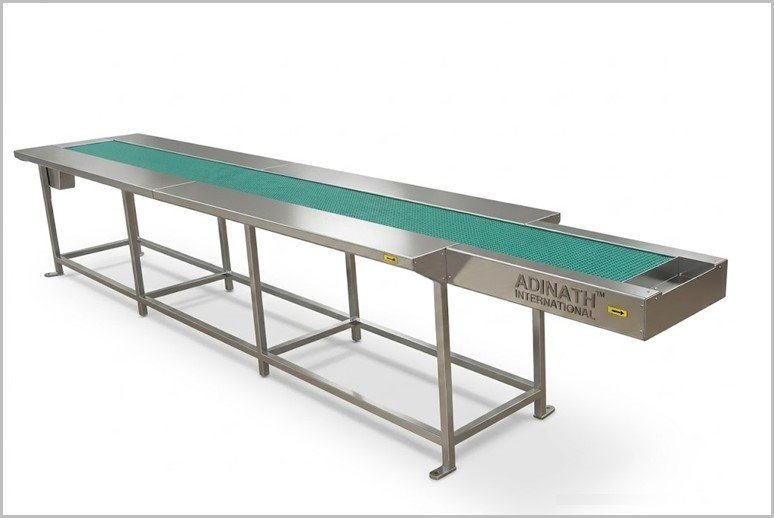
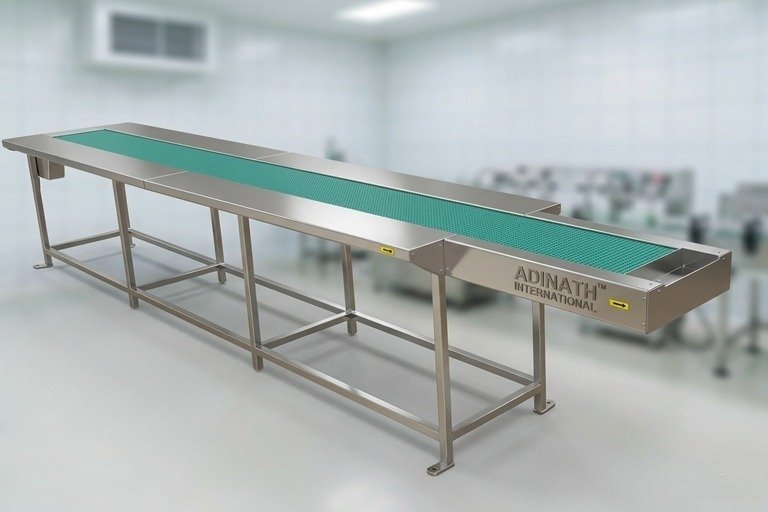
A packing conveyor, also commonly referred to as a packaging conveyor or packing conveyor system, is an essential material handling solution designed to streamline the movement of products, packages, and boxes across various stages of the packaging process. In today’s fast-paced manufacturing, warehousing, and distribution environments, these automated systems have become indispensable for businesses looking to optimize productivity while reducing operational costs. Whether you operate in food processing, pharmaceuticals, e-commerce fulfillment, or logistics, investing in a high-quality packing conveyor can transform your packaging workflow.
At its core, a packing conveyor consists of a continuous conveyor belt, rollers, modular chains, or powered rollers that automatically transport items from one station to another. Operators no longer need to manually lift, carry, or reposition heavy loads. Instead, products flow smoothly along the line, allowing workers to focus on value-added tasks such as filling, sealing, labeling, quality inspection, coding, and final packing. Modern systems often integrate with sensors, PLC controls, variable speed drives, and automated sorting mechanisms to ensure precise movement and minimal downtime.
Many facilities customize their packaging conveyor systems with features like incline/decline sections, accumulation tables, merge/divert units, and side tables for ergonomic packing stations. This flexibility makes them suitable for both small-scale operations and high-volume production lines.
A packing conveyor is a specialized material-handling system designed to transport products smoothly and continuously through various stages of the packaging process — such as filling, sealing, labeling, weighing, or cartoning.
Basic Working Principle
Belt Width | Tailored (depends on product dimensions) |
Belt Speed | Customized according to production requirement |
Material | SS (Stainless steel) 304/SS 316 |
Electricity | 3-phase: 415v; 50Hz |
Machine Length | Length can vary depending on industry needs |
* Power voltage can be adjusted as per customer’s domestic power voltage requirements.
* Rights of technical improvements & modification reserved.
* Illustrations & dimensions are shown for information purpose only.
A packing conveyor (also called a packaging conveyor or packing conveyor system) is a material-handling solution that uses a continuous belt, rollers, modular chains, or powered rollers to move products, packages, and boxes through packaging stages such as filling, sealing, labeling, inspection, coding, and final packing. It streamlines workflows in manufacturing, warehousing, and distribution, reducing manual handling while improving productivity and lowering costs.
It is available in stainless steel (S.S. 304 or S.S. 316) or mild steel (M.S.) models. The structure uses S.S. 304/M.S. 32 mm square pipe with a matt finish or painted surface. The table top is made of S.S. 304 16-gauge sheet with a matt finish. The conveyor belt is typically a PVC-coated canvas belt or endless rubberized belt, supported by special self-aligning bearings for smooth roller rotation and a reduction gearbox for jerk-free, noiseless operation.
Yes. Length, height, width, and speed are tailored to customer requirements and product dimensions. Belt width and overall machine length vary according to industry needs, and power voltage can be adjusted to match local domestic supply.
Products are loaded (manually or automatically) at the infeed end. An electric motor and gearbox drive a pulley, rollers, or chains to create continuous movement. Variable frequency drives or speed controllers regulate speed to match packaging cycles. Sensors, photo-eyes, or encoders ensure proper spacing and positioning. Products pass through or stop at stations (fillers, sealers, labelers, etc.) and are discharged at the outfeed end for collection or further handling.
Common types include flat or inclined belt conveyors for general transport (often in filling/capping lines); gravity or powered roller conveyors for boxes/pallets and accumulation or manual packing; flexible plastic chain conveyors for curves, elevation changes, or heavy loads; and spiral, vertical, or accumulation conveyors for space-saving or buffering. Many systems integrate with robots, sorters, sealers, or scanners for fully automated operation.
They are widely used in the pharmaceutical, nutraceutical, herbal, Ayurvedic, biotech, cosmetic, and chemical industries, as well as food processing, e-commerce fulfillment, and logistics.
Benefits include higher productivity through continuous product movement, reduced labor costs by minimizing manual handling, consistent product flow and spacing for better machine synchronization, improved packaging accuracy, lower product damage, better ergonomics and worker safety, flexible and scalable design, optimized floor-space use, easy integration with automation (sensors, PLCs, robots), and overall lower operating costs through reduced waste and downtime.
Belt width is tailored to product dimensions. Belt speed is customized to production needs. Construction material is typically SS 304 or SS 316. Power supply is 3-phase 415 V, 50 Hz (adjustable). Machine length varies by application. Technical improvements and modifications are reserved by the manufacturer.
It synchronizes with fillers, cappers, sealers, labelers, checkweighers, and other machines via variable speed drives, sensors, and PLC controls. Products can be stopped or positioned precisely at each station. Systems can also connect with robotic arms, sorters, scanners, and smart packaging lines for fully automated, hands-free operation.
Key features include a 3-speed pulley for the conveyor belt, special self-aligning bearings for trouble-free roller rotation, a reduction gearbox for jerk-less and noiseless long-term performance, durable PVC-coated canvas or rubberized belts, and robust stainless-steel or mild-steel construction. These elements support continuous operation with minimal downtime in demanding production environments.
Algeria | Angola | Argentina | Australia | Austria | Bahrain | Bangladesh | Belarus | Belgium | Bolivia | Botswana | Brazil | Bulgaria | Canada | Chile | China | Colombia | Costa Rica | Cuba | Czech Republic | Denmark | Dominican Republic | Ecuador | Egypt | El Salvador | Ethiopia | Finland | France | Germany | Ghana | Greece | Guatemala | Haiti | Honduras | Hong Kong | Hungary | India | Indonesia | Iran | Ireland | Israel | Italy | Ivory Coast | Japan | Jordan | Kazakhstan | Kenya | Kuwait | Lebanon | Libya | Malaysia | Mexico | Mongolia | Morocco | Mozambique | Myanmar | Netherlands | New Zealand | Nicaragua | Nigeria | Norway | Oman | Pakistan | Panama | Paraguay | Peru | Philippines | Poland | Portugal | Qatar | Romania | Russia | Saudi Arabia | Senegal | Slovakia | Singapore | South Africa | South Korea | South Sudan | Spain | Sri Lanka | Sweden | Switzerland | Taiwan | Tanzania | Thailand | Trinidad and Tobago | Tunisia | Turkey | Uganda | Ukraine | United Arab Emirates | United Kingdom | United States | Uruguay | Uzbekistan | Venezuela | Vietnam | Zambia | Zimbabwe
Connect with our engineering team to discuss your specific production requirements. We provide customized, cGMP-compliant machinery solutions designed to optimize your manufacturing facility and maximize output.
©Adinath International | Theme Developed By Pharma Machinery Manufacturer I Website updated on: 01 September 2026
WhatsApp us
