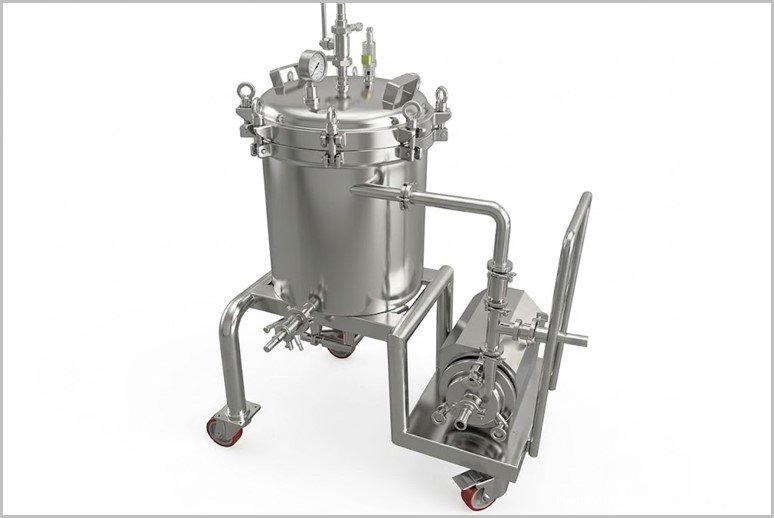
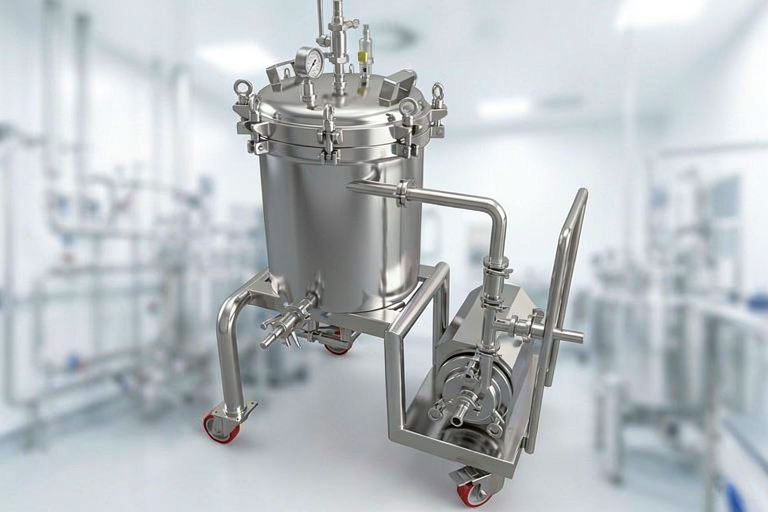
In modern chemical, pharmaceutical, and food processing facilities, ensuring that products are completely clear is essential for following regulations, ensuring safety, and meeting customer expectations. Among the different methods used to separate solid materials from liquids, the Sparkler Filter Press, often referred to as a “Sparkle Filter Press” in industrial searches, is recognized as a top choice for highly effective liquid purification. This specialized filter is built with a series of horizontal plates enclosed in a secure, leak-proof unit. It is designed to efficiently remove solid particles from liquids, turning cloudy slurries into clear, sparkling filtrates. This guide explains the mechanical design, how it works, its benefits, and where it is commonly used in various industries. The Sparkler Filter Press operates through a process that combines positive pressure filtration with depth and cake filtration techniques. This method is why the equipment is relied upon for high-quality purification tasks:
Fluid Intake: Unfiltered liquid is pumped into the system using a positive displacement pump, such as a centrifugal, gear, or lobe pump.
Distribution Across Plates: The liquid flows into the enclosed filter unit, spreading evenly across the stacked, horizontal filter plates.
Media Interception: As the liquid moves through specialized filter media, like non-woven cloths, filter paper, or pads, the suspended solids and fine impurities are captured. Filter aids, such as diatomaceous earth, are often used to improve the removal of very small particles.
Filtrate Collection: The purified liquid moves through interlocking pressure cups and a central channel, leaving the system through the bottom outlet, free from any contaminants.
Modern Sparkler Filter Presses are designed with several key features to meet the strict requirements of current good manufacturing practices, especially in clean and sanitary environments. These include:
Material of Construction (MOC): Usually made from high-quality stainless steel, such as SS 304, SS 316, or SS 316L, to prevent corrosion and chemical damage.
Zero Hold-Up Designs: These advanced designs use reverse-flow mechanisms to ensure that all liquid is completely filtered, with no liquid remaining inside the system, reducing waste.
Enclosed and Sealed Assembly: The use of sturdy swing-bolt closures and airtight gaskets ensures that hazardous, toxic, or volatile liquids are safely contained without any vapor leaks.
Jacketing Options: Some models include double-walled or jacketed vessels to support both hot and cold filtration processes, helping maintain accurate temperature control for sensitive liquids.
Due to its ability to achieve very fine clarification—often down to 1 micron—the Sparkler Filter Press is widely used in several industries:
Pharmaceuticals: It is used to clarify liquid oral medications, syrups, parenteral solutions, bulk drugs, antibiotics, and alcohol extracts by removing foreign particles and microbial contaminants.
Food and Beverages: Essential for clarifying edible oils, syrups, soft drinks, juices, and fine wines by eliminating haze, unwanted sediments, and yeast cells.
Chemicals and Petrochemicals: Ideal for processing fine chemicals, solvents, paints, varnishes, resins, and liquid dyes to ensure consistency and purity in batches.
Cosmetics and Distilleries: Used in the production of perfumes, colognes, and distilled water to maintain a clear appearance. Facility managers and process engineers often choose Sparkler Filter Presses for several operational benefits:
High Efficiency: They offer better purification performance than standard bag or cartridge filters when dealing with liquids containing a lot of solids.
Easy Maintenance: The horizontal plate assembly can be easily removed on a mobile trolley, disassembled, and cleaned, reducing downtime for maintenance.
Flexibility: The system can be adjusted to handle different batch volumes and liquid viscosities by simply changing the number of plates or using different filter media grades.
The liquid is fed into the filter of the machine and it is done under positive pressure. Now, the liquid travels downwards and passes through the opening on the sides of filter plates. The filter media holds back foreign particles and enables only clear filtrate to go past the central channel. This central channel is made by interlocking pressure cups to the outlet. The filtration process continues until the cake holding capacity gets saturated or the filtrate rate gets way slower than it must be. This happens due to decreasing cake resistance.
Our meticulously designed filter press is cost-efficient. And you can bet on its efficiency – it helps save every precious drop.
Diameter of Plate | No. of Plates | Output LPH | Plate Height | Filtering Area m² | Cake Holding Space m³ | Motor | Size of Pump | Plate Thickness |
8 | 4 | 250 | 25mm | 0.1507 | 0.002893 | 1 H.P. | ½” | 1.2mm |
8 | 6 | 400 | 25mm | 0.1886 | 0.004340 | 1 H.P. | ½” | 1.2mm |
8 | 8 | 500 | 25mm | 0.2260 | 0.00579 | 1 H.P. | ½” | 1.2mm |
14 | 8 | 1000 | 38mm | 0.6130 | 0.02778 | 2 H.P. | 1″ | 1.2mm |
14 | 10 | 1200 | 38mm | 0.7960 | 003472 | 2 H.P. | 1″ | 1.2mm |
18S | 8 | 2500 | 50mm | 1.160 | 0.05007 | 3 H.P. | 1 ½” | 1.5mm |
18D | 15 | 5000 | 25mm | 2.169 | 0.04050 | 3 H.P. | 1 ½” | 1.5mm |
18D | 12 | 4000 | 50mm | 1.745 | 0.07801 | 3 H.P. | 1 ½” | 1.5mm |
18S | 23 | 7000 | 25mm | 3.338 | 0.06349 | 3 H.P. | 1 ½” | 1.5mm |
24D | 10 | 9000 | 2.53 | 0.14256 | 5 H.P. | 2″ | 1.5mm | |
24S | 18 | 16200 | 4.37 | 0.1132 | 5 H.P. | 2″ | 1.5mm | |
24D | 13 | 11700 | 3.22 | 0.18533 | 5 H.P. | 2″ | 1.5mm | |
24S | 24 | 21000 | 5.75 | 0.15081 | 5 H.P. | 2″ | 1.5mm |
Note:
* Power voltage can be adjusted as per customer’s domestic power voltage requirements.
* Rights of technical improvements & modification reserved.
* Illustrations & dimensions are shown for information purpose only.
It is a specialized horizontal-plate filter designed for highly effective liquid purification. It uses a series of horizontal plates inside a secure, leak-proof unit to remove solid particles from liquids, converting cloudy slurries into clear, sparkling filtrates. It is widely used in chemical, pharmaceutical, and food processing facilities for regulatory compliance, safety, and product quality.
Unfiltered liquid is pumped under positive pressure into the enclosed unit and spreads evenly across stacked horizontal filter plates. As the liquid passes through filter media (non-woven cloths, paper, or pads—often with filter aids such as diatomaceous earth), solids and fine impurities are trapped. Clear filtrate flows through interlocking pressure cups into a central channel and exits via the bottom outlet. Filtration continues until the cake capacity is reached or the flow rate drops significantly.
Contact parts are typically made from high-quality stainless steel—SS 304, SS 316, or SS 316L—to resist corrosion and chemical attack. All contact surfaces receive a high degree of finish for sanitary and clean applications.
Zero hold-up designs incorporate reverse-flow or scavenging mechanisms so that virtually all liquid is filtered and recovered, leaving no residual unfiltered slurry inside the system. This minimizes product waste and boosts productivity.
It is used in pharmaceuticals (clarifying liquid orals, syrups, parenteral solutions, bulk drugs, antibiotics, and alcohol extracts), food & beverages (edible oils, syrups, soft drinks, juices, and wines), chemicals & petrochemicals (fine chemicals, solvents, paints, varnishes, resins, and liquid dyes), cosmetics, distilleries, and related sectors such as nutraceutical, herbal, Ayurvedic, and biotech industries.
Models are offered with plate diameters of 4, 8, 14, 18, 24, and 33 inches. Technical configurations vary by number of plates, output (LPH), filtering area, cake-holding capacity, motor power, and pump size—for example, 8-inch units range from roughly 250–500 LPH, while larger 24-inch models can reach 9,000–21,000 LPH depending on plate count and design.
Key features include easy maintenance (cartridge handling without full lifting in many designs), construction to modern engineering standards, pressure gauge + safety valve + air vent, compatibility with centrifugal/gear/lobe pumps, crystal-clear filtration, stainless-steel contact parts with high finish, and minimum hold-up of unfiltered slurry for higher productivity.
The horizontal plate assembly is typically mounted on a mobile trolley, allowing easy removal, disassembly, and cleaning. This design reduces downtime compared with more complex vertical or fixed systems.
It delivers superior purification performance on liquids with higher solids content, provides an enclosed sealed assembly that prevents leaks/evaporation/contamination, offers flexibility through adjustable plate counts and media grades for different batch sizes and viscosities, and achieves very fine clarification (often down to 1 micron). Optional jacketing supports temperature-controlled hot or cold filtration.
Yes. Plate number and filter media grade can be changed to suit batch volume and viscosity. Jacketing options are available for temperature-sensitive liquids. Power voltage can be adapted to local supply requirements, and technical specifications (output, filtering area, cake space, pump size, etc.) vary across the model range.
More Other Machines
 Beverage Application Filter Press
 Cold Drinks Filter Press
 Filter Press
 Filter Press For Agriculture Liquid
Algeria | Angola | Argentina | Australia | Austria | Bahrain | Bangladesh | Belarus | Belgium | Bolivia | Botswana | Brazil | Bulgaria | Canada | Chile | China | Colombia | Costa Rica | Cuba | Czech Republic | Denmark | Dominican Republic | Ecuador | Egypt | El Salvador | Ethiopia | Finland | France | Germany | Ghana | Greece | Guatemala | Haiti | Honduras | Hong Kong | Hungary | India | Indonesia | Iran | Ireland | Israel | Italy | Ivory Coast | Japan | Jordan | Kazakhstan | Kenya | Kuwait | Lebanon | Libya | Malaysia | Mexico | Mongolia | Morocco | Mozambique | Myanmar | Netherlands | New Zealand | Nicaragua | Nigeria | Norway | Oman | Pakistan | Panama | Paraguay | Peru | Philippines | Poland | Portugal | Qatar | Romania | Russia | Saudi Arabia | Senegal | Slovakia | Singapore | South Africa | South Korea | South Sudan | Spain | Sri Lanka | Sweden | Switzerland | Taiwan | Tanzania | Thailand | Trinidad and Tobago | Tunisia | Turkey | Uganda | Ukraine | United Arab Emirates | United Kingdom | United States | Uruguay | Uzbekistan | Venezuela | Vietnam | Zambia | Zimbabwe
Connect with our engineering team to discuss your specific production requirements. We provide customized, cGMP-compliant machinery solutions designed to optimize your manufacturing facility and maximize output.
©Adinath International | Theme Developed By Pharma Machinery Manufacturer I Website updated on: 15 October 2026
Request A Quick Quote
Sparkle Filter Press
Please drop your requirements, one of our technical expert will contact you in next 24 working hours.
WhatsApp us
