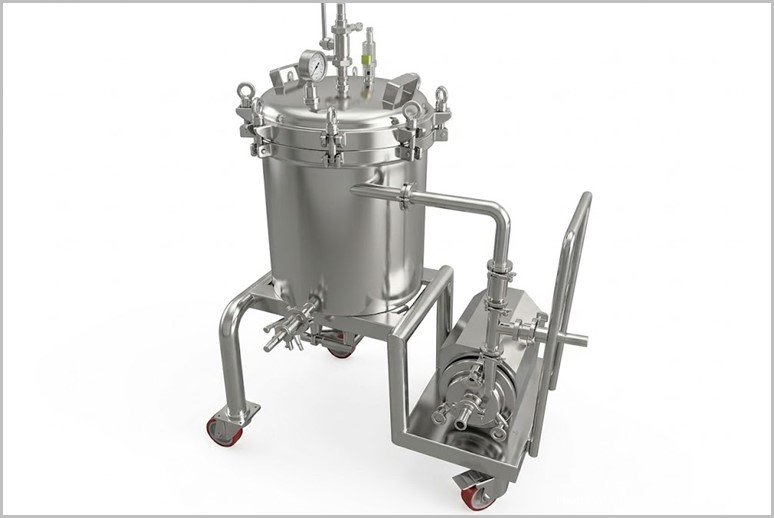
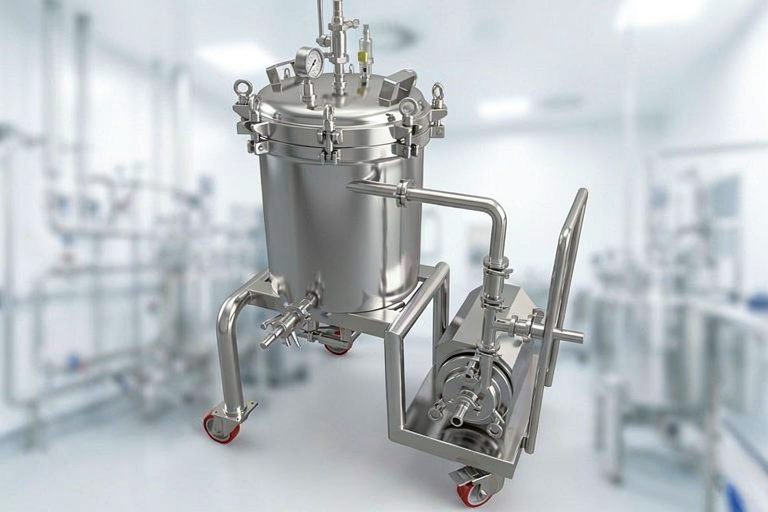
A Suspension Filter Press—frequently referred to as a filter press for industrial slurries and suspensions—is a high-performance, mechanical solid-liquid separation device. Engineered to process complex fluid mixtures containing suspended solid particles within a liquid matrix, this heavy-duty apparatus plays a critical baseline role across modern manufacturing and processing plants. By leveraging applied pressure to drive efficient separation, a suspension filter press ensures maximum resource recovery, exceptional filtrate clarity, and streamlined environmental waste management.
Optimizing separation processes is essential for plant engineers and operations managers striving for regulatory compliance, lower overhead costs, and minimized environmental impact. Understanding the mechanics, operational parameters, and multi-industry utilities of these systems underscores their value in contemporary industrial engineering.
Equipment Highlights
Diameter of Plate | No. of Plates | Output LPH | Plate Height | Filtering Area m² | Cake Holding Space m³ | Motor | Size of Pump | Plate Thickness |
8 | 4 | 250 | 25mm | 0.1507 | 0.002893 | 1 H.P. | ½” | 1.2mm |
8 | 6 | 400 | 25mm | 0.1886 | 0.004340 | 1 H.P. | ½” | 1.2mm |
8 | 8 | 500 | 25mm | 0.2260 | 0.00579 | 1 H.P. | ½” | 1.2mm |
14 | 8 | 1000 | 38mm | 0.6130 | 0.02778 | 2 H.P. | 1″ | 1.2mm |
14 | 10 | 1200 | 38mm | 0.7960 | 003472 | 2 H.P. | 1″ | 1.2mm |
18S | 8 | 2500 | 50mm | 1.160 | 0.05007 | 3 H.P. | 1 ½” | 1.5mm |
18D | 15 | 5000 | 25mm | 2.169 | 0.04050 | 3 H.P. | 1 ½” | 1.5mm |
18D | 12 | 4000 | 50mm | 1.745 | 0.07801 | 3 H.P. | 1 ½” | 1.5mm |
18S | 23 | 7000 | 25mm | 3.338 | 0.06349 | 3 H.P. | 1 ½” | 1.5mm |
24D | 10 | 9000 | 2.53 | 0.14256 | 5 H.P. | 2″ | 1.5mm | |
24S | 18 | 16200 | 4.37 | 0.1132 | 5 H.P. | 2″ | 1.5mm | |
24D | 13 | 11700 | 3.22 | 0.18533 | 5 H.P. | 2″ | 1.5mm | |
24S | 24 | 21000 | 5.75 | 0.15081 | 5 H.P. | 2″ | 1.5mm |
* Power voltage can be adjusted as per customer’s domestic power voltage requirements.
* Rights of technical improvements & modification reserved.
* Illustrations & dimensions are shown for information purpose only.
A suspension filter press is a high-performance solid-liquid separation machine engineered for efficient cake filtration of various liquid suspensions. Widely utilized in pharmaceutical, chemical, and industrial processing, it ensures maximum yield recovery and crystal-clear filtrate generation.
A Suspension Filter Press (also called a filter press for industrial slurries and suspensions) is a high-performance mechanical solid-liquid separation device. It processes complex fluid mixtures containing suspended solid particles by applying pressure to achieve efficient separation, maximum resource recovery, clear filtrate, and effective waste management.
Liquid product enters the filter assembly under positive pressure. The fluid flows downward through side openings on the filter plates; filter media traps solid particles while clear filtrate passes through and collects in a central channel formed by interlocking pressure cups linked to the outlet. Filtration continues until the cake-holding capacity is saturated or the filtration rate drops significantly due to rising cake resistance.
Filter plates are suspended from side bars or an overhead beam for free longitudinal movement. The design offers a completely open underside for free gravity discharge of filter cakes, full side and bottom access for inspection/cleaning/cloth change, controlled plate movement to reduce cloth wear, uniform vertical stress distribution to minimize warping and leakage, support for full mechanization/automation of plate shifting and cake discharge, protected plate-shifting mechanisms, suitability for larger plates (typically 800–2000+ mm), robust hydraulic closing, and enhanced safety features such as power cut-off near moving parts.
It delivers a high solid capture rate (>99%), very clear filtrate that can often be reused, a dry filter cake that is easy to handle/transport/dispose of, a compact design with high capacity, and suitability for a wide range of suspensions—from fine particles to coarse slurries.
It is applied in the pharmaceutical, nutraceutical, herbal, Ayurvedic, biotech, cosmetic, and chemical industries for solid-liquid separation processes.
Models vary by plate diameter (e.g., 8″, 14″, 18S/18D, 24D/24S), number of plates, output (LPH), plate height, filtering area (m²), cake-holding space (m³), motor power, pump size, and plate thickness. Examples range from smaller units (e.g., 8″ plates, 4–8 plates, 250–500 LPH) to larger high-capacity models (e.g., 24″ plates delivering up to 21,000 LPH). Power voltage can be adjusted to customer requirements; technical improvements are reserved.
The completely open/unobstructed underside enables free gravity discharge of cakes. Full side and bottom access allows easy inspection, cleaning, filter-cloth changes, and maintenance. Controlled plate movement reduces cloth wear from impact, and the plate-shifting mechanism is mounted overhead or protected to minimize contact with slurry, corrosion, and contamination.
Yes. It supports full mechanization and automation of plate shifting (individual or group), cake discharge, and related operations. The robust framework with hydraulic closing (single or multi-ram) ensures reliable sealing at predetermined pressure, and safety features such as power cut-off protect operators near moving mechanisms.
It is suitable for larger plate sizes (typically 800–2000+ mm) and higher capacities compared with basic designs. Technical tables list various configurations with filtering areas from approximately 0.15 m² up to over 5.7 m² and corresponding cake-holding capacities and outputs scaled accordingly.
It helps plant engineers and operations managers achieve regulatory compliance, lower overhead costs, and minimize environmental impact through efficient solid-liquid separation, maximum product recovery, clear reusable filtrate, and streamlined waste management of dry filter cakes.
More Other Machines
 Beverage Application Filter Press
 Cold Drinks Filter Press
 Filter Press
 Filter Press For Agriculture Liquid
Algeria | Angola | Argentina | Australia | Austria | Bahrain | Bangladesh | Belarus | Belgium | Bolivia | Botswana | Brazil | Bulgaria | Canada | Chile | China | Colombia | Costa Rica | Cuba | Czech Republic | Denmark | Dominican Republic | Ecuador | Egypt | El Salvador | Ethiopia | Finland | France | Germany | Ghana | Greece | Guatemala | Haiti | Honduras | Hong Kong | Hungary | India | Indonesia | Iran | Ireland | Israel | Italy | Ivory Coast | Japan | Jordan | Kazakhstan | Kenya | Kuwait | Lebanon | Libya | Malaysia | Mexico | Mongolia | Morocco | Mozambique | Myanmar | Netherlands | New Zealand | Nicaragua | Nigeria | Norway | Oman | Pakistan | Panama | Paraguay | Peru | Philippines | Poland | Portugal | Qatar | Romania | Russia | Saudi Arabia | Senegal | Slovakia | Singapore | South Africa | South Korea | South Sudan | Spain | Sri Lanka | Sweden | Switzerland | Taiwan | Tanzania | Thailand | Trinidad and Tobago | Tunisia | Turkey | Uganda | Ukraine | United Arab Emirates | United Kingdom | United States | Uruguay | Uzbekistan | Venezuela | Vietnam | Zambia | Zimbabwe
Connect with our engineering team to discuss your specific production requirements. We provide customized, cGMP-compliant machinery solutions designed to optimize your manufacturing facility and maximize output.
©Adinath International | Theme Developed By Pharma Machinery Manufacturer I Website updated on: 15 October 2026
Request A Quick Quote
Suspension Filter Press
Please drop your requirements, one of our technical expert will contact you in next 24 working hours.
WhatsApp us
