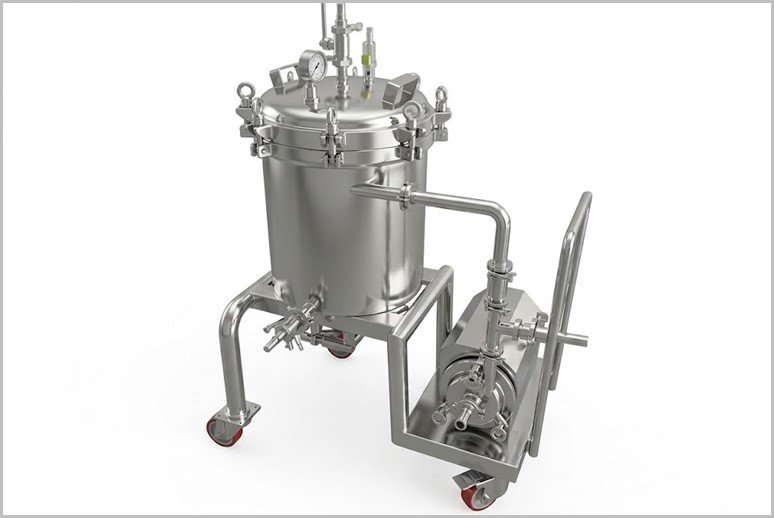
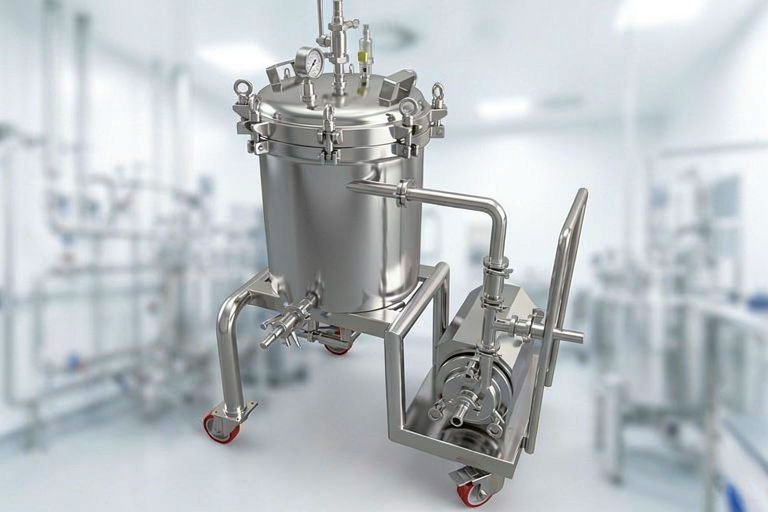
A Zero Hold Up Filter Press—frequently referenced in industrial sectors as a Zero Holdup Filter Press or Sparkler Type Zero Hold Up Filter Press—represents the pinnacle of advanced solid-liquid separation technology. Engineered meticulously to eliminate product retention, or “hold-up,” within the filtration chamber, this specialized device ensures complete recovery of processed liquids.
In modern manufacturing environments processing high-value, toxic, or expensive fluids, minimizing waste is vital for operational profitability and regulatory compliance. By combining an enclosed, contamination-free design with high-pressure performance, the zero hold up filter press delivers crystal-clear filtration while protecting operators and the surrounding environment.
Summary
Investing in a Zero Hold Up Filter Press optimizes production lines by maximizing yield, reducing chemical waste, and ensuring uncompromised purity. Its robust engineering, combined with zero fluid retention capacity, guarantees rapid return on investment for businesses handling critical, high-value liquid batches.
The liquid is fed into the filter of the machine and it is done under positive pressure. Now, the liquid travels downwards and passes through the opening on the sides of filter plates. The filter media holds back foreign particles and enables only clear filtrate to go past the central channel. This central channel is made by interlocking pressure cups to the outlet. The filtration process continues until the cake holding capacity gets saturated or the filtrate rate gets way slower than it must be. This happens due to decreasing cake resistance.
Our meticulously designed filter press is cost-efficient. And you can bet on its efficiency – it helps save every precious drop.
Diameter of Plate | No. of Plates | Output LPH | Plate Height | Filtering Area m² | Cake Holding Space m³ | Motor | Size of Pump | Plate Thickness |
8 | 4 | 250 | 25mm | 0.1507 | 0.002893 | 1 H.P. | ½” | 1.2mm |
8 | 6 | 400 | 25mm | 0.1886 | 0.004340 | 1 H.P. | ½” | 1.2mm |
8 | 8 | 500 | 25mm | 0.2260 | 0.00579 | 1 H.P. | ½” | 1.2mm |
14 | 8 | 1000 | 38mm | 0.6130 | 0.02778 | 2 H.P. | 1″ | 1.2mm |
14 | 10 | 1200 | 38mm | 0.7960 | 003472 | 2 H.P. | 1″ | 1.2mm |
18S | 8 | 2500 | 50mm | 1.160 | 0.05007 | 3 H.P. | 1 ½” | 1.5mm |
18D | 15 | 5000 | 25mm | 2.169 | 0.04050 | 3 H.P. | 1 ½” | 1.5mm |
18D | 12 | 4000 | 50mm | 1.745 | 0.07801 | 3 H.P. | 1 ½” | 1.5mm |
18S | 23 | 7000 | 25mm | 3.338 | 0.06349 | 3 H.P. | 1 ½” | 1.5mm |
24D | 10 | 9000 | 2.53 | 0.14256 | 5 H.P. | 2″ | 1.5mm | |
24S | 18 | 16200 | 4.37 | 0.1132 | 5 H.P. | 2″ | 1.5mm | |
24D | 13 | 11700 | 3.22 | 0.18533 | 5 H.P. | 2″ | 1.5mm | |
24S | 24 | 21000 | 5.75 | 0.15081 | 5 H.P. | 2″ | 1.5mm |
Note:
* Power voltage can be adjusted as per customer’s domestic power voltage requirements.
* Rights of technical improvements & modification reserved.
* Illustrations & dimensions are shown for information purpose only.
A Zero Hold Filter Press (also called Zero Hold-Up or Sparkler Type Zero Hold-Up Filter Press) is an advanced solid-liquid separation machine designed to eliminate product retention or “hold-up” in the filtration chamber. It ensures complete recovery of processed liquids, delivers crystal-clear filtration, and is ideal for high-value, toxic, or expensive fluids in contamination-sensitive environments.
Liquid is fed under positive pressure and travels downward through openings on the sides of the filter plates. The filter media retains foreign particles while clear filtrate passes into a central channel formed by interlocking pressure cups leading to the outlet. Filtration continues until the cake-holding capacity is saturated or the filtrate rate slows due to cake resistance. The reverse-flow design (typically bottom-to-top) leaves virtually no residual liquid.
Key advantages include high-efficiency single-pass clear filtration, significantly reduced product loss (critical for costly materials), easy operation and maintenance with quick batch changeovers, compliance with GMP and FDA standards, and versatility for both small- and large-scale production.
Salient features include maintenance that can be performed without fully lifting the cartridge, construction to the latest engineering standards, availability in plate diameters of 4, 8, 14, 18, 24, and 33 inches, options for centrifugal/gear/lobe pumps, fitted pressure gauge, safety valve and air vent, crystal-clear filtration, minimum hold-up of unfiltered slurry, all contact parts in SS 304/316/316L, and a high degree of finish on contact surfaces.
All contact parts are made of high-quality stainless steel (SS 304, SS 316, or SS 316L) for corrosion resistance, hygiene, and GMP compliance. The plates and overall enclosed design ensure contamination-free operation suitable for pharmaceutical and related industries.
It is widely used in the pharmaceutical, nutraceutical, herbal, Ayurvedic, biotech, cosmetic, and chemical industries—particularly where high-value liquids, purity, and minimal product loss are essential.
Core components include a reverse-flow mechanism (unfiltered liquid enters from the bottom via a central channel and clean filtrate exits from the top), a series of horizontal stainless-steel plates with filter media (pads or cartridges), an enclosed design that retains cake and solids with zero residual liquid, and supporting elements such as pumps, pressure gauges, safety valves, and air vents. No scavenger arrangement is required.
Models are offered with plate diameters of 8″, 14″, 18″, and 24″ (and others), varying numbers of plates, output rates from approximately 250 LPH to over 21,000 LPH (based on water with 5% activated carbon and polypropylene cloth), different filtering areas, cake-holding capacities, motor sizes (1–5 HP), and pump sizes. Actual filtration rates depend on liquid viscosity, filter media quality, and sediment nature. Power voltage can be adjusted to customer requirements.
Traditional presses often leave residual liquid due to top-to-bottom flow. The Zero Hold model uses a reverse (bottom-to-top) flow and interlocking pressure cups so that virtually no unfiltered slurry remains in the chamber or dome after filtration. This maximizes yield, reduces chemical waste, and is especially valuable for expensive or hazardous fluids.
Yes. Maintenance can often be performed without fully lifting the cartridge. The machine features easy operation, quick batch changeovers, high-finish contact surfaces, and an enclosed design. It is engineered for GMP and FDA compliance, making it suitable for regulated industries that require hygiene, operator safety, and contamination control.
More Other Machines
 Beverage Application Filter Press
 Cold Drinks Filter Press
 Filter Press
 Filter Press For Agriculture Liquid
Algeria | Angola | Argentina | Australia | Austria | Bahrain | Bangladesh | Belarus | Belgium | Bolivia | Botswana | Brazil | Bulgaria | Canada | Chile | China | Colombia | Costa Rica | Cuba | Czech Republic | Denmark | Dominican Republic | Ecuador | Egypt | El Salvador | Ethiopia | Finland | France | Germany | Ghana | Greece | Guatemala | Haiti | Honduras | Hong Kong | Hungary | India | Indonesia | Iran | Ireland | Israel | Italy | Ivory Coast | Japan | Jordan | Kazakhstan | Kenya | Kuwait | Lebanon | Libya | Malaysia | Mexico | Mongolia | Morocco | Mozambique | Myanmar | Netherlands | New Zealand | Nicaragua | Nigeria | Norway | Oman | Pakistan | Panama | Paraguay | Peru | Philippines | Poland | Portugal | Qatar | Romania | Russia | Saudi Arabia | Senegal | Slovakia | Singapore | South Africa | South Korea | South Sudan | Spain | Sri Lanka | Sweden | Switzerland | Taiwan | Tanzania | Thailand | Trinidad and Tobago | Tunisia | Turkey | Uganda | Ukraine | United Arab Emirates | United Kingdom | United States | Uruguay | Uzbekistan | Venezuela | Vietnam | Zambia | Zimbabwe
Connect with our engineering team to discuss your specific production requirements. We provide customized, cGMP-compliant machinery solutions designed to optimize your manufacturing facility and maximize output.
©Adinath International | Theme Developed By Pharma Machinery Manufacturer I Website updated on: 15 October 2026
Request A Quick Quote
Zero Hold Filter Press
Please drop your requirements, one of our technical expert will contact you in next 24 working hours.
WhatsApp us
