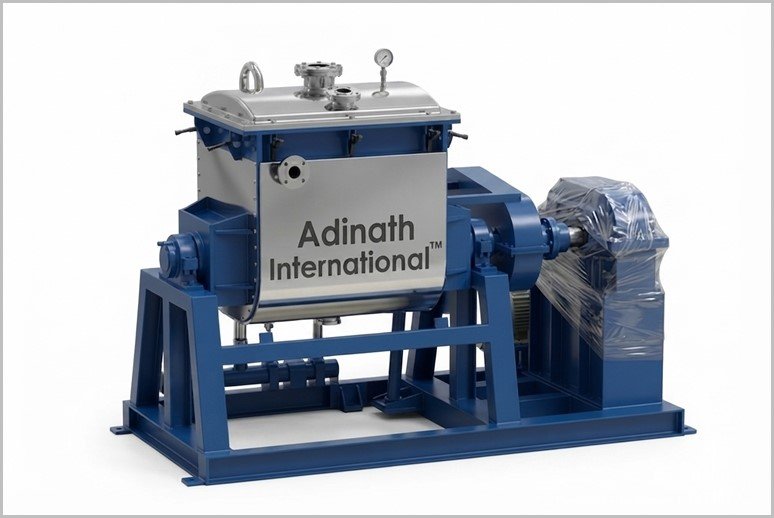
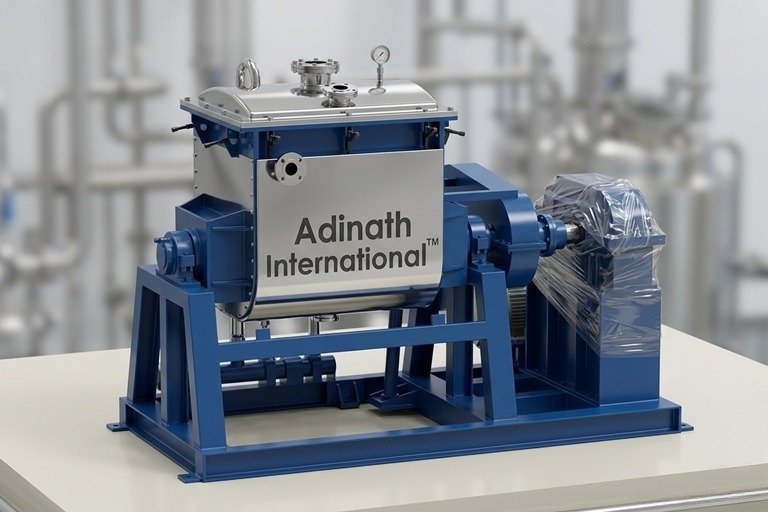
In the world of industrial manufacturing, a Gasket and Gland Packings Kneader stands as a critical piece of equipment designed specifically for processing high-viscosity materials. Commonly known as a sigma mixer kneader or dispersion kneader, this specialized industrial mixing machine delivers powerful, uniform blending that standard mixers simply cannot achieve. Industries involved in the production of gaskets, gland packings (also referred to as compression packings or braided packings), rubber compounds, adhesives, sealants, and other heavy-duty materials rely heavily on kneaders for consistent quality and performance.
A kneader, particularly the sigma mixer kneader, features two counter-rotating sigma-shaped blades that thoroughly knead, mix, and disperse materials with viscosities ranging from thick pastes to rubber-like compounds. The unique blade design creates high shear forces while ensuring complete material turnover, eliminating dead zones and delivering homogeneous mixtures.
Dispersion kneaders take this capability further with advanced cooling and heating jackets, variable speed controls, and robust hydraulic tilting mechanisms for easy discharge. These features make them ideal for temperature-sensitive processes where precise control over mixing time, temperature, and pressure directly impacts the final product quality.
Mixing Dynamics and Thermal Cycle
Tangential Blade Architecture
Overlapping Blade Architecture
Model | Capacity – Liters | Motor (H.P.) | ||
Working Capacity approx. | Gross Capacity approx. | General | Heavy Duty | |
ASM – 50 | 50 Liters | 80 Liters | 5 H.P. | 7.5 H.P. |
ASM – 75 | 75 Liters | 110 Liters | 7.5 H.P. | 10 H.P. |
ASM – 100 | 100 Liters | 150 Liters | 10 H.P. | 15 H.P. |
ASM – 150 | 150 Liters | 200 Liters | 15 H.P. | 20 H.P. |
ASM – 200 | 200 Liters | 300 Liters | 20 H.P. | 25 H.P. |
ASM – 400 | 400 Liters | 550 Liters | 30 H.P. | 40 H.P. |
ASM – 500 | 500 Liters | 750 Liters | 40 H.P. | 50 H.P. |
ASM – 750 | 750 Liters | 1150 Liters | 50 H.P. | 60 H.P. |
ASM – 1000 | 1000 Liters | 1500 Liters | 60 H.P. | 70 H.P. |
ASM – 1500 | 1500 Liters | 2100 Liters | 75 H.P. | 80 H.P. |
ASM – 2000 | 2000 Liters | 2600 Liters | 80 H.P. | 90 H.P. |
ASM – 3000 | 3000 Liters | 3800 Liters | 100 H.P. | 120 H.P. |
* Power voltage can be adjusted as per customer’s domestic power voltage requirements.
* Rights of technical improvements & modification reserved.
* Illustrations & dimensions are shown for information purpose only.
It is a specialized industrial mixing machine (also called a sigma mixer kneader or dispersion kneader) designed for high-viscosity materials. It uses two counter-rotating sigma-shaped blades to thoroughly knead, mix, and disperse thick pastes, rubber-like compounds, and other heavy-duty materials used in gaskets, gland packings (compression or braided packings), adhesives, and sealants.
It uniformly mixes semi-solid, viscous compounds such as rubber, PTFE, graphite, aramid fibers, lubricants, and fillers. These form the base material for sheet gaskets (cut or molded for static sealing) and gland packings (braided or extruded into ropes/rings for dynamic sealing in pumps, valves, and shafts).
Key features include construction in Stainless Steel 316, 304, or Mild Steel; matt/mirror polish or epoxy-painted finishes; manual (hand-wheel) or hydraulic discharge; heating/cooling jackets with mineral wool insulation; tangential ‘Z’ (sigma) blades; PTFE shaft sealing for food-grade compatibility; minimal gap between trough and blades to prevent sticking; and optional spray or vacuum systems.
Tangential action of dual ‘Z’-type (sigma) kneading blades rotating at different speeds toward each other transfers product from one end to the other. Mixing combines bulk movement, stretching, folding, dividing, and recombining. Shearing against the blades and walls reduces solid particle size. Discharge occurs by tilting the container, bottom valves, or an extrusion screw.
In the tangential design (preferred for higher-viscosity materials like adhesives, rubber compounds, dyes, and pigments), blades meet tangentially and typically rotate at different speeds (often a 3:2 ratio). Overlapping blades rotate at the same speed, suit lighter-viscosity materials (e.g., carbon pastes, creams, ointments), provide faster material interchange, but deliver lower kneading and shearing action.
Models range from ASM-50 (approx. 50 L working / 80 L gross capacity, 5–7.5 HP) to ASM-3000 (approx. 3000 L working / 3800 L gross capacity, 100–120 HP). Both general and heavy-duty motor options are offered, and power voltage can be adjusted to local requirements.
Discharge can be manual (hand-wheel operated) or automatic (hydraulic operated). Additional options include an automatic valve discharge system or a screw (extrusion) system for controlled or continuous product removal.
Yes. A jacket for heating or cooling applications can be provided, complete with mineral wool insulation and cladding. Optional blade cooling arrangements further help maintain precise temperatures and minimize heat buildup during mixing of temperature-sensitive materials.
Optional features include a liquid spray system, vacuum system, blades cooling arrangement, screw system, and automatic valve discharge system. Custom configurations for heating/cooling and specialized process needs can also be supplied.
It is used in the pharmaceutical, nutraceutical, herbal, Ayurvedic, biotech, cosmetic, and chemical industries. It is especially valuable for producing consistent sealing materials that require homogeneous dispersion for reliable chemical resistance, durability, and performance in chemical processing, petrochemical, and manufacturing applications.
Algeria | Angola | Argentina | Australia | Austria | Bahrain | Bangladesh | Belarus | Belgium | Bolivia | Botswana | Brazil | Bulgaria | Canada | Chile | China | Colombia | Costa Rica | Cuba | Czech Republic | Denmark | Dominican Republic | Ecuador | Egypt | El Salvador | Ethiopia | Finland | France | Germany | Ghana | Greece | Guatemala | Haiti | Honduras | Hong Kong | Hungary | India | Indonesia | Iran | Ireland | Israel | Italy | Ivory Coast | Japan | Jordan | Kazakhstan | Kenya | Kuwait | Lebanon | Libya | Malaysia | Mexico | Mongolia | Morocco | Mozambique | Myanmar | Netherlands | New Zealand | Nicaragua | Nigeria | Norway | Oman | Pakistan | Panama | Paraguay | Peru | Philippines | Poland | Portugal | Qatar | Romania | Russia | Saudi Arabia | Senegal | Slovakia | Singapore | South Africa | South Korea | South Sudan | Spain | Sri Lanka | Sweden | Switzerland | Taiwan | Tanzania | Thailand | Trinidad and Tobago | Tunisia | Turkey | Uganda | Ukraine | United Arab Emirates | United Kingdom | United States | Uruguay | Uzbekistan | Venezuela | Vietnam | Zambia | Zimbabwe
Connect with our engineering team to discuss your specific production requirements. We provide customized, cGMP-compliant machinery solutions designed to optimize your manufacturing facility and maximize output.
©Adinath International | Theme Developed By Pharma Machinery Manufacturer I Website updated on: 15 October 2026
Request A Quick Quote
Gasket and Gland Packings Kneader
Please drop your requirements, one of our technical expert will contact you in next 24 working hours.
WhatsApp us


