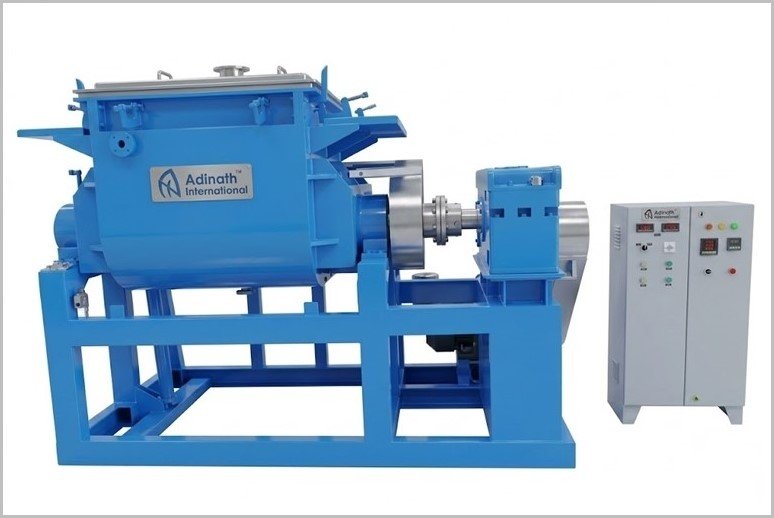
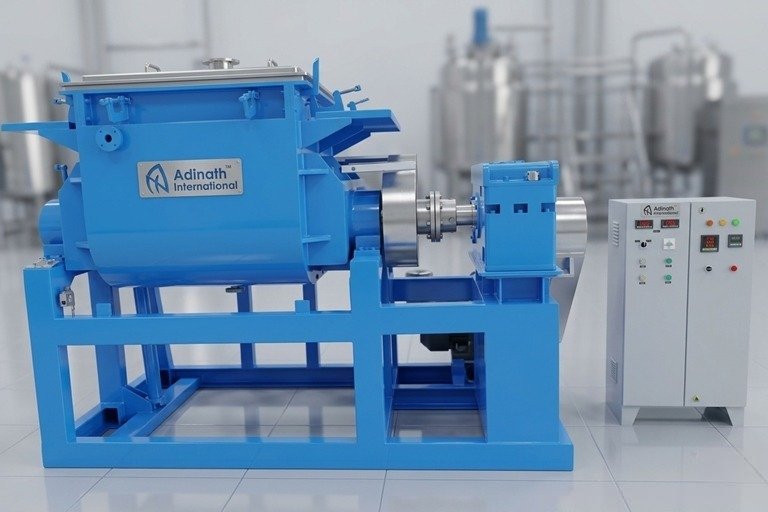
The Silicon Rubber Extruder, also commonly known as a silicone extruder or silicone rubber extrusion machine, is a specialized industrial machine designed for the efficient and precise silicone rubber extrusion process. This advanced equipment plays a critical role in modern manufacturing by forcing uncured or catalyzed silicone rubber compound through a custom-shaped die to produce continuous, high-quality profiles with exact dimensions and consistent cross-sections. From medical-grade tubing to industrial seals, the silicone rubber extruder delivers unmatched accuracy and productivity for a wide range of silicone rubber products.
In the silicone rubber extrusion process, pre-mixed silicone rubber compound (often prepared using a sigma mixer kneader) is fed into the extruder’s hopper or screw feed system. The machine uses a powerful screw mechanism — typically a cold feed or hot feed extruder — to convey, compress, and pressurize the material. As the silicone compound moves forward, it is forced through a precision-engineered die that shapes it into the desired profile.
The extruded silicone then passes through a vulcanization system (hot air vulcanization, steam curing, or salt bath) to cure the material, locking in its final properties. This continuous process enables high-speed production of uniform products such as:
Silicone tubes and hoses
Rubber seals and gaskets
Weatherstrips and cords
Custom silicone profiles and strips
Medical tubing and catheters
Electrical insulation sleeves
Kinetic Mixing Principles & Action Mechanism
Product Discharge Alternatives
Tangential Rotor Configuration
Overlapping Rotor Configuration
Model | Capacity – Liters | Motor (H.P.) | ||
Working Capacity approx. | Gross Capacity approx. | General | Heavy Duty | |
ASM – 50 | 50 Liters | 80 Liters | 5 H.P. | 7.5 H.P. |
ASM – 75 | 75 Liters | 110 Liters | 7.5 H.P. | 10 H.P. |
ASM – 100 | 100 Liters | 150 Liters | 10 H.P. | 15 H.P. |
ASM – 150 | 150 Liters | 200 Liters | 15 H.P. | 20 H.P. |
ASM – 200 | 200 Liters | 300 Liters | 20 H.P. | 25 H.P. |
ASM – 400 | 400 Liters | 550 Liters | 30 H.P. | 40 H.P. |
ASM – 500 | 500 Liters | 750 Liters | 40 H.P. | 50 H.P. |
ASM – 750 | 750 Liters | 1150 Liters | 50 H.P. | 60 H.P. |
ASM – 1000 | 1000 Liters | 1500 Liters | 60 H.P. | 70 H.P. |
ASM – 1500 | 1500 Liters | 2100 Liters | 75 H.P. | 80 H.P. |
ASM – 2000 | 2000 Liters | 2600 Liters | 80 H.P. | 90 H.P. |
ASM – 3000 | 3000 Liters | 3800 Liters | 100 H.P. | 120 H.P. |
* Power voltage can be adjusted as per customer’s domestic power voltage requirements.
* Rights of technical improvements & modification reserved.
* Illustrations & dimensions are shown for information purpose only.
The machine typically includes:
The process is continuous: Raw silicone (high-consistency rubber or HCR) is fed in, heated and pressurized, then forced through the die. The emerging profile is then cured in ovens (e.g., hot air, microwave, or salt bath) and cooled.
A Silicon Rubber Extruder (also called a silicone extruder or silicone rubber extrusion machine) is a specialized industrial machine that forces uncured or catalyzed silicone rubber compound through a custom-shaped die. It produces continuous, high-quality profiles with precise dimensions and consistent cross-sections for applications ranging from medical tubing to industrial seals.
Pre-mixed silicone rubber compound is fed into the extruder’s hopper or screw feed system. A powerful screw (cold-feed or hot-feed type) conveys, compresses, and pressurizes the material, forcing it through a precision die that shapes it into the desired profile. The extruded silicone then passes through a vulcanization system to cure and lock in its final properties.
It produces silicone tubes and hoses, rubber seals and gaskets, weatherstrips and cords, custom silicone profiles and strips, medical tubing and catheters, and electrical insulation sleeves, among other continuous high-quality silicone rubber products.
The machine typically employs a cold-feed or hot-feed screw mechanism. Pre-mixed silicone rubber compound (often prepared in a sigma mixer kneader) is introduced via a hopper or screw feed system for efficient conveying and pressurization.
After shaping through the die, the extruded silicone passes through a vulcanization system such as hot-air vulcanization, steam curing, or a salt bath. This continuous curing step sets the material’s final properties and enables high-speed production of uniform products.
The machine is fabricated using industrial-grade structural alloys including Mild Steel, SS 304, and SS 316. Surface finishes can be customized from matte to ultra-reflective mirror gloss, with protective coatings such as red-oxide primer and dual-layer epoxy.
A precision-engineered die shapes the pressurized silicone compound into the exact desired profile and cross-section. This ensures continuous production of profiles with consistent dimensions and high accuracy across a wide range of silicone rubber products.
Yes. It is designed for high-precision extrusion of medical tubing, catheters, and other medical-grade silicone products, delivering the accuracy, consistency, and material integrity required for such demanding uses.
The uncured or catalyzed silicone rubber compound is typically pre-mixed (often using a sigma mixer kneader) before being fed into the extruder’s hopper or screw system. This ensures the material is homogeneous and ready for efficient extrusion and subsequent vulcanization.
Optional add-ons available on request include vacuum integration setups, controlled fluid spray mechanisms, temperature-regulation jackets, PTFE shaft seals for hygienic operation, and specialized discharge or cooling arrangements to support specific process requirements.
Algeria | Angola | Argentina | Australia | Austria | Bahrain | Bangladesh | Belarus | Belgium | Bolivia | Botswana | Brazil | Bulgaria | Canada | Chile | China | Colombia | Costa Rica | Cuba | Czech Republic | Denmark | Dominican Republic | Ecuador | Egypt | El Salvador | Ethiopia | Finland | France | Germany | Ghana | Greece | Guatemala | Haiti | Honduras | Hong Kong | Hungary | India | Indonesia | Iran | Ireland | Israel | Italy | Ivory Coast | Japan | Jordan | Kazakhstan | Kenya | Kuwait | Lebanon | Libya | Malaysia | Mexico | Mongolia | Morocco | Mozambique | Myanmar | Netherlands | New Zealand | Nicaragua | Nigeria | Norway | Oman | Pakistan | Panama | Paraguay | Peru | Philippines | Poland | Portugal | Qatar | Romania | Russia | Saudi Arabia | Senegal | Slovakia | Singapore | South Africa | South Korea | South Sudan | Spain | Sri Lanka | Sweden | Switzerland | Taiwan | Tanzania | Thailand | Trinidad and Tobago | Tunisia | Turkey | Uganda | Ukraine | United Arab Emirates | United Kingdom | United States | Uruguay | Uzbekistan | Venezuela | Vietnam | Zambia | Zimbabwe
Connect with our engineering team to discuss your specific production requirements. We provide customized, cGMP-compliant machinery solutions designed to optimize your manufacturing facility and maximize output.
©Adinath International | Theme Developed By Pharma Machinery Manufacturer I Website updated on: 15 October 2026
Request A Quick Quote
Silicon Rubber Extruder
Please drop your requirements, one of our technical expert will contact you in next 24 working hours.
WhatsApp us


