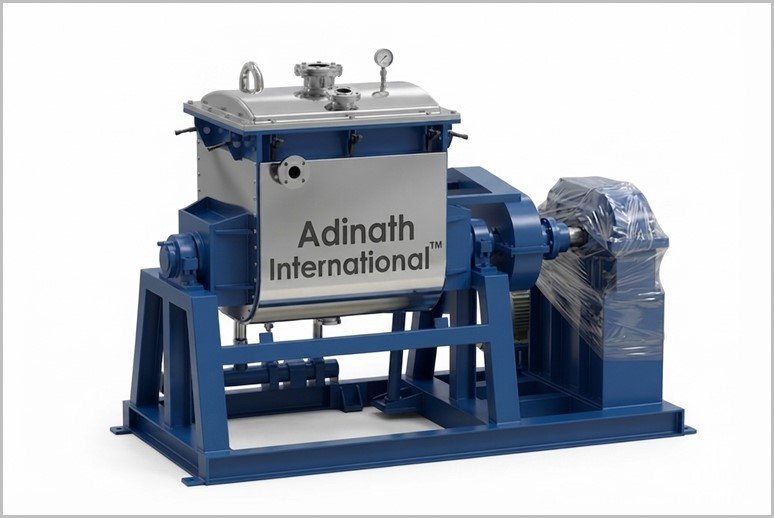
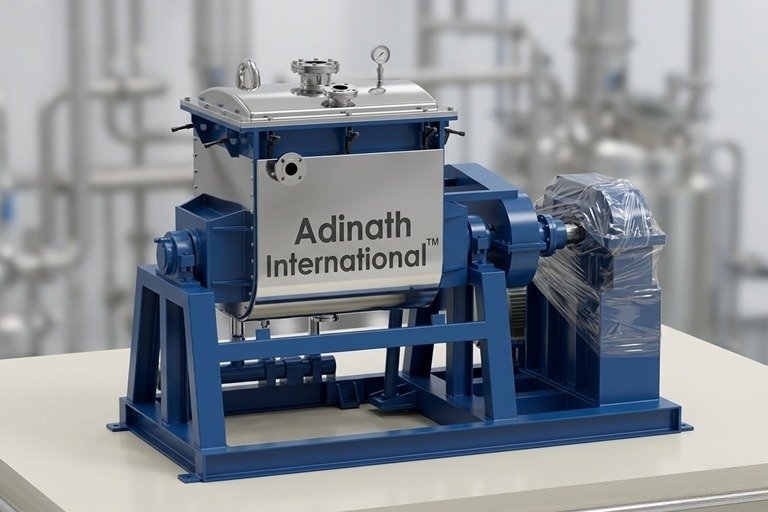
A Smc Compound Sigma Mixer, also widely known as a Sigma Blade Mixer, Z-Blade Kneader, or Double Arm Mixer, is a robust industrial mixing machine engineered specifically for handling highly viscous, dough-like, sticky, and paste-type materials. Particularly popular in the compounding of SMC (Sheet Molding Compound), this powerful equipment delivers exceptional performance where standard mixers fall short. Its unique design makes it the preferred choice across rubber, plastic, chemical, adhesive, food processing, and pharmaceutical industries.
At the heart of every SMC Compound Sigma Mixer are two heavy-duty, interlocking sigma-shaped (or Z-shaped) blades that rotate in opposite directions inside a W-shaped mixing trough. These blades typically operate at different speeds, creating a highly effective combination of shearing, folding, compressing, and kneading actions. This dual-motion technology ensures thorough dispersion and uniform blending of even the toughest materials, eliminating lumps and achieving homogeneous consistency in minimal time.
The W-shaped trough is engineered for optimal material flow and easy discharge, while the sigma blades provide intense mechanical action that breaks down agglomerates and distributes additives evenly throughout the batch. Modern sigma kneaders often come with jacketed troughs for precise temperature control, vacuum capabilities, and hydraulic tilting mechanisms for effortless unloading.
SMC stands for Sheet Molding Compound, a reinforced thermoset composite material used in compression molding for parts like automotive components, electrical enclosures, and structural items. SMC consists of polyester resin, fillers (e.g., calcium carbonate), chopped glass fibers, pigments, and additives.
The Sigma Mixer is commonly used in the production of related compounds like BMC (Bulk Molding Compound) or DMC (Dough Molding Compound), where it kneads semi-manufactured resin paste with chopped glass strands and fillers into a homogeneous dough-like mass. For SMC production, a high-speed disperser (dissolver) typically handles the initial resin paste mixing, while the final impregnation occurs on a dedicated SMC machine. However, Sigma Mixers are sometimes referenced or adapted in composite production lines for handling viscous SMC pastes or similar high-viscosity polyester compounds.
Blending Kinematics & Agitation Principles
Product Extraction Systems
Tangential Blade Arrangement
Overlapping Blade Arrangement
Model | Capacity – Liters | Motor (H.P.) | ||
Working Capacity approx. | Gross Capacity approx. | General | Heavy Duty | |
ASM – 50 | 50 Liters | 80 Liters | 5 H.P. | 7.5 H.P. |
ASM – 75 | 75 Liters | 110 Liters | 7.5 H.P. | 10 H.P. |
ASM – 100 | 100 Liters | 150 Liters | 10 H.P. | 15 H.P. |
ASM – 150 | 150 Liters | 200 Liters | 15 H.P. | 20 H.P. |
ASM – 200 | 200 Liters | 300 Liters | 20 H.P. | 25 H.P. |
ASM – 400 | 400 Liters | 550 Liters | 30 H.P. | 40 H.P. |
ASM – 500 | 500 Liters | 750 Liters | 40 H.P. | 50 H.P. |
ASM – 750 | 750 Liters | 1150 Liters | 50 H.P. | 60 H.P. |
ASM – 1000 | 1000 Liters | 1500 Liters | 60 H.P. | 70 H.P. |
ASM – 1500 | 1500 Liters | 2100 Liters | 75 H.P. | 80 H.P. |
ASM – 2000 | 2000 Liters | 2600 Liters | 80 H.P. | 90 H.P. |
ASM – 3000 | 3000 Liters | 3800 Liters | 100 H.P. | 120 H.P. |
* Power voltage can be adjusted as per customer’s domestic power voltage requirements.
* Rights of technical improvements & modification reserved.
* Illustrations & dimensions are shown for information purpose only.
It is a robust industrial mixing machine (also known as a Sigma Blade Mixer, Z-Blade Kneader, or Double Arm Mixer) designed for highly viscous, dough-like, sticky, and paste-type materials. It is particularly popular for compounding Sheet Molding Compound (SMC) and related materials such as BMC and DMC.
Two heavy-duty, interlocking sigma-shaped (Z-shaped) blades rotate in opposite directions inside a W-shaped mixing trough, usually at different speeds. This creates intense shearing, folding, compressing, and kneading actions that thoroughly disperse additives, break down agglomerates, and produce a homogeneous blend.
It handles polyester resin pastes, fillers (such as calcium carbonate), chopped glass fibers, pigments, and additives used in SMC/BMC/DMC production. It is also widely used in rubber, plastic, chemical, adhesive, food processing, pharmaceutical, nutraceutical, herbal, Ayurvedic, biotech, and cosmetic industries for high-viscosity compounds.
The mixer is manufactured from Mild Steel, SS 304, or SS 316. Surface finishes can be customized from matte to mirror-gloss polish. Mild steel units receive an anti-corrosive red oxide primer followed by dual epoxy paint coats. PTFE shaft seals provide sanitary, food-grade compatibility.
Precision-engineered tangential Z-shaped blades with ultra-tight clearance to the trough walls eliminate product retention. Jacketed troughs allow heating or cooling, high-density mineral wool insulation with
Models range from ASM-50 (approx. 50 L working / 80 L gross capacity, 5–7.5 HP) to ASM-3000 (approx. 3000 L working / 3800 L gross capacity, 100–120 HP). Intermediate sizes and both general and heavy-duty motor variants are available; voltage can be customized to local requirements.
Discharge options include manual hand-wheel tilting, automated hydraulic tilting, bottom-mounted outlet valves, or a lateral extrusion screw. These configurations suit different viscosities and production preferences, making unloading of sticky materials efficient.
Yes. Integrated temperature-regulation jackets support external heating or cooling. The trough is insulated with high-density mineral wool and clad externally. Optional blade cooling arrangements are also available for temperature-sensitive processes.
Available options include a liquid spray system, vacuum system (for de-aeration), blades cooling arrangement, screw/extrusion system, and automatic valve discharge system. Specialized modular configurations can be supplied on request.
Its dual-blade design delivers superior shearing and kneading action that standard mixers cannot match, ensuring uniform dispersion of glass fibers, fillers, and resins into a homogeneous dough-like mass. This results in consistent quality, reduced mixing time, and reliable performance for demanding composite and industrial applications.
More Sigma Mixers
 BMC Compound Sigma Mixer
 1000 Liters Sigma Mixer
 500 Liters Sigma Mixer
 Acrylic Latex Sealant Sigma Mixer
Algeria | Angola | Argentina | Australia | Austria | Bahrain | Bangladesh | Belarus | Belgium | Bolivia | Botswana | Brazil | Bulgaria | Canada | Chile | China | Colombia | Costa Rica | Cuba | Czech Republic | Denmark | Dominican Republic | Ecuador | Egypt | El Salvador | Ethiopia | Finland | France | Germany | Ghana | Greece | Guatemala | Haiti | Honduras | Hong Kong | Hungary | India | Indonesia | Iran | Ireland | Israel | Italy | Ivory Coast | Japan | Jordan | Kazakhstan | Kenya | Kuwait | Lebanon | Libya | Malaysia | Mexico | Mongolia | Morocco | Mozambique | Myanmar | Netherlands | New Zealand | Nicaragua | Nigeria | Norway | Oman | Pakistan | Panama | Paraguay | Peru | Philippines | Poland | Portugal | Qatar | Romania | Russia | Saudi Arabia | Senegal | Slovakia | Singapore | South Africa | South Korea | South Sudan | Spain | Sri Lanka | Sweden | Switzerland | Taiwan | Tanzania | Thailand | Trinidad and Tobago | Tunisia | Turkey | Uganda | Ukraine | United Arab Emirates | United Kingdom | United States | Uruguay | Uzbekistan | Venezuela | Vietnam | Zambia | Zimbabwe
Connect with our engineering team to discuss your specific production requirements. We provide customized, cGMP-compliant machinery solutions designed to optimize your manufacturing facility and maximize output.
©Adinath International | Theme Developed By Pharma Machinery Manufacturer I Website updated on: 15 October 2026
Request A Quick Quote
Smc Compound Sigma Mixer
Please drop your requirements, one of our technical expert will contact you in next 24 working hours.
WhatsApp us
