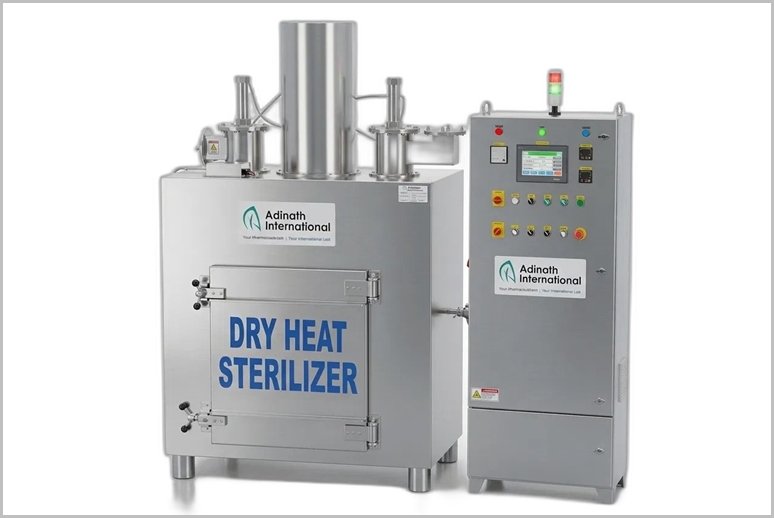
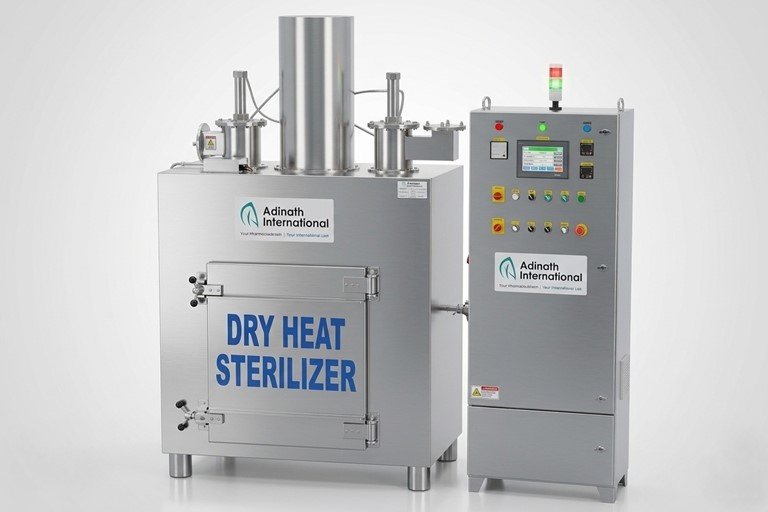
A dry heat sterilizer is a reliable, moisture-free sterilization device that uses high-temperature dry air to completely eliminate all forms of microbial life—including bacteria, viruses, fungi, and highly resistant bacterial spores. Unlike traditional steam autoclaves, dry heat sterilization relies on conduction and oxidation rather than moisture, making it the preferred method for heat-resistant instruments that cannot tolerate steam or moisture.
Dry heat sterilization works through a simple yet highly effective process. The sterilizer heats air to temperatures typically ranging between 160°C to 180°C (320°F to 356°F) and maintains that heat for a specified duration. Heat is absorbed by the outer surface of the instruments and gradually transfers inward through conduction. This intense, sustained heat denatures microbial proteins, oxidizes cellular components, and ultimately destroys the microorganisms’ ability to survive and reproduce.
Because no steam or moisture is involved, dry heat sterilizers prevent corrosion, dulling, or damage to sharp instruments such as dental burs, surgical blades, glassware, metal tools, and certain powders or oils that would be ruined by autoclaving. This makes dry heat sterilization especially valuable in settings where instrument longevity and precision are critical.
What Can and Cannot Be Sterilized?
Always follow manufacturer guidelines and perform biological indicators to validate efficacy.
The Ampoules / Vials placed in trays are washed in non-sterile room and loaded on the trolley. The trolley is moved to the sterilizer on a transfer trolley. Temperature and Times are set on the Digital Controller. The Impeller mounted on the top circulates the hot air horizontally over the charge. The air is heated by elements mounted on the top. Fresh air enters the system through Hepa Filter Module. The system incorporates two doors, one opening into the sterile room and the other opening in the non-sterile room. Both the doors are pneumatically interlocked. The temperature profile during sterilization cycle is recorded on a circular chart recorder, validation of the system is provided by a six-point digital temperature scanner. After the time period required for sterilizing the batch has elapsed, the heating circuit shuts of the pneumatics damper (exhaust) opens and cooling operation commences.
Temperature | Up to 250 degree C |
Structure | Made of M. S. heavy angle. |
Sterilizer wall | Inner wall made from Stainless Steel 316 quality sheet & and outer wall made from Stainless Steel 304 quality sheet. |
Doors | Door will be provided on both side one opening in sterile area (filling) and other opening in non-sterile area (washing). |
Insulation | A grade mineral wool insulation to optimize heat effectiveness and stop heat loses. |
Fan | Dynamically balanced fan provided for hot air circulation to achieve uniform temperature. |
HEPA Filter | Pre-filter up to 5 microns, a blower & a HEPA Filter up to 0.3 microns |
Electric | Total 9 K.W. heaters for the Sterilizer, 1 H.P. for blower and 0.75 H.P. for HEPA filter |
Trolley | Fabricated from Stainless Steel 316 angles and flat with ‘U’- grooved Stainless-Steel wheels. |
Transfer Trolley | Fabricated from Stainless Steel 304 quality angles and flat with castor wheel for sterile and non-sterile room. |
Temperature Control & timer | A combined Electronic Digital Controller & Timer is installed. ±2ºC., one probe centrally mounted. |
Temperature Recorder | A, 1-point Circular Chart recorder is installed with chart Dia 8”. |
Exhaust Damper | Controlled by solenoid valve and is opened during initial heat up, shuts off and re-opens during cooling cycle. |
Control Panel | Made of Stainless Steel 304 |
Finish | All Stainless-Steel components buffed to matt finish. |
* Power voltage can be adjusted as per customer’s domestic power voltage requirements.
* Rights of technical improvements & modification reserved.
* Illustrations & dimensions are shown for information purpose only.
Professionals with years of experience in sterile processing consistently report that dry heat sterilization extends the life of delicate instruments compared to repeated steam exposure.
A dry heat sterilizer is a moisture-free sterilization device that uses high-temperature dry air to eliminate all forms of microbial life, including bacteria, viruses, fungi, and resistant bacterial spores. It relies on conduction and oxidation rather than steam or moisture.
The sterilizer heats air (typically 160–180°C / 320–356°F, up to 250°C) and maintains it for a set duration. Heat is absorbed by the outer surface of items and transfers inward through conduction, denaturing microbial proteins, oxidizing cellular components, and destroying the organisms’ ability to survive and reproduce. Hot air is circulated by a dynamically balanced fan/impeller, with fresh air entering through a HEPA filter module.
Temperatures typically range from 160°C to 180°C (up to 250°C maximum). A common recommended cycle is 170°C for 60 minutes. Exact settings depend on the load and are controlled via a digital controller and timer (±2°C accuracy).
Unlike steam autoclaves that use moisture, dry heat sterilization uses only dry air. This prevents corrosion, dulling, or damage to sharp instruments, glassware, metal tools, powders, and oils that would be ruined by steam or moisture.
It is ideal for heat-resistant, moisture-sensitive items such as dental burs, surgical blades, glassware, metal tools, carbon steel instruments, powders, oils, anhydrous substances, ampoules, and vials.
Key features include a compact cGMP model; inner walls of Stainless Steel 316 and outer walls of Stainless Steel 304; dual interlocked doors (one for sterile/filling area, one for non-sterile/washing area); ‘A’ grade mineral wool insulation; dynamically balanced fan for uniform temperature; optional PLC-based automatic operation; HEPA filtration; and temperature recording via circular chart recorder.
The sterilizer has two pneumatically interlocked doors—one opening into the sterile (filling) area and the other into the non-sterile (washing) area. Ampoules/vials are washed and loaded in the non-sterile side, sterilized, then unloaded into the sterile side to maintain separation of areas.
Advantages include no corrosion or rust (ideal for sharp tools), suitability for heat-stable materials like glass, metal, powders, and oils, low maintenance (no water, steam generators, or complex drainage), excellent penetration for complex geometries, and an environmentally friendly process that uses only electricity and air.
It is used in the pharmaceutical, nutraceutical, herbal, Ayurvedic, biotech, cosmetic, and chemical industries for sterilizing heat-resistant instruments and materials.
Thoroughly clean and dry all instruments before loading; avoid overloading to ensure proper air circulation; use manufacturer-recommended temperature and time cycles; regularly monitor with biological and chemical indicators; and store sterilized items in a clean, dry environment until use.
More Sterilization Equipments
 2 Cubic Feet EO Gas Sterilizer
 2 Cubic Feet Sterilizer
 3 Cubic Feet EO Sterilizer
 4 CFT Ethylene Oxide Sterilizer
Algeria | Angola | Argentina | Australia | Austria | Bahrain | Bangladesh | Belarus | Belgium | Bolivia | Botswana | Brazil | Bulgaria | Canada | Chile | China | Colombia | Costa Rica | Cuba | Czech Republic | Denmark | Dominican Republic | Ecuador | Egypt | El Salvador | Ethiopia | Finland | France | Germany | Ghana | Greece | Guatemala | Haiti | Honduras | Hong Kong | Hungary | India | Indonesia | Iran | Ireland | Israel | Italy | Ivory Coast | Japan | Jordan | Kazakhstan | Kenya | Kuwait | Lebanon | Libya | Malaysia | Mexico | Mongolia | Morocco | Mozambique | Myanmar | Netherlands | New Zealand | Nicaragua | Nigeria | Norway | Oman | Pakistan | Panama | Paraguay | Peru | Philippines | Poland | Portugal | Qatar | Romania | Russia | Saudi Arabia | Senegal | Slovakia | Singapore | South Africa | South Korea | South Sudan | Spain | Sri Lanka | Sweden | Switzerland | Taiwan | Tanzania | Thailand | Trinidad and Tobago | Tunisia | Turkey | Uganda | Ukraine | United Arab Emirates | United Kingdom | United States | Uruguay | Uzbekistan | Venezuela | Vietnam | Zambia | Zimbabwe
Connect with our engineering team to discuss your specific production requirements. We provide customized, cGMP-compliant machinery solutions designed to optimize your manufacturing facility and maximize output.
©Adinath International | Theme Developed By Pharma Machinery Manufacturer I Website updated on: 23 October 2026
Request A Quick Quote
Dry Heat Sterilizer
Please drop your requirements, one of our technical expert will contact you in next 24 working hours.
WhatsApp us
