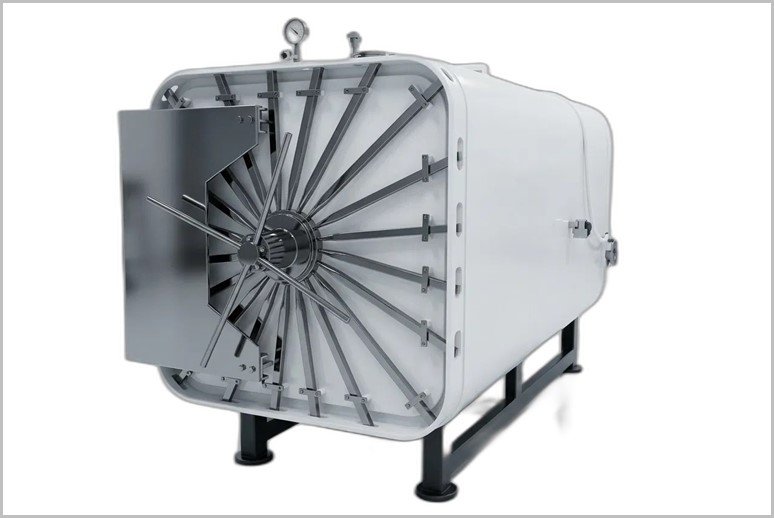
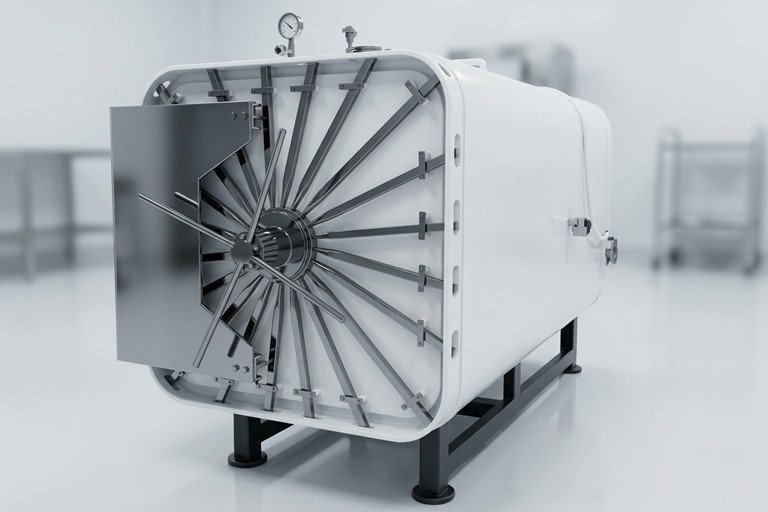
A high pressure sterilizer, also known as High Pressure Processing (HPP) equipment or high hydrostatic pressure sterilizer, represents a cutting-edge non-thermal technology widely adopted for food preservation, medical applications, and industrial sterilization needs. This innovative system applies extreme hydrostatic pressure — typically between 400 to 600 MPa (approximately 58,000 to 87,000 psi) — to products submerged in a pressure-transmitting fluid, usually water. The intense pressure inactivates harmful microorganisms such as bacteria, viruses, yeasts, molds, and parasites while leaving the sensory and nutritional qualities of the product largely intact.
Unlike traditional heat-based sterilization methods that can degrade taste, texture, color, and nutrients, HPP high pressure sterilizer technology achieves microbial inactivation through mechanical disruption of cellular structures without significant heat generation. This makes it exceptionally suitable for heat-sensitive items, including fresh juices, ready-to-eat meals, seafood, meats, dairy products, and certain pharmaceutical or medical materials.
Core Benefits Over Traditional Steam Methods
Leading Indian Manufacturer & Control Configurations
As a premier producer of industrial ethylene oxide sterilizers in India, we engineer our systems across two distinct operational models:
Model | AETOS – 2.6 | AETOS – 4.5 | AETOS – 8 |
Working Capacity in Cu. Ft. | 2.6 | 4.5 | 8 |
Working Volume | 70 Liters | 125 Liters | 200 Liters |
Chamber Size | 12” (W) x 12” (H) x 32”
| 12” (W) x 12” (H) x 54” (D) OR 15” (W) x 15” (H) x 36” (D) | 20” (W) x 18” (H) x 38” (D) OR 16” (W) x 16” (H) x 54” (D) |
Sterilant Gas | 40 grams cartridge | 100 grams cartridge | 170 grams cartridge |
Sterilization Cycle | Warm & Cold Cycles are possible. | Warm & Cold Cycles are possible. | Warm & Cold Cycles are possible. |
Aeration | In-built aeration facility provided. | In-built aeration facility provided. | In-built aeration facility provided. |
Utility | Compressed Air (100 psig) | Compressed Air (100 psig) | Compressed Air (100 psig) |
Power Supply | 1 K.W. | 2 K.W. | 2.5 K.W. |
Power Voltage | 220 volts, Single Phase, 50 Hertz | 220 volts, Single Phase, 50 Hertz | 220 volts, Single Phase, 50 Hertz |
* Power voltage can be adjusted as per customer’s domestic power voltage requirements.
* Rights of technical improvements & modification reserved.
* Illustrations & dimensions are shown for information purpose only.
A high pressure sterilizer (also called High Pressure Processing or HPP equipment / high hydrostatic pressure sterilizer) is a non-thermal technology that applies extreme hydrostatic pressure—typically 400 to 600 MPa (about 58,000–87,000 psi)—to products submerged in a pressure-transmitting fluid (usually water). It inactivates bacteria, viruses, yeasts, molds, and parasites by mechanically disrupting cellular structures while largely preserving sensory qualities, taste, texture, color, and nutrients. Unlike heat sterilization, it avoids degrading heat-sensitive items such as fresh juices, ready-to-eat meals, seafood, meats, dairy, and certain pharmaceutical or medical materials.
The system typically applies 400–600 MPa of hydrostatic pressure. Related process descriptions on the page also reference low-temperature operation around 50°C as a cool, dry cycle that protects sensitive goods from heat damage, along with high-diffusion capabilities for complex layouts and narrow lumens.
It is tailored for clinical disposables including intravenous administration lines, single-use syringes, procedure packs, drainage catheters, and collection pouches. It also works well for seasonings, dried nut kernels, boxed grains, and heat-sensitive food items. Additional applications noted include premium fragile healthcare goods such as cardiovascular catheters, coronary stents, intraocular lenses (IOLs), optical scopes, fluid conduits, and precision cutting tools.
Key advantages include non-thermal processing that retains vitamins, colors, and flavors better than pasteurization; compatibility with cold-chain conditions (ambient temperatures of 4–25°C); eco-friendly operation with no chemicals or radiation and energy efficiency for large batches; and scalability from lab-scale (liters) to industrial (tons) volumes. It successfully lowers pathogen levels while protecting material integrity and maximizing product durability.
Product-facing surfaces are constructed from high-grade stainless steel (SS 304 or SS 316) for corrosion resistance and hygiene. The equipment uses a sectional design framework for structural flexibility, horizontal cylindrical chambers in many configurations, front-loading doors for convenient access (often with wheeled carts), and insulation in related designs to improve efficiency.
Units are offered in varying capacities, scaling from compact 0.5-cubic-meter models up to large 40-cubic-meter industrial systems. Specific technical examples include models such as AETOS–2.6 (≈70 liters / 2.6 cu. ft.), AETOS–4.5 (≈125 liters / 4.5 cu. ft.), and AETOS–8 (≈200 liters / 8 cu. ft.), with corresponding chamber dimensions.
It features fully automated system cycles powered by a centralized PLC platform. Control configurations include semi-automatic systems managed via conventional hard-wired analog push buttons or air-actuated ball valves, and fully automatic PLC-HMI systems with interactive touchscreen interfaces for seamless cycle execution. Modern units support data logging and cycle validation.
An average operational run completes in approximately 8 hours. Related cycle information notes support for warm and cold cycles where applicable, along with in-built aeration facilities in certain configurations.
Applications span the pharmaceutical, nutraceutical, herbal, Ayurvedic, biotech, cosmetic, and chemical industries. It is also relevant for medical and industrial sterilization needs involving heat-sensitive or high-value items.
Comprehensive qualification paperwork (IQ, OQ, and DQ) can be furnished optionally upon request. Safety-oriented elements referenced across related sterilizer designs include door interlocks, pressure relief valves, overheat protection, alarms, and construction that supports compliance considerations for hygienic, reliable operation. Power supply details (e.g., single-phase 220 V options) can also be adjusted to local requirements.
More Sterilization Equipments
 2 Cubic Feet EO Gas Sterilizer
 2 Cubic Feet Sterilizer
 3 Cubic Feet EO Sterilizer
 4 CFT Ethylene Oxide Sterilizer
Algeria | Angola | Argentina | Australia | Austria | Bahrain | Bangladesh | Belarus | Belgium | Bolivia | Botswana | Brazil | Bulgaria | Canada | Chile | China | Colombia | Costa Rica | Cuba | Czech Republic | Denmark | Dominican Republic | Ecuador | Egypt | El Salvador | Ethiopia | Finland | France | Germany | Ghana | Greece | Guatemala | Haiti | Honduras | Hong Kong | Hungary | India | Indonesia | Iran | Ireland | Israel | Italy | Ivory Coast | Japan | Jordan | Kazakhstan | Kenya | Kuwait | Lebanon | Libya | Malaysia | Mexico | Mongolia | Morocco | Mozambique | Myanmar | Netherlands | New Zealand | Nicaragua | Nigeria | Norway | Oman | Pakistan | Panama | Paraguay | Peru | Philippines | Poland | Portugal | Qatar | Romania | Russia | Saudi Arabia | Senegal | Slovakia | Singapore | South Africa | South Korea | South Sudan | Spain | Sri Lanka | Sweden | Switzerland | Taiwan | Tanzania | Thailand | Trinidad and Tobago | Tunisia | Turkey | Uganda | Ukraine | United Arab Emirates | United Kingdom | United States | Uruguay | Uzbekistan | Venezuela | Vietnam | Zambia | Zimbabwe
Connect with our engineering team to discuss your specific production requirements. We provide customized, cGMP-compliant machinery solutions designed to optimize your manufacturing facility and maximize output.
©Adinath International | Theme Developed By Pharma Machinery Manufacturer I Website updated on: 15 October 2026
Request A Quick Quote
High Pressure Sterilizer
Please drop your requirements, one of our technical expert will contact you in next 24 working hours.
WhatsApp us
