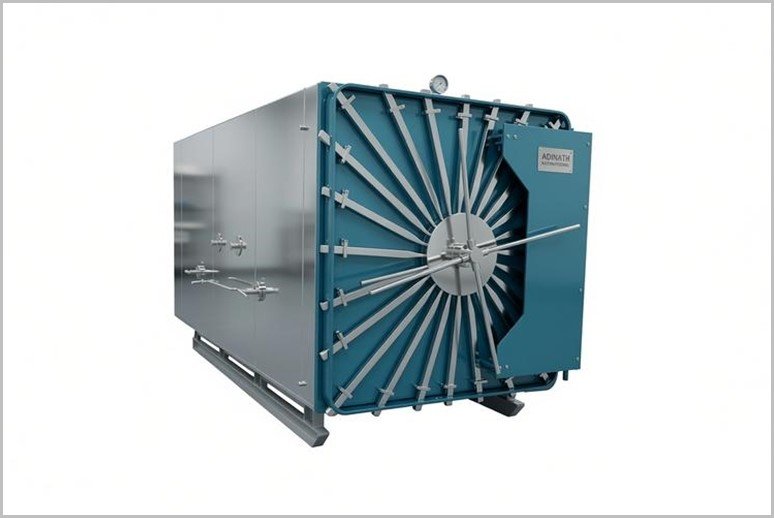
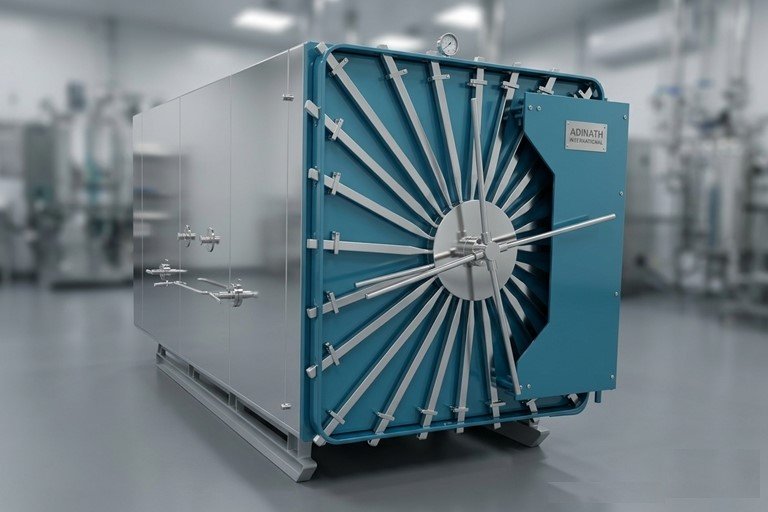
Industrial Ethylene Oxide Sterilizer systems represent the gold standard for sterilizing heat- and moisture-sensitive products that cannot withstand traditional steam autoclaving. These large-scale EO sterilization chambers deliver reliable, low-temperature microbial control for high-volume manufacturing and contract sterilization facilities worldwide.
An Industrial Ethylene Oxide Sterilizer uses Ethylene Oxide (EO or ETO) gas as a powerful alkylating agent. EO effectively penetrates complex packaging materials and intricate device geometries to eliminate bacteria, viruses, fungi, and even highly resistant bacterial spores. The process typically operates at low temperatures between 30–60°C, making it ideal for delicate items that would degrade under high heat or moisture.
This versatility explains why EO sterilization remains essential in modern healthcare supply chains.
Sterilization Process Overview
Below is a generalized operational breakdown of a typical ethylene oxide (EO) sterilization cycle. Because parameters such as gas concentration and exposure duration vary widely across applications, the following details serve merely as a conceptual reference.
Equipment Specifications
Phase 1: Conditioning (Pre-Moisturization)
Phase 2: Gas Exposure (Sterilization)
Phase 3: Evacuation and Aeration (Gas Removal)
Model | AETOS – 2.6 | AETOS – 4.5 | AETOS – 8 |
Working Capacity in Cu. Ft. | 2.6 | 4.5 | 8 |
Working Volume | 70 Liters | 125 Liters | 200 Liters |
Chamber Size | 12” (W) x 12” (H) x 32”
| 12” (W) x 12” (H) x 54” (D) OR 15” (W) x 15” (H) x 36” (D) | 20” (W) x 18” (H) x 38” (D) OR 16” (W) x 16” (H) x 54” (D) |
Sterilant Gas | 40 grams cartridge | 100 grams cartridge | 170 grams cartridge |
Sterilization Cycle | Warm & Cold Cycles are possible. | Warm & Cold Cycles are possible. | Warm & Cold Cycles are possible. |
Aeration | In-built aeration facility provided. | In-built aeration facility provided. | In-built aeration facility provided. |
Utility | Compressed Air (100 psig) | Compressed Air (100 psig) | Compressed Air (100 psig) |
Power Supply | 1 K.W. | 2 K.W. | 2.5 K.W. |
Power Voltage | 220 volts, Single Phase, 50 Hertz | 220 volts, Single Phase, 50 Hertz | 220 volts, Single Phase, 50 Hertz |
* Power voltage can be adjusted as per customer’s domestic power voltage requirements.
* Rights of technical improvements & modification reserved.
* Illustrations & dimensions are shown for information purpose only.
Ethylene Oxide is flammable, potentially explosive in certain concentrations, and classified as a potential carcinogen. Leading manufacturers address these concerns through advanced engineering:
These safety innovations allow facilities to operate Industrial Ethylene Oxide Sterilizers with minimal risk to workers and the environment while maintaining regulatory compliance.
Reputable industrial EO sterilization providers strictly adhere to ISO 11135 (Sterilization of health care products — Ethylene oxide — Requirements for the development, validation and routine control of a sterilization process) and U.S. FDA guidelines. Facilities also comply with EPA regulations regarding EO emissions.
As of 2025–2026, the industry continues to face heightened scrutiny around ethylene oxide emissions. This has driven significant innovation, including:
Many forward-thinking sterilization service providers now offer both EO and alternative technologies, helping manufacturers meet sustainability goals without compromising sterility assurance.
It is a large-scale, low-temperature sterilization system that uses ethylene oxide (EO or ETO) gas as an alkylating agent to eliminate bacteria, viruses, fungi, and resistant bacterial spores. It is the preferred method for heat- and moisture-sensitive products that cannot withstand traditional steam autoclaving, operating typically between 30–60°C while penetrating complex packaging and device geometries.
Common applications include medical devices such as syringes, catheters, heart stents, surgical kits, and flexible endoscopes; pharmaceutical packaging and components; sterile food packaging and spices; textiles; and other heat-sensitive materials like hypodermic syringes, infusion sets, surgical dressing packs, protective gloves, urinary bags, and contraceptives.
The cycle generally includes three phases: Conditioning (pre-moisturization at ~70% relative humidity and 55°C for about 12 hours); Gas Exposure (vacuum creation followed by EO injection for 4–8 hours while maintaining humidity and temperature); and Evacuation/Aeration (continuous vacuum and fresh-air flushing for 8–12 hours to remove residual EO gas).
Models include AETOS-2.6 (2.6 cu. ft. / 70 liters, 40g cartridge), AETOS-4.5 (4.5 cu. ft. / 125 liters, 100g cartridge), and AETOS-8 (8 cu. ft. / 200 liters, 170g cartridge). They support warm and cold cycles, feature in-built aeration, require compressed air (100 psig), and run on 220V single-phase power (with adjustable voltage options). Chamber sizes and power ratings vary by model.
Internal components and product-contact surfaces are fabricated from premium-grade stainless steel (SS 304 and SS 316). The design uses a sectional, modular framework for flexibility and scalability, with a single-access door and heavy-duty outer enclosure housing a high-capacity venturi system.
Because EO is flammable, potentially explosive, and a potential carcinogen, systems include explosion-proof chamber designs and electrical systems, real-time gas detection sensors with alarms, automated controlled aeration cycles, negative-pressure rooms, emission control (e.g., catalytic oxidation), leak detection, emergency shutdown protocols, flame-proof construction, multiple vacuum pumps, and explosion vents. Many modern units use 50–90% less EO than older models.
They adhere to ISO 11135 (requirements for development, validation, and routine control of EO sterilization processes for health-care products) and U.S. FDA guidelines. Facilities also comply with EPA regulations on EO emissions. Complete qualification services (IQ, OQ, DQ) are available, and systems support a Sterility Assurance Level (SAL) of 10⁻⁶, often validated with biological indicators.
They serve the pharmaceutical, nutraceutical, herbal, Ayurvedic, biotech, cosmetic, and chemical industries, as well as high-volume manufacturing and contract sterilization facilities for medical devices and related products.
It enables reliable sterilization of heat- and moisture-sensitive items without degradation, offers excellent penetration through packaging and complex geometries, supports high-volume bulk processing (including pallet-based loading in larger systems), provides modular scalability, simplified controls for ease of use, and integrated aeration. It remains essential for modern healthcare supply chains where steam or other high-temperature methods are unsuitable.
Residual EO is removed during the aeration phase through continuous vacuum cycles and fresh-air flushing (typically 8–12 hours). Modern systems incorporate effluent treatment such as catalytic oxidation to reduce emissions, support reduced-EO usage cycles, and may offer hybrid or alternative low-temperature options. Operators follow strict protocols to minimize worker and environmental exposure while maintaining compliance.
More Sterilization Equipments
 Industrial Type Ethylene Oxide Sterilizer
 4 CFT Ethylene Oxide Sterilizer
 Cath Lab Ethylene Oxide Gas Sterilizer
 Ethylene Oxide Cylindrical Sterilizer
Algeria | Angola | Argentina | Australia | Austria | Bahrain | Bangladesh | Belarus | Belgium | Bolivia | Botswana | Brazil | Bulgaria | Canada | Chile | China | Colombia | Costa Rica | Cuba | Czech Republic | Denmark | Dominican Republic | Ecuador | Egypt | El Salvador | Ethiopia | Finland | France | Germany | Ghana | Greece | Guatemala | Haiti | Honduras | Hong Kong | Hungary | India | Indonesia | Iran | Ireland | Israel | Italy | Ivory Coast | Japan | Jordan | Kazakhstan | Kenya | Kuwait | Lebanon | Libya | Malaysia | Mexico | Mongolia | Morocco | Mozambique | Myanmar | Netherlands | New Zealand | Nicaragua | Nigeria | Norway | Oman | Pakistan | Panama | Paraguay | Peru | Philippines | Poland | Portugal | Qatar | Romania | Russia | Saudi Arabia | Senegal | Slovakia | Singapore | South Africa | South Korea | South Sudan | Spain | Sri Lanka | Sweden | Switzerland | Taiwan | Tanzania | Thailand | Trinidad and Tobago | Tunisia | Turkey | Uganda | Ukraine | United Arab Emirates | United Kingdom | United States | Uruguay | Uzbekistan | Venezuela | Vietnam | Zambia | Zimbabwe
Connect with our engineering team to discuss your specific production requirements. We provide customized, cGMP-compliant machinery solutions designed to optimize your manufacturing facility and maximize output.
©Adinath International | Theme Developed By Pharma Machinery Manufacturer I Website updated on: 15 October 2026
Request A Quick Quote
Industrial Ethylene Oxide Sterilizer
Please drop your requirements, one of our technical expert will contact you in next 24 working hours.
WhatsApp us
