
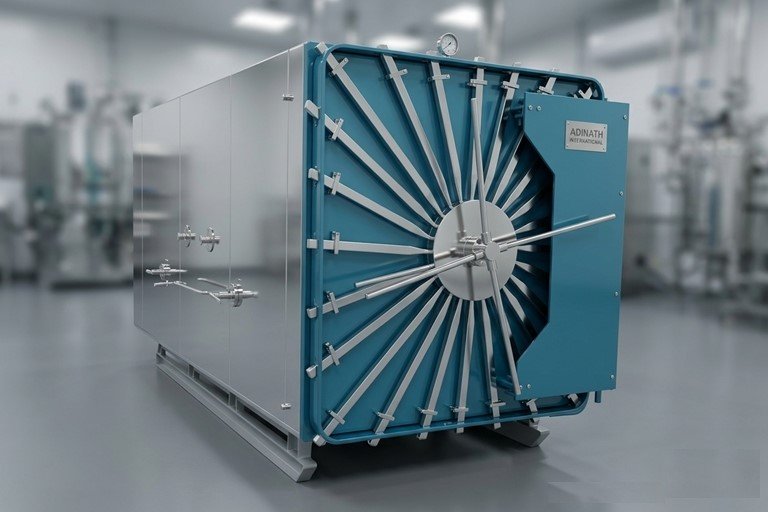
An Industrial Type Ethylene Oxide Sterilizer is a robust, large-scale sterilization system specifically engineered for high-volume processing of heat- and moisture-sensitive products in the medical device, pharmaceutical, and packaging industries. Unlike conventional high-temperature methods such as steam autoclaving, these advanced systems utilize ethylene oxide (EO or ETO) gas — a potent alkylating agent — to achieve thorough microbial kill at low temperatures while preserving the integrity of delicate materials.
By disrupting the DNA and proteins of microorganisms, EO gas effectively eliminates bacteria, viruses, fungi, and highly resistant spores, consistently delivering a Sterility Assurance Level (SAL) of 10⁻⁶, the gold standard for critical healthcare products.
Industrial EO sterilizers operate in a sealed stainless-steel chamber under vacuum to enhance gas penetration. Key components include:
The Three-Phase Industrial EO Sterilization Process
Expertly designed Industrial Type Ethylene Oxide Sterilizers operate through three well-controlled phases:
This structured approach ensures repeatability, regulatory compliance, and product safety at industrial scale.
Because ethylene oxide is both flammable and toxic at higher concentrations, leading Industrial Type Ethylene Oxide Sterilizer manufacturers incorporate multiple layers of protection. These include explosion-proof (ATEX-compliant) designs, advanced emission control systems (catalytic converters and scrubbers), real-time gas monitoring, automated interlocks, and comprehensive alarm systems.
Facilities operating these units follow strict international standards such as ISO 11135, FDA guidelines, EPA regulations, and local occupational safety requirements. Experienced operators and validation teams conduct rigorous cycle development, biological indicator studies, and ongoing performance qualification to maintain the highest levels of process control and patient safety.
Organizations with decades of sterilization expertise select industrial EO systems for their unmatched penetration capabilities, broad material compatibility, and proven scalability. The technology enables manufacturers to sterilize pre-packaged goods in final shipping configurations, significantly streamlining logistics and reducing contamination risks during handling.
When investing in an Industrial Type Ethylene Oxide Sterilizer, decision-makers prioritize chamber capacity, cycle efficiency, automation sophistication, environmental compliance features, and long-term technical support from reputable manufacturers.
It is a robust, large-scale system engineered specifically for high-volume sterilization of heat- and moisture-sensitive products in medical device, pharmaceutical, and packaging industries. It delivers consistent Sterility Assurance Level (SAL) of 10⁻⁶ while handling large batches efficiently.
EO gas acts as a potent alkylating agent that disrupts the DNA and proteins of microorganisms (bacteria, viruses, fungi, and resistant spores). This enables thorough microbial kill at low temperatures, preserving the integrity of delicate materials that cannot withstand steam autoclaving.
Key features include double gaskets for fail-proof door sealing, flame-proof (explosion-proof) design, gas detection systems with audio-visual alarms, evacuation hoods for residual gas removal, emergency evacuation systems, HI/LO temperature and pressure alarms, and controlled gas injection via a manifold with regulators, pressure switches, safety valves, and load cells.
Uniform distribution ensures consistent sterilant concentration and temperature throughout the load. This is achieved through energy-efficient jacket and door heating systems, plus a dedicated gas circulation blower.
Screw vacuum pumps and roots blowers are used for applications requiring ultra-high vacuum, enabling effective gas penetration, residual removal, and cycle control.
They are widely applied in the pharmaceutical, nutraceutical, herbal, Ayurvedic, biotech, cosmetic, and chemical industries for sterilizing heat- and moisture-sensitive products and pre-packaged goods.
It penetrates breathable packaging for true in-package sterilization, operates at low temperatures to preserve delicate materials, is compatible with most plastics, metals, and composites, and offers high efficacy against a broad spectrum of microorganisms including spores.
Systems incorporate multiple protection layers: ATEX-compliant explosion-proof designs, advanced emission control (catalytic converters and scrubbers), real-time gas monitoring, automated interlocks, comprehensive alarms, and emergency evacuation. Operations follow ISO 11135, FDA guidelines, EPA regulations, and local safety standards, with rigorous cycle validation using biological indicators.
The technology’s unmatched penetration allows sterilization of goods in their final shipping configurations. This streamlines logistics, reduces post-sterilization handling contamination risks, and supports scalable high-volume production with strong material compatibility.
Key considerations include chamber capacity, cycle efficiency, automation level, environmental compliance features (emission controls and residual gas management), long-term technical support, and validation documentation from experienced manufacturers.
More Sterilization Equipments
 Industrial Ethylene Oxide Sterilizer
 4 CFT Ethylene Oxide Sterilizer
 Cath Lab Ethylene Oxide Gas Sterilizer
 Ethylene Oxide Cylindrical Sterilizer
Algeria | Angola | Argentina | Australia | Austria | Bahrain | Bangladesh | Belarus | Belgium | Bolivia | Botswana | Brazil | Bulgaria | Canada | Chile | China | Colombia | Costa Rica | Cuba | Czech Republic | Denmark | Dominican Republic | Ecuador | Egypt | El Salvador | Ethiopia | Finland | France | Germany | Ghana | Greece | Guatemala | Haiti | Honduras | Hong Kong | Hungary | India | Indonesia | Iran | Ireland | Israel | Italy | Ivory Coast | Japan | Jordan | Kazakhstan | Kenya | Kuwait | Lebanon | Libya | Malaysia | Mexico | Mongolia | Morocco | Mozambique | Myanmar | Netherlands | New Zealand | Nicaragua | Nigeria | Norway | Oman | Pakistan | Panama | Paraguay | Peru | Philippines | Poland | Portugal | Qatar | Romania | Russia | Saudi Arabia | Senegal | Slovakia | Singapore | South Africa | South Korea | South Sudan | Spain | Sri Lanka | Sweden | Switzerland | Taiwan | Tanzania | Thailand | Trinidad and Tobago | Tunisia | Turkey | Uganda | Ukraine | United Arab Emirates | United Kingdom | United States | Uruguay | Uzbekistan | Venezuela | Vietnam | Zambia | Zimbabwe
Connect with our engineering team to discuss your specific production requirements. We provide customized, cGMP-compliant machinery solutions designed to optimize your manufacturing facility and maximize output.
©Adinath International | Theme Developed By Pharma Machinery Manufacturer I Website updated on: 15 October 2026
Request A Quick Quote
Industrial Type Ethylene Oxide Sterilizer
Please drop your requirements, one of our technical expert will contact you in next 24 working hours.
WhatsApp us
