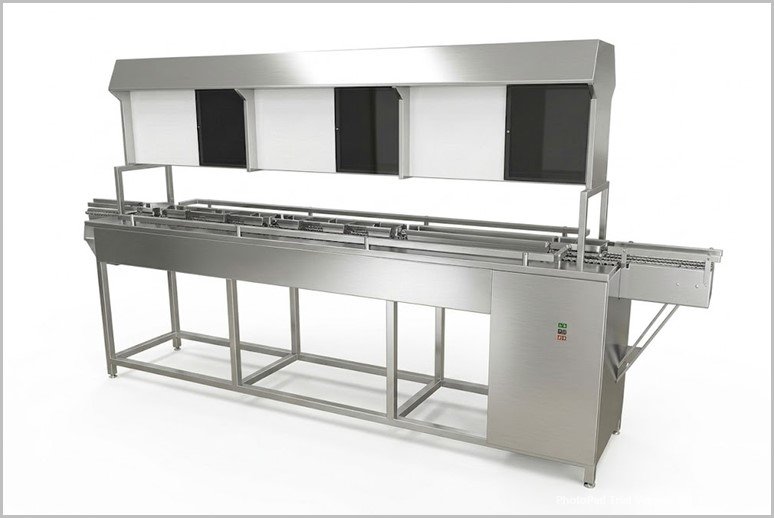
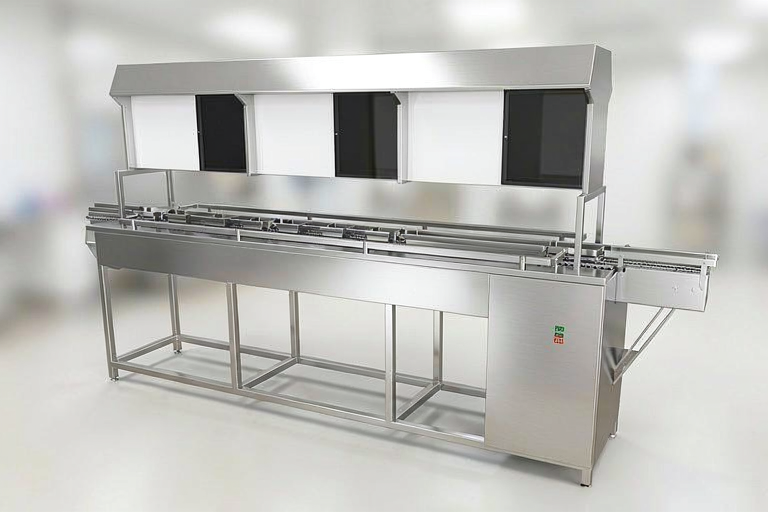
In the fast-paced world of modern logistics, manufacturing, and distribution, maximizing floor space while maintaining high throughput is a constant challenge. As facilities expand and production lines grow more complex, the need for efficient vertical material handling becomes paramount. Enter the spiral conveyor—a specialized vertical transport solution engineered to elevate or lower products in a continuous, helical flow. By utilizing a compact vertical footprint, these systems are revolutionizing how industries manage elevation changes in crowded production environments.
Choosing the Right System
Belt Width | Tailored (depends on product dimensions) |
Belt Speed | Customized according to production requirement |
Material | SS (Stainless steel) 304/SS 316 |
Electricity | 3-phase: 415v; 50Hz |
Machine Length | Length can vary depending on industry needs |
* Power voltage can be adjusted as per customer’s domestic power voltage requirements.
* Rights of technical improvements & modification reserved.
* Illustrations & dimensions are shown for information purpose only.
A spiral conveyor is a specialized vertical material-handling system that elevates or lowers products in a continuous helical path. It maximizes floor space in crowded manufacturing, packaging, and distribution environments while maintaining high throughput and product orientation.
A continuous side-flexing belt (or overlapping slat/chain-slat belt) travels around a central vertical column, drum, or cage. Products enter at the infeed (usually bottom for ascending or top for descending), travel along a low-incline helical path (typically 5–15°), and exit at the outfeed level in the same sequence. The empty belt returns via a dedicated path to complete the endless loop.
Systems are offered in Stainless Steel (SS 304 or SS 316) or Mild Steel configurations. The framework uses 32 mm square pipe (SS 304 matte finish or MS with protective paint), and the tabletop is typically 16-gauge SS 304 sheet with a matte finish. Belts can be PVC-coated canvas or endless rubberized types depending on the application.
Yes. Speed, length, height, width, and belt dimensions are fully customizable to match product size, production requirements, and facility layout. Power voltage can also be adjusted to local domestic standards.
Belt width is tailored to product dimensions, belt speed is set according to production needs, construction material is SS 304/316, power is typically 3-phase 415 V / 50 Hz, and overall machine length varies by application. Speeds often exceed 200 feet per minute (≈60 m/min) with load capacities in the range of 10–50 kg/m depending on the model.
It is widely applied in the pharmaceutical, nutraceutical, herbal, Ayurvedic, biotech, cosmetic, and chemical industries for efficient vertical transfer of bottles, containers, and other packaged or loose products within production and packaging lines.
Spiral designs are extremely compact (diameters as small as 585 mm in some models) and can save 40–50 % of the floor space required by traditional incline conveyors while providing the same elevation change.
Benefits include continuous high-throughput vertical movement, gentle product handling that prevents tipping or damage, the ability to start and stop fully loaded, reversible operation on many models, quiet vibration-free running via a high-quality reduction gearbox, and seamless integration into full production lines.
A motor-driven central drum/cage or chain drive powers the system. Low-tension designs rely on friction between the cage and belt edge; modern versions often use low-friction rolling-element (chain-slat) systems that need only a single drive. Self-aligning bearings ensure smooth roller rotation, and a 3-speed pulley system allows belt-speed adjustment.
Yes. It is designed for straightforward integration with packaging lines, automated storage and retrieval systems (AS/RS), and other conveyors. Products enter and exit horizontally, maintaining orientation and sequence for downstream processes such as filling, capping, labeling, or inspection.
More Other Machines
 Bucket Conveyor
 Drive Roller Conveyor
 Flexible Moving Gravity Roller Conveyor
 Gravity Roller Conveyor
Algeria | Angola | Argentina | Australia | Austria | Bahrain | Bangladesh | Belarus | Belgium | Bolivia | Botswana | Brazil | Bulgaria | Canada | Chile | China | Colombia | Costa Rica | Cuba | Czech Republic | Denmark | Dominican Republic | Ecuador | Egypt | El Salvador | Ethiopia | Finland | France | Germany | Ghana | Greece | Guatemala | Haiti | Honduras | Hong Kong | Hungary | India | Indonesia | Iran | Ireland | Israel | Italy | Ivory Coast | Japan | Jordan | Kazakhstan | Kenya | Kuwait | Lebanon | Libya | Malaysia | Mexico | Mongolia | Morocco | Mozambique | Myanmar | Netherlands | New Zealand | Nicaragua | Nigeria | Norway | Oman | Pakistan | Panama | Paraguay | Peru | Philippines | Poland | Portugal | Qatar | Romania | Russia | Saudi Arabia | Senegal | Slovakia | Singapore | South Africa | South Korea | South Sudan | Spain | Sri Lanka | Sweden | Switzerland | Taiwan | Tanzania | Thailand | Trinidad and Tobago | Tunisia | Turkey | Uganda | Ukraine | United Arab Emirates | United Kingdom | United States | Uruguay | Uzbekistan | Venezuela | Vietnam | Zambia | Zimbabwe
Connect with our engineering team to discuss your specific production requirements. We provide customized, cGMP-compliant machinery solutions designed to optimize your manufacturing facility and maximize output.
©Adinath International | Theme Developed By Pharma Machinery Manufacturer I Website updated on: 15 October 2026
Request A Quick Quote
Spiral Conveyor
Please drop your requirements, one of our technical expert will contact you in next 24 working hours.
WhatsApp us
